
TL;DR
Google updated its Veo model to version 3.1, improving how generated clips follow reference images and adding native vertical output for portrait sources. The release brings Ingredients to Video improvements, 9:16 exports for short-form platforms, and 4K upscaling.
What happened
Google has released Veo 3.1 with a set of visual and workflow upgrades for its Ingredients to Video tool. The feature, which accepts up to three reference images for use as character subjects, backgrounds or textures, now generates clips that more closely adhere to those inputs and maintain visual consistency across different shots. Users can reuse objects, backgrounds and textures across scenes so characters and elements remain recognizable in multiple clips. For the first time, clips derived from portrait reference images can be output in a native 9:16 vertical aspect ratio, removing the need to crop results manually for platforms like TikTok and YouTube Shorts. Google is rolling the improved Ingredients to Video and portrait-mode support into the Gemini app immediately and is integrating the tools into YouTube Shorts and the YouTube Create app. Veo 3.1 also raises the resolution ceiling for generated clips from 1080p to 4K.
Why it matters
- Native vertical output streamlines creation for short-form platforms, avoiding post-export cropping.
- Better adherence to reference images gives creators more control over character and scene continuity.
- Reusing objects and textures across scenes can speed up multi-shot storytelling and scene consistency.
- 4K upscaling offers higher-resolution results, which may improve suitability for professional or large-format use.
Key facts
- Update is for Veo model version 3.1.
- Ingredients to Video accepts up to three reference images to guide generation.
- Reference images can supply character subjects, backgrounds and textures for generated clips.
- Veo 3.1 improves visual consistency so a character can look the same across different clips and environments.
- Generated clips can now be output in a native 9:16 aspect ratio for vertical video.
- Developers previously could generate vertical videos from text prompts; this update adds portrait reference support.
- Google is adding the improved Ingredients to Video and portrait mode features to the Gemini app starting today.
- The tools are being integrated into YouTube Shorts and the YouTube Create app for the first time.
- Veo output resolution can now be upscaled to 4K, up from a previous 1080p limit.
What to watch next
- How accurately the model preserves likeness and detail from portrait references in complex or dynamic scenes — not confirmed in the source.
- Whether the new features will be available to all users or limited to developers and select partners at launch — not confirmed in the source.
- How platform integrations (YouTube Shorts and Create) will affect moderation, metadata or upload workflows — not confirmed in the source.
Quick glossary
- Veo: Google's AI video generation model family used to create motion clips from text or image inputs.
- Ingredients to Video: A Veo feature that lets users supply reference images (up to three) to guide video generation, such as subjects, backgrounds and textures.
- 9:16 aspect ratio: A vertical video format commonly used by short-form platforms (e.g., TikTok, YouTube Shorts), where height exceeds width.
- Upscaling: A process that increases the resolution of generated media, here allowing Veo outputs to be rendered at 4K.
Reader FAQ
How many reference images can Ingredients to Video use?
Up to three reference images.
Can Veo 3.1 produce vertical videos ready for platforms like TikTok?
Yes — it supports native 9:16 vertical outputs intended for short-form platforms.
Does Veo 3.1 increase output resolution?
Yes — generated videos can be upscaled to 4K, up from a previous 1080p limit.
Is the update available in Google's apps now?
Google is adding the improved Ingredients to Video and portrait-mode features to the Gemini app starting today and integrating them into YouTube Shorts and YouTube Create — beyond that, wider availability is not confirmed in the source.
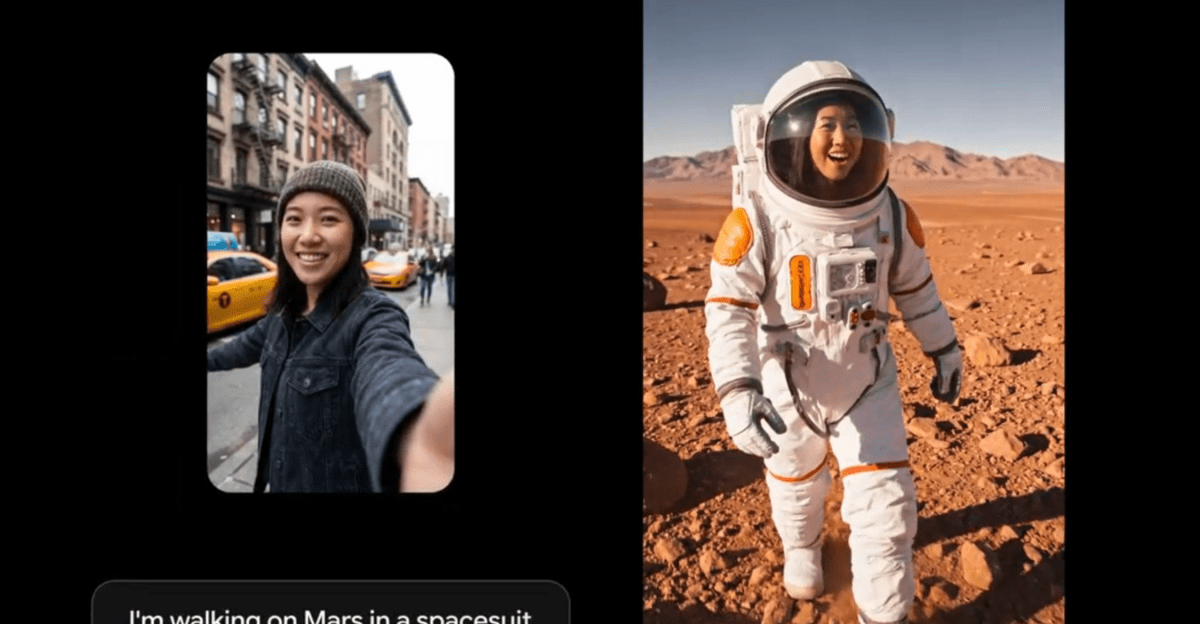
NEWS AI TECH Google’s Veo now turns portrait images into vertical AI videos Videos should now be more consistent with the images they’re based on, including those in portrait orientations….
Sources
- Google’s Veo now turns portrait images into vertical AI videos
- Gemini AI video generator powered by Veo 3.1
- Veo 3.1
- Google Veo 3.1: What's New and How to Prep Your Workflow
Related posts
- Legion Health (YC S21) seeks founding engineer for AI-native ops infrastructure
- ElevenLabs reports surpassing $330M in annual recurring revenue
- Linus Torvalds experiments with vibe coding for audio effects and pedals