
TL;DR
Geologic surveys indicate Greenland contains substantial deposits of rare earths, other critical minerals and possible fossil fuels, drawing renewed strategic interest from the United States. But extraction faces long timelines, technical hurdles, limited infrastructure and legal constraints that have already stalled at least one project.
What happened
Over more than a century of mapping and exploration, researchers have identified a range of mineral prospects beneath Greenland's ice and in its exposed rock, including rare earth elements and other resources used in clean-energy technologies. The island's geology records ancient continental collisions and rifting, and parts of the continental shelf resemble other Arctic hydrocarbon provinces. Political attention has surged recently after public interest from US President Donald Trump revived a long history of American proposals to acquire the territory. At the same time, geological institutions such as GEUS and international teams have refined surface and under-ice maps, but the work is far from complete. Practical barriers remain significant: exploration success rates are low, processing some deposits is technically difficult or carries radioactivity risks, Greenland lacks overland infrastructure outside towns, and a 2021 Greenland law limiting uranium content has halted at least one rare-earth project.
Why it matters
- Critical minerals under Greenland could affect global supply chains for batteries, wind turbines and solar technology.
- Renewed geopolitical interest in the island has prompted diplomatic tensions between the US and Denmark, raising security and alliance concerns.
- The long, uncertain process from discovery to production means new sources won’t quickly relieve mineral constraints.
- Environmental, technical and regulatory barriers — including limits on uranium-bearing ore — can stop projects even where resources exist.
Key facts
- Greenland is about 2 million sq km (roughly 770,000 sq miles) in area.
- Approximately 80% of Greenland is covered by the Greenland Ice Sheet; about 20% is ice-free.
- Historic US interest in acquiring Greenland dates back to proposals in 1867, 1910 and a $100m gold-bullion offer in 1946; President Trump renewed public interest in 2019 and later.
- Geologic mapping intensified after World War II; initial broad maps were completed in the early 2000s and 55 more detailed map sheets have since been produced.
- Scientists and geophysicists have produced preliminary under-ice maps of geologic provinces to infer potential mineral distributions.
- Critical-mineral demand for clean-energy technologies is expected to rise sharply; one estimate cited says mineral demand could quadruple by 2040.
- Exploration is risky: a quoted rule of thumb is that only about 1 in 100 exploration projects becomes a mine.
- If a discovery is viable, it commonly takes around 10 years to move from discovery to production, depending on infrastructure, permitting and other factors.
- Greenland has seen repeated oil and gas exploration since the 1970s but offshore searches have not yielded confirmed commercial reservoirs to date; its continental shelf shows some geological similarities to other Arctic fossil-fuel provinces.
- Processing some rare-earth mineral deposits can be complex and may be associated with uranium or other undesirable elements; a 2021 Greenland law limiting uranium content froze a rare-earth project in southern Greenland.
What to watch next
- Diplomatic and policy moves by the US and Denmark regarding Greenland's status and resource access — developments have already prompted high-level responses.
- Ongoing geophysical and under-ice mapping programs by GEUS and collaborators that could change estimates of resource distribution.
- New mining project approvals, infrastructure investments or changes to Greenland's uranium restrictions: not confirmed in the source.
Quick glossary
- Rare earth elements: A group of chemically similar metallic elements used in electronics, batteries and magnets; they often occur in low concentrations and require complex processing.
- Critical minerals: Materials considered essential to modern economies and technologies whose supply is vulnerable to disruption.
- Geologic province: A large region of the Earth's crust with shared geological histories and rock types that can suggest common mineral potential.
- Continental shelf: Submerged extension of a continent where sedimentary basins can host petroleum and natural gas accumulations.
- Ice sheet: A massive, slow-moving body of ice covering large land areas, which can conceal underlying geology and complicate exploration.
Reader FAQ
Does Greenland contain valuable minerals and fossil fuels?
Yes; mapping and exploration indicate rare earths, other critical minerals and suspected oil and gas potential, though commercial fossil-fuel finds have not been confirmed.
How soon could mining start if a deposit is found?
Not quickly: the typical interval from discovery to production is cited as around ten years, subject to infrastructure, permitting and market factors.
Has any rare-earth project been stopped?
Yes. A 2021 Greenland law limiting uranium content effectively froze development of a rare-earth element project in southern Greenland.
Is the US planning to annex or buy Greenland?
US interest has a long history and recent public suggestions drew attention and diplomatic pushback; future action beyond statements and proposals is not confirmed in the source.
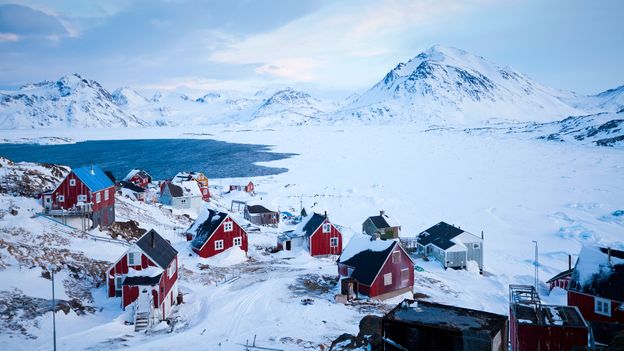
The mineral riches hiding under Greenland's ice 18 hours ago Share Save Sarah Derouin Getty Images The treasures beneath Greenland's icy terrain have been coveted for more than a century….
Sources
- The mineral riches hiding under Greenland's ice
- Beneath Greenland's Ice Lies a Climate Solution
- Greenland Mineral Resources: 2025 Exploration …
- Fearing toxic waste, Greenland ended uranium mining. …
Related posts
- Are We Finally Exhausted by Social Media’s Commercialized Networks
- Rep. Marjorie Taylor Greene Files Bill to End H-1B Visa Program
- Vietnam moves to ban unskippable ads with 5-second skip rule in decree