
TL;DR
A dome-shaped energy storage installation on Sardinia contains about 2,000 tonnes of carbon dioxide held permanently inside its system to store surplus renewable power. The gas was supplied by a commercial gas provider rather than captured from industrial emissions or direct-air capture.
What happened
On the island of Sardinia, a large dome structure holds roughly 2,000 tonnes of carbon dioxide in what the source describes as a permanent, sealed system used to store excess renewable electricity until it is needed. The CO2 inside the dome did not come from factory emissions or from direct-air capture; instead, it was supplied by a gas company. The installation serves as an example of a grid-scale storage approach in which a pressurized or contained working fluid — in this case carbon dioxide — functions as the medium for holding energy. The article frames this demonstration as part of a broader move toward so-called "bubble" batteries for large-scale energy storage, but specifics about the developer, detailed operating principles, costs, and deployment timeline are not confirmed in the source.
Why it matters
- Grid-scale storage is essential for balancing variable renewable generation; new physical storage concepts could expand options beyond chemical batteries.
- Using CO2 as a contained working fluid offers a different engineering approach to storing large energy quantities, potentially at utility scale.
- The choice to source CO2 from a gas supplier rather than capturing emissions raises questions about lifecycle emissions and supply chains for the gas.
- If broadly adopted, such installations could change how utilities manage excess renewable power, but technical and regulatory details are still unclear.
Key facts
- A dome installation on Sardinia holds about 2,000 tonnes of carbon dioxide.
- The CO2 was provided by a gas supplier, not captured from factory emissions or pulled from the air.
- The gas remains permanently inside the dome's system according to the source.
- The system is presented as a way to store large amounts of excess renewable energy until needed.
- The source frames the approach as a type of grid-scale "bubble" battery.
- The full developer identity and technical specifications are not confirmed in the source.
- Publication: IEEE Spectrum article, published 2025-12-21 (source URL provided).
What to watch next
- Commercial rollout schedules and concrete deployment plans — not confirmed in the source.
- Independent data on round-trip efficiency, lifetime, and operating costs — not confirmed in the source.
- Regulatory and environmental assessments related to sourcing and storing CO2 at scale — not confirmed in the source.
Quick glossary
- Grid-scale energy storage: Large-capacity systems that store electricity for use on an electric grid to help balance supply and demand over time.
- Carbon dioxide (CO2): A common gas produced by combustion and other processes; here it is used as a contained working fluid for energy storage, per the source.
- Working fluid: A substance used inside an energy system whose physical state changes or whose properties are exploited to store or release energy.
- Dome containment: A sealed or pressurized enclosure used to hold gases or other substances; in this context it houses CO2 for storage purposes.
Reader FAQ
Where is this prototype located?
On the island of Sardinia, according to the source.
Was the CO2 captured from industrial emissions or the atmosphere?
No — the source says the gas came from a gas supplier, not from factory emissions or direct-air capture.
Who developed the bubble battery system?
Not confirmed in the source.
Is there a confirmed timeline for widespread deployment?
Not confirmed in the source.
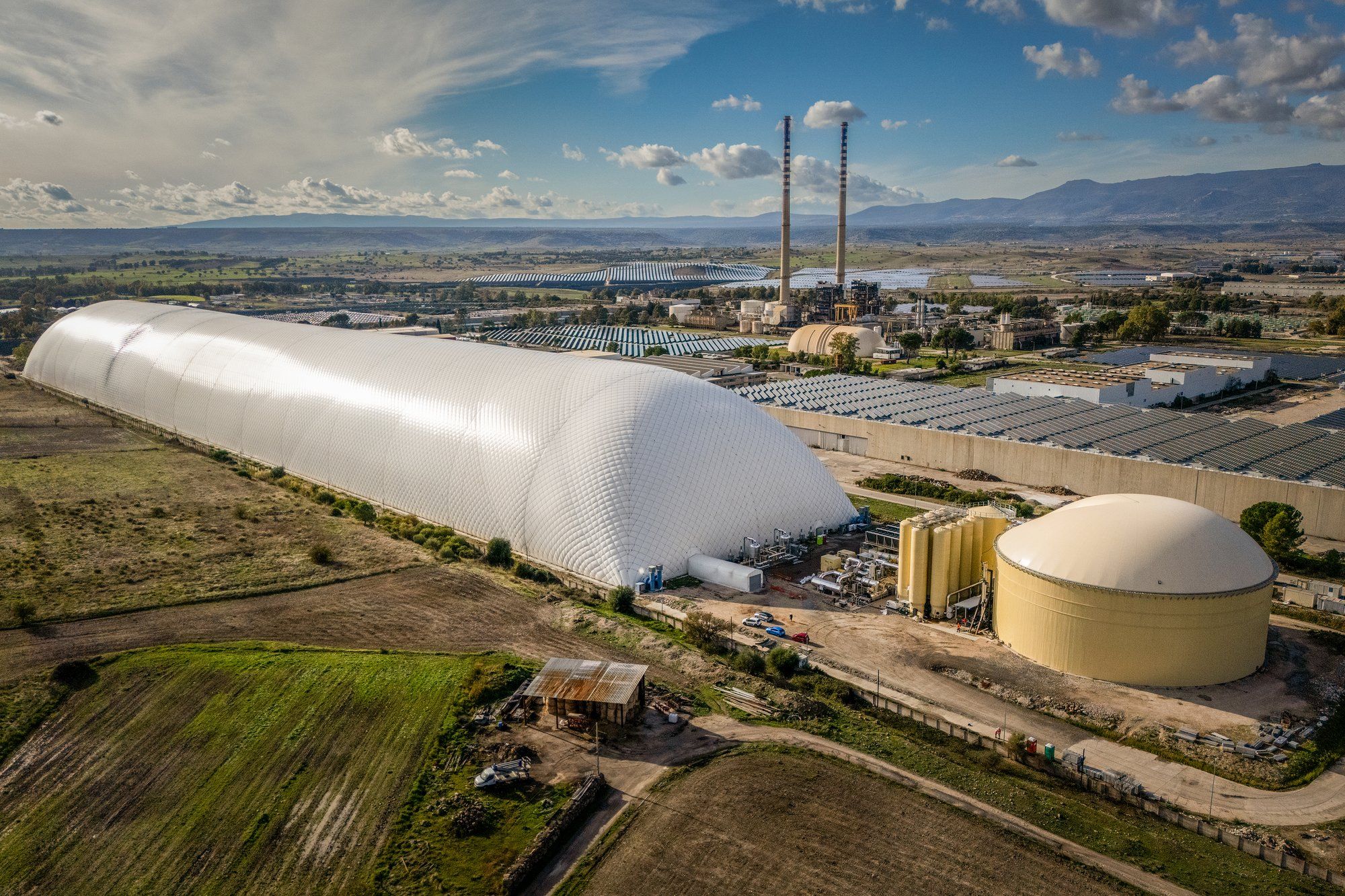
This giant bubble on the island of Sardinia holds 2,000 tonnes of carbon dioxide. But the gas wasn’t captured from factory emissions, nor was it pulled from the air. It…
Sources
- Grid-Scale Bubble Batteries Will Soon Be Everywhere
- Grid-scale bubble batteries will soon be everywhere
Related posts
- IEEE Spectrum’s Most-Read Biomedical Stories of 2025 Highlight AI and Revamps
- Harnessing Ultrasound Cavitation to Attack Hard-to-Treat Tumors
- Seven Major Telecommunications Developments Defining 2025 Networks