
TL;DR
A memoir recounts childhood in Factory 404, a classified nuclear industrial town built in the Gobi Desert in 1958. Once a closed community of elite technicians, by the author’s birth the site had shifted to processing radioactive waste, with enduring isolation and safety risks.
What happened
Factory 404 was established in 1958 when technicians, machinists and other skilled workers were relocated to a remote site west of the Yumen Pass in the Gobi Desert to build China’s atomic program. Early residents endured severe environmental hardships — daily sandstorms, almost no trees, and only about 50 millimeters of annual rainfall — and initially relied on water trucked in. The settlement evolved from survival camps of thatched dugouts into a functioning town with stores, cinemas, dedicated food factories and even a zoo, reaching under 30,000 inhabitants by the author’s childhood. By the late 20th century the facility’s mission had shifted to handling spent nuclear fuel and reprocessing, with radioactive material kept separate from the residential zone by an hour-long train ride. Work in the most exposed areas was tightly time-limited; anecdotal accounts in the memoir describe accidents and severe contamination responses, including burned belongings and visible injuries.
Why it matters
- Highlights how strategic nuclear sites were constructed in remote, harsh environments and kept off maps.
- Illustrates the human cost and social isolation experienced by workers and their families in classified projects.
- Raises questions about long-term handling and local impacts of radioactive waste management.
- Shows how a closed industrial mission shaped a distinct civic life and culture despite environmental hardships.
Key facts
- Factory 404 was set up in 1958 as a classified nuclear industrial base.
- The site is located west of the Yumen Pass in the Gobi Desert; it was not shown on public maps.
- Annual rainfall in the area is reported around 50 millimeters; early settlers had to truck in water.
- The local railway station’s name is Di Wo Pu, meaning 'Low-Lying Hollow.'
- Initial housing included dugouts covered with thatch; sandstorms and wind-blown grit were common.
- The workforce included highly skilled machinists; final machining tolerances were described as extremely fine.
- A noted master lathe operator, Yuan Gongpu, was recruited from Shanghai to perform precision work.
- During 1959–1961 the settlement faced food shortages and set up farms, meltwater channels and hunting teams to survive.
- By the author’s birth in 1991 the complex had shifted toward processing spent nuclear fuel, using deep cooling pools.
- Residential areas were separated from the radioactive processing site by roughly an hour-long train commute; high-exposure tasks were limited to thirty-minute shifts.
What to watch next
- Long-term health studies of residents and workers: not confirmed in the source
- Official disclosures, declassification or government reporting on Factory 404: not confirmed in the source
- Any public remediation or environmental monitoring programs for the site: not confirmed in the source
Quick glossary
- Nuclear industrial base: A facility or complex dedicated to the research, production, or processing of nuclear materials and related components.
- Spent fuel: Nuclear reactor fuel that has been used to the extent that it can no longer sustain a chain reaction and typically requires storage or reprocessing.
- Cooling pool: A water-filled basin used to store and cool spent nuclear fuel, providing shielding from radiation.
- Lathe operator: A skilled machinist who shapes metal or other materials using a lathe, often responsible for precision components.
- Three Years of Hardship: A period (1959–1961) in China marked by severe food shortages and widespread famine.
Reader FAQ
Where is Factory 404 located?
The memoir places it in the Gobi Desert west of the Yumen Pass; the site was not marked on regular maps.
When was the site established?
The author reports the site was founded in 1958.
What was Factory 404’s original purpose and later role?
It was created to support China’s atomic weapons program and later became a processing center for spent nuclear fuel and radioactive waste.
Are there confirmed studies on long-term health effects for residents?
not confirmed in the source
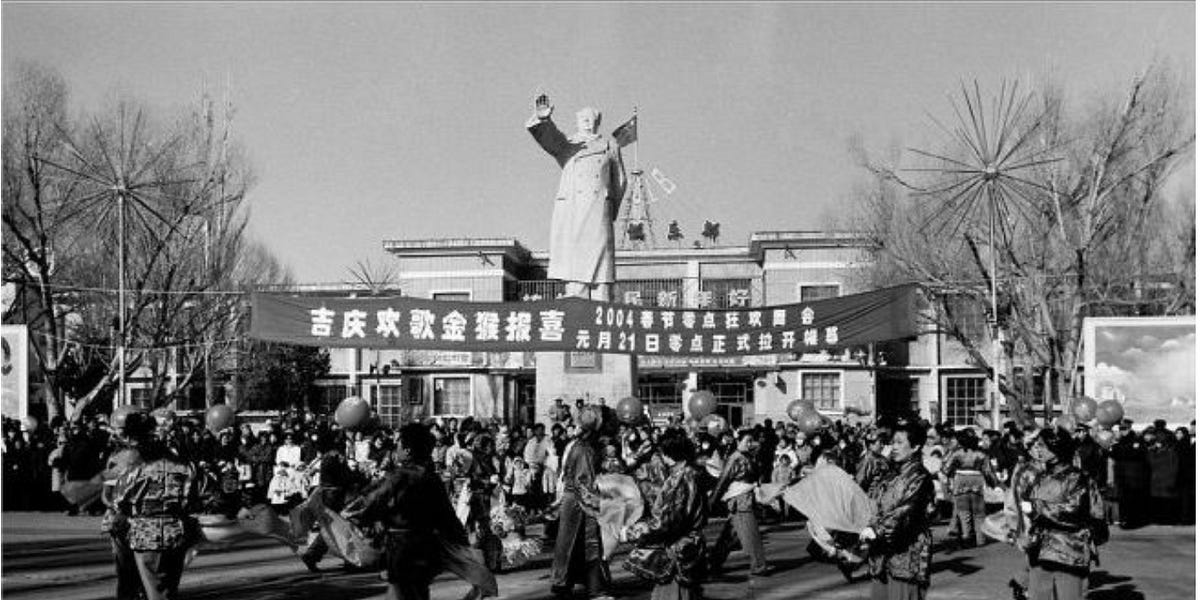
VINCENT Error 404: Life in a Secret Chinese Nuclear City That Was Never on the Map A memoir of growing up in China’s classified atomic bomb base in the Gobi…
Sources
- Growing up in "404 Not Found": China's nuclear city in the Gobi Desert
- Error 404: Life in a Secret Chinese Nuclear City That Was …
- 404: The City Left Behind by China's Nuclear Ambitions
- City 404 – The Nuclear City That Doesn't Exist
Related posts
- Seville hotel swaps blue skies for a classic Windows Blue Screen of Death
- How Expired SSL Certificates Can Halt Systems: Lessons from the Bazel Outage
- Rainbow Six Siege outages: accounts flooded with credits and random bans