
TL;DR
GTMfund argues that in the AI-driven startup landscape, distribution—not product alone—is the decisive advantage. Partner and COO Paul Irving told TechCrunch’s Build Mode that founders should craft bespoke distribution strategies, use AI to sharpen targeting, and rely on curated advisory networks rather than default hiring and ad-heavy approaches.
What happened
In the season finale of TechCrunch’s Build Mode, Paul Irving, partner and COO at GTMfund, outlined a revised go-to-market approach for startups navigating the AI era. Irving said conventional, one-size-fits-all GTM models borrowed from legacy enterprise SaaS are losing effectiveness as product development and innovation cycles accelerate. Instead of competing primarily on product, he recommends that startups differentiate through creative, data-driven distribution strategies tailored to their specific customer pathways. GTMfund encourages early-stage teams to prioritize targeted channels, avoid spreading limited resources across every option, and hire with a fresh mindset rather than following standard templates. The firm supports portfolio companies with a network of operators and intentionally curated adviser pairings intended to produce actionable value. Irving offered concrete examples — including startups that activated niche community channels such as selective Facebook groups — to show how small teams can efficiently acquire customers without heavy ad spending or a full sales force.
Why it matters
- Distribution may become the enduring competitive edge as product features become easier to replicate.
- Faster innovation cycles mean startups must find quicker, more precise customer paths rather than long sales buildouts.
- Targeted, creative channels can deliver early customers more cost-effectively than large ad budgets or immediate large sales teams.
- Curated adviser networks can compensate for founders’ experience gaps and accelerate practical go-to-market learning.
Key facts
- Paul Irving is partner and COO at GTMfund and was the guest on TechCrunch’s Build Mode season finale.
- GTMfund’s central thesis: distribution is the final moat in the AI era.
- The firm argues traditional one-size-fits-all GTM playbooks from enterprise SaaS days are less relevant in 2025.
- Irving says innovation cycles have compressed — outcomes that once took years can now happen in months.
- GTMfund advises portfolio companies to focus on differentiating distribution strategies rather than solely on product features.
- AI is presented as a tool for small teams to adopt a data-driven approach and discover direct customer channels.
- Investors at GTMfund prefer creative, low-cost customer-acquisition tactics over startups that spent large shares of budget on paid ads or hired full sales teams early.
- GTMfund provides a network of operators and arranges bespoke adviser pairings to ensure mutual value in introductions.
- Irving cited an example of a startup that became an active participant in specific Facebook groups, turning a modest community into a meaningful acquisition channel.
What to watch next
- Whether more early-stage investors adopt distribution-focused criteria for evaluations — not confirmed in the source.
- How broadly startups replicate GTMfund’s approach and whether it changes fundraising or growth benchmarks industry-wide — not confirmed in the source.
- Which measurable KPIs investors will prioritize if distribution becomes the primary moat — not confirmed in the source.
Quick glossary
- Distribution: The methods and channels a company uses to reach and acquire customers, including organic, paid, and community-driven tactics.
- Go-to-market (GTM) playbook: A repeatable plan that outlines how a company will sell its product to target customers, including strategy, channels, and hiring.
- Ideal Customer Profile (ICP): A description of the type of customer that is the best fit for a product, based on attributes like industry, size, and pain points.
- Moat: A sustainable competitive advantage that helps a company protect market share and profitability over time.
- AI era: The current period in which artificial intelligence tools and models broadly influence product development, operations, and market dynamics.
Reader FAQ
What is GTMfund’s main argument about startups and go-to-market strategy?
GTMfund contends that distribution will be the primary moat in the AI era and that startups should prioritize differentiated distribution over product-only competition.
Who presented this view and where?
Paul Irving, partner and COO at GTMfund, discussed the thesis on TechCrunch’s Build Mode season finale.
How does GTMfund help its portfolio companies?
The firm provides access to a network of operators and arranges bespoke adviser pairings to create valuable, targeted support.
Does GTMfund want startups to invest heavily in paid ads or hire full sales teams early?
According to Irving, GTMfund is not looking for startups that have spent a large portion of budget on paid ads or that have already built a full sales team.
Will this approach change industry fundraising norms?
not confirmed in the source
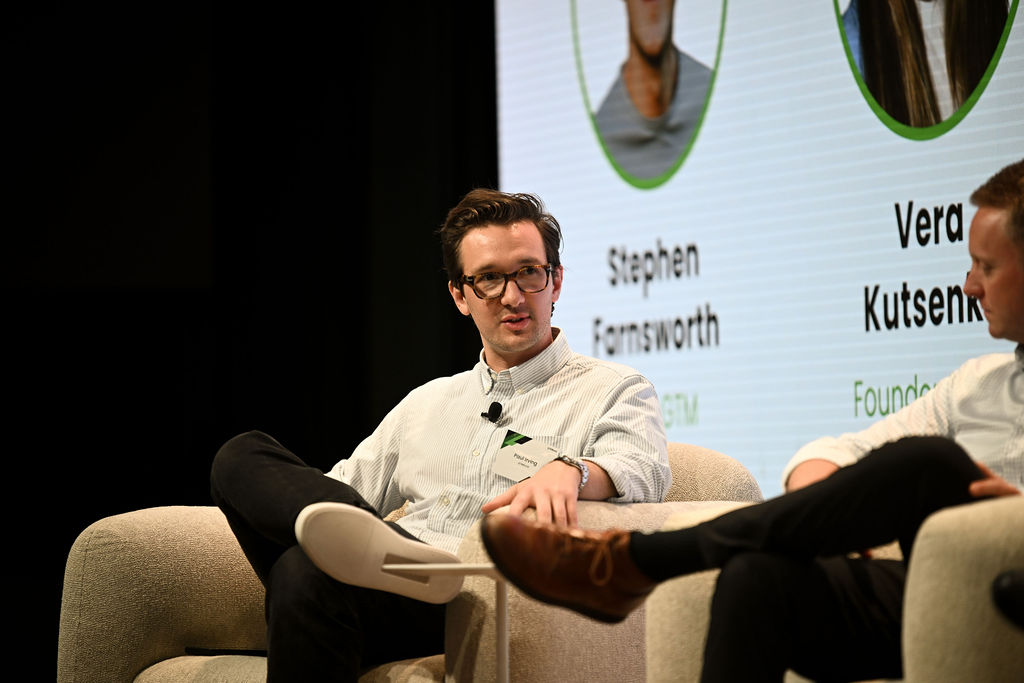
Building software products has never been easier, so why are so many well-funded startups failing to take off no matter how good their product is? In this season finale episode of Build…
Sources
- GTMfund has rewritten the distribution playbook for the AI era
- The GTM Moat Series: Distribution is the Final Moat
- 2025 Go-To-Market Playbook for AI Startups | Insights
- 4.5 Years of Building GTMfund: From Conviction to …
Related posts
- AI Devices Are Coming — Will Your Favorite Apps Be Part of Them?
- NVIDIA Introduces Rubin: Six-Chip Platform for Next-Gen AI Supercomputers
- Called a ‘terrorist sympathizer,’ Replit founder’s AI startup valued $3B