
TL;DR
Researchers have shifted from treating ultrasonic cavitation as an unwanted side effect to exploring it as a potential tool against difficult tumors. Work that began at the University of Michigan in 2001 is highlighted as part of this change in approach, though full clinical details are not available in the source.
What happened
Medical practitioners once regarded the tiny gas bubbles produced during ultrasound—known as cavitation—as a problematic and largely uncontrollable phenomenon. That view began to change when a team at the University of Michigan, starting in 2001, started investigating whether cavitation could be deliberately used to destroy targeted tissue. The source frames this line of inquiry within a broader trend: researchers and clinicians are reconsidering ultrasonic effects once classed as nuisances and testing whether those effects can be directed against disease. The article title indicates application to some of the most treatment-resistant cancers, but the excerpt does not provide technical details, outcomes, or whether these methods have reached routine clinical use. Additional specifics about devices, trial results, patient selection, and regulatory status are not confirmed in the source.
Why it matters
- Represents a conceptual shift from viewing cavitation as a hazard to treating it as a therapeutic mechanism.
- Could open a new pathway for noninvasive or minimally invasive interventions against hard-to-treat tumors (not confirmed in the source).
- May expand the range of tools oncologists can consider when traditional treatments fail (not confirmed in the source).
- Highlights ongoing research translating physical phenomena in ultrasound into clinical applications.
Key facts
- Cavitation is the formation and collapse of tiny gas bubbles that occurs when pressure changes during ultrasound exposure.
- Historically, cavitation has been treated as an undesirable and difficult-to-control side effect in medical ultrasound procedures.
- In 2001, researchers at the University of Michigan began studying ways to harness cavitation for destructive applications in biological tissue.
- The published piece frames these developments as part of efforts to target some of cancer’s toughest tumors, according to the article title.
- The source is an IEEE Spectrum article published on 2025-12-22.
- The excerpt does not include procedural details, clinical trial data, safety outcomes, or regulatory status—those items are not confirmed in the source.
- Full text of the article was not provided, so the scope of the research and its current stage are not specified in the excerpt.
What to watch next
- Publication of clinical trial results or peer-reviewed studies demonstrating efficacy and safety (not confirmed in the source).
- Regulatory decisions or device approvals relevant to cavitation-based ultrasound therapies (not confirmed in the source).
- Reports on comparative outcomes against existing standard-of-care treatments for difficult tumors (not confirmed in the source).
Quick glossary
- Cavitation: The formation and violent collapse of gas-filled bubbles in a fluid when local pressure drops and subsequently rises.
- Ultrasound: Sound waves at frequencies above human hearing, used in medicine for imaging and, increasingly, for therapeutic applications.
- Tumor ablation: A medical procedure that destroys tumor tissue, which can be achieved by heat, cold, chemicals, radiation, or mechanical means.
- Noninvasive therapy: A treatment approach that does not require incisions into the body or removal of tissue, often aimed at reducing recovery time and risk.
Reader FAQ
When did researchers start exploring cavitation as a treatment tool?
According to the source excerpt, investigators at the University of Michigan began that work in 2001.
Has this ultrasound cavitation approach become a standard cancer treatment?
Not confirmed in the source.
How does cavitation destroy tissue?
Not confirmed in the source.
Are there published clinical results or approvals?
Not confirmed in the source.
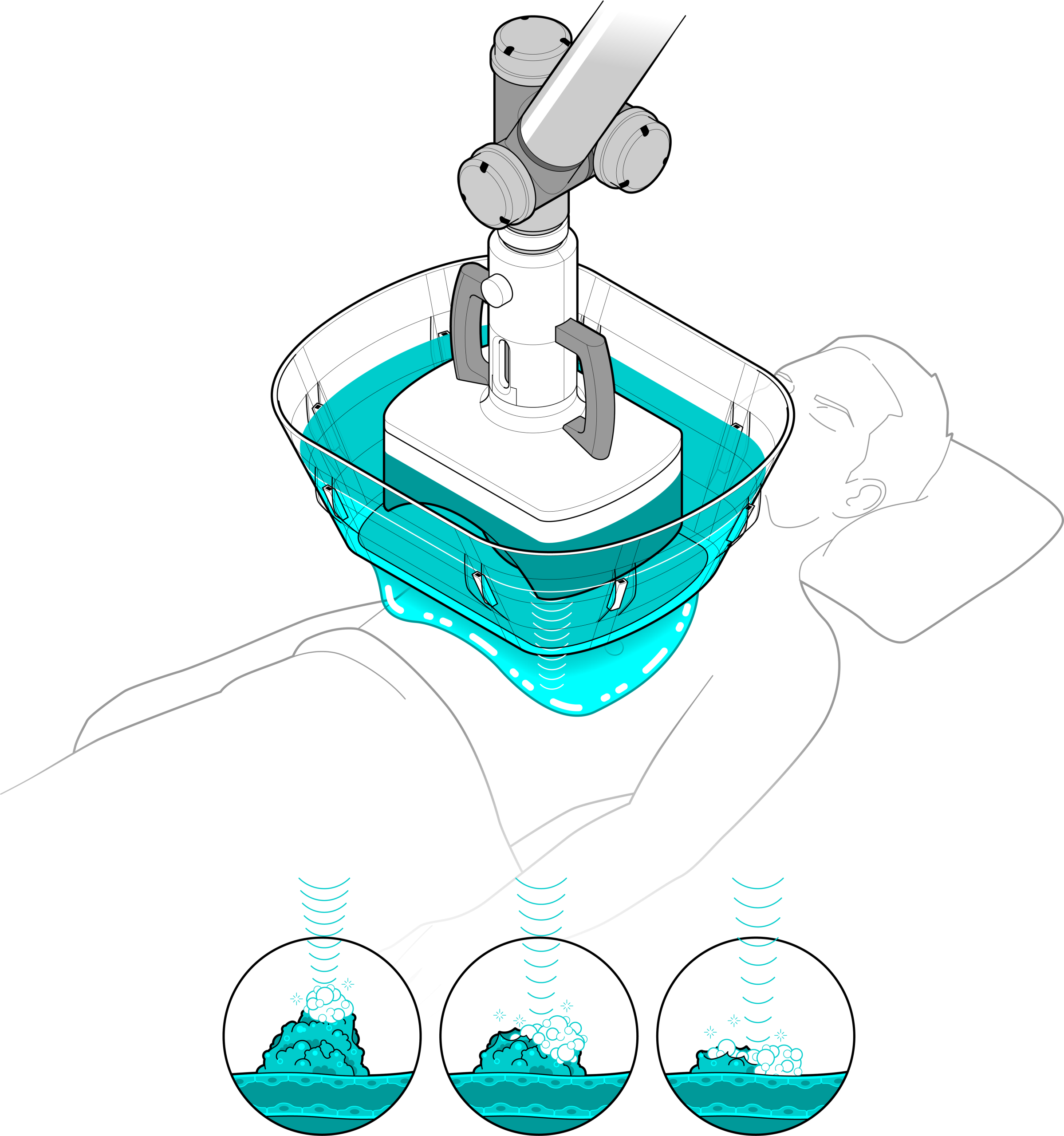
For many years, doctors and technicians who performed medical ultrasound procedures viewed bubbles with wary concern. The phenomenon of cavitation—the formation and collapse of tiny gas bubbles due to changes…
Sources
- Ultrasound Treatment Takes on Cancer’s Toughest Tumors
- Scientists use ultrasound to soften and treat cancer tumors …
- Tricking Tumors into Marking Themselves for Destruction
- The promise of soundwaves in treating cancer
Related posts
- Seven Major Telecommunications Developments Defining 2025 Networks
- IEEE STEM Summit Aims to Equip Preuniversity Educators Worldwide
- Top Transportation Tech Stories of 2025: EVs, Charging, Automation, Aviation