
TL;DR
An 18-year-old researcher, Matteo Paz, trained a machine learning model to analyze retired NEOWISE infrared data and flagged roughly 1.5 million candidate variable astronomical objects. His work, published in The Astronomical Journal, earned him first prize in the 2025 Regeneron Science Talent Search.
What happened
Matteo Paz, an 18-year-old from Pasadena, developed an artificial intelligence model to search for changes in infrared detections collected by NASA’s NEOWISE telescope. Working initially through Caltech’s Planet Finder Academy in summer 2022 and continuing under the mentorship of astronomer Davy Kirkpatrick at Caltech’s IPAC, Paz trained the model on a database that had grown to about 200 billion detection rows. The algorithm scanned that understudied archive for small temporal variations in infrared emission, which can signal variable phenomena such as supernovas, binary interactions or accreting black holes. The system produced a catalog called VarWISE that lists approximately 1.5 million candidate variable objects. Caltech researchers are already using the catalog in follow-up work, and the project earned Paz the $250,000 first-place Regeneron Science Talent Search award.
Why it matters
- Demonstrates how machine learning can extract new scientific value from legacy survey data that was previously too large to examine comprehensively.
- Expands the list of candidate variable objects astronomers can prioritize for follow-up observations and classification.
- Provides a reusable approach for mining temporal signals in other large time-series datasets.
- Highlights the scientific contributions that can come from early-career researchers working with institutional mentors and archival data.
Key facts
- Researcher: Matteo Paz, 18 years old, Pasadena, California.
- Prize: First place in the 2025 Regeneron Science Talent Search with a $250,000 award.
- Dataset size: roughly 200 billion detection rows from the retired NEOWISE infrared telescope.
- Result: about 1.5 million potential new variable astronomical objects identified and compiled into VarWISE.
- Mentor and collaborator: Davy Kirkpatrick, astronomer and senior scientist at Caltech’s Infrared Processing and Analysis Center (IPAC).
- Project origin: Paz began the work while attending Caltech’s Planet Finder Academy in summer 2022 and continued afterward.
- Publication: study detailing the work appeared in The Astronomical Journal in November, sole authored by Paz.
- NEOWISE mission: launched in 2009 to search for near-Earth asteroids and comets; also recorded infrared variability used in this study.
- Candidate types mentioned: includes objects such as supernovas and black holes, according to the source.
What to watch next
- Caltech follow-up studies making use of the VarWISE catalog are already underway (confirmed in the source).
- Broader astronomical follow-up to verify and classify the 1.5 million candidates is expected (source indicates these candidates “will be widely studied”).
- Potential adaptation of the A.I. approach to other temporal datasets (Paz suggested applicability to other time-series formats).
Quick glossary
- NEOWISE: A NASA infrared telescope mission that surveyed the sky for near-Earth asteroids, comets and other infrared-emitting objects.
- Variable object: An astronomical source whose brightness or emission changes over time, including phenomena like pulsating stars, eclipsing binaries, supernovas and accreting compact objects.
- Infrared telescope: A telescope that observes light at infrared wavelengths, useful for detecting heat and penetrating dust that blocks visible light.
- Machine learning: A set of computational methods that allow algorithms to identify patterns in data and make classifications or predictions based on those patterns.
- Catalog (astronomy): A structured list of astronomical sources and their measured properties used by researchers for analysis and follow-up.
Reader FAQ
Who conducted the research?
Matteo Paz, an 18-year-old high school student from Pasadena, authored the study and developed the A.I. model.
What data did the model analyze?
The model processed about 200 billion detection rows from NASA's NEOWISE infrared telescope archive.
How many candidate objects were identified?
Approximately 1.5 million potential variable astronomical objects were flagged and compiled into the VarWISE catalog.
Will the candidates be confirmed as real astronomical objects?
Not confirmed in the source.
Was the work peer-reviewed or published?
Yes; the study was published in The Astronomical Journal in November (as reported in the source).
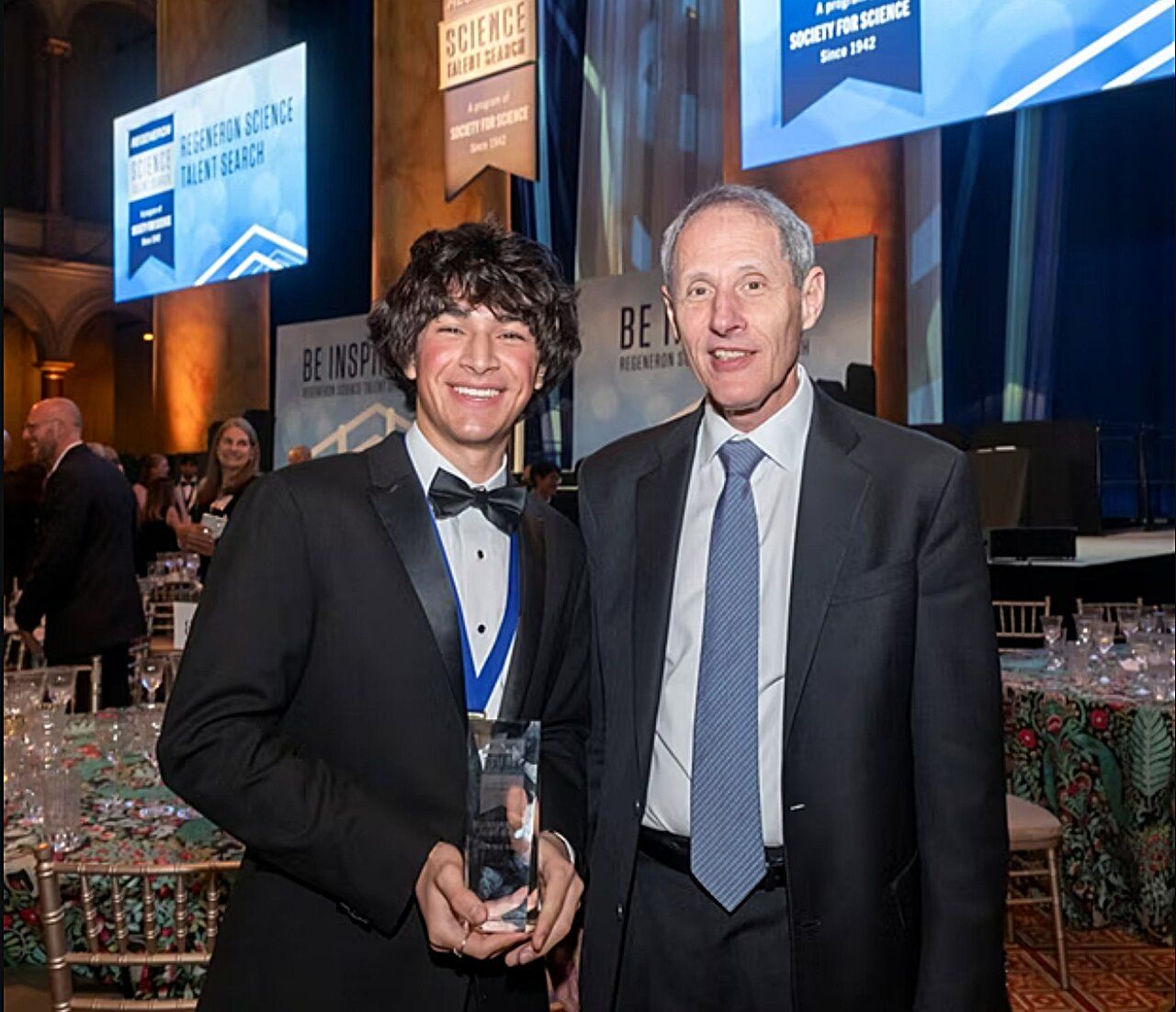
High School Student Discovers 1.5 Million Potential New Astronomical Objects by Developing an A.I. Algorithm The 18-year-old won $250,000 for training a machine learning model to analyze understudied data from…
Sources
- High School Student Discovers 1.5M Potential New Astronomical Objects
- Exploring Space with AI
- US teen's AI identifies 1.5 million previously unknown …
- US high school student's AI identifies 1.5 million previously …
Related posts
- How Postmodernism Transformed Literature and Displaced Moral Narrative
- Unix “find” expressions compiled to bytecode — compiling find’s expression language
- LearnixOS: Step-by-step guide to building a POSIX OS in Rust