
TL;DR
Mouse studies and a recent analysis traced links between a father’s diet, exercise and other experiences and patterns of RNA carried in sperm. Those sperm RNAs appear able to alter gene activity in embryos, but the molecular mechanisms and the extent of effects in humans remain unresolved.
What happened
Over the past two decades, multiple laboratories have produced experiments—mostly in mice—showing that a father’s environmental exposures and behaviors (diet, exercise, stress, nicotine) can alter molecular content in sperm and influence offspring traits. Researchers have focused on RNA molecules found in sperm, including microRNAs and longer noncoding RNAs, as likely carriers of such information. A comprehensive November 2025 paper in Cell Metabolism followed how an exercise regimen in male mice changed levels of specific sperm microRNAs that target genes important for mitochondrial function and metabolic control in embryos; similar RNAs were also found at higher levels in the sperm of physically active human men. Despite accumulating evidence that sperm RNAs can modify embryonic gene expression and affect progeny metabolism or behavior, investigators emphasize that the biochemical steps linking paternal experience to stable developmental outcomes are not yet understood and are actively being studied.
Why it matters
- Challenges the traditional view that heredity is carried only by DNA; paternal experiences may contribute non‑genetic information to offspring.
- Suggests paternal lifestyle factors before conception could influence offspring metabolism, endurance and behavior through epigenetic routes.
- If validated and mechanistically explained, it may reshape research and clinical questions about preconception health for fathers as well as mothers.
- Highlights gaps in basic molecular understanding that must be filled before drawing conclusions about human health or advising behavior change.
Key facts
- Many experimental results linking paternal diet, stress, exercise or nicotine exposure to offspring traits come from mouse models.
- Sperm carry short-lived RNA molecules—such as microRNAs and long noncoding RNAs—that reflect gene activity and can persist longer than once thought.
- A November 2025 Cell Metabolism study traced exercise-associated changes in sperm microRNAs that target genes tied to mitochondrial function in embryos.
- That study also reported similar overexpression of many of those RNAs in sperm samples from well‑exercised human men.
- Epigenetics refers to heritable changes in gene expression that do not alter DNA sequence, and RNAs are one class of epigenetic regulators.
- Sperm are orders of magnitude smaller than eggs and contribute far less cytoplasm and organelles to a zygote, making mechanistic explanations of effect more challenging.
- Researchers acknowledged clear evidence that environments can regulate sperm RNAs and that these molecules can influence embryonic gene expression, but detailed mechanisms remain unclear.
- Some paternal effects observed in animal studies have been described as potentially adaptive—priming offspring for environments similar to the parents’—but this interpretation requires further proof.
- Experimental work tracing how lived experience becomes molecular signals in sperm and how those signals act after fertilization is ongoing.
What to watch next
- Laboratory efforts to map the molecular steps by which paternal experience alters sperm RNA and how those RNAs act in the embryo.
- Further replication of exercise‑related sperm RNA signatures and functional effects in human studies (not confirmed in the source).
- Studies testing whether sperm RNA–mediated changes reliably produce adaptive benefits across different environments and generations.
Quick glossary
- Epigenetics: Biological processes that change gene activity without altering the underlying DNA sequence, often by modifying DNA, chromatin, or associated molecules.
- MicroRNA (miRNA): Short noncoding RNA molecules that can bind other RNAs to repress their translation or promote their degradation, influencing gene expression.
- Long noncoding RNA (lncRNA): RNA molecules longer than typical small RNAs that do not code for proteins but can regulate gene expression through interactions with DNA, proteins or other RNAs.
- Sperm: Male gametes that deliver paternal DNA—and, as recent studies suggest, additional RNA molecules—to an egg at fertilization.
- Zygote: The single cell formed immediately after an egg is fertilized by a sperm; the developmental starting point for an embryo.
Reader FAQ
Can a father’s exercise or diet change his children?
Animal experiments show paternal diet and exercise can alter sperm RNA and influence offspring traits; a recent study found similar RNA changes in sperm from exercised men, but causal effects in humans are not established.
Does this mean DNA is changed?
No. The findings relate to epigenetic regulation—changes in gene activity and expression—not alterations to the DNA sequence itself.
Do sperm RNAs last long enough to affect embryos?
Some RNA species are more stable than once believed and can persist for extended periods; researchers argue certain sperm RNAs can survive long enough to influence early embryonic gene regulation.
Are these findings proven in people?
Not confirmed in the source.
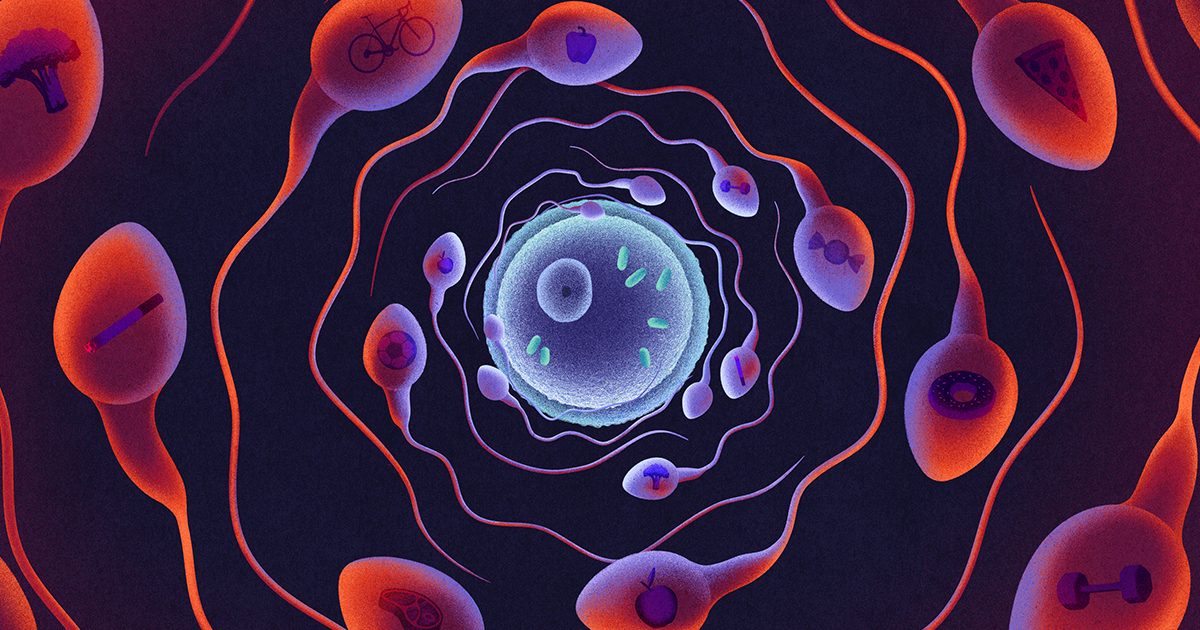
Home How Dad’s Fitness May Be Packaged and Passed Down in Sperm RNA EPIGENETICS How Dad’s Fitness May Be Packaged and Passed Down in Sperm RNA By IVAN AMATO December…
Sources
- How a father’s choices may be packaged and passed down in sperm RNA
- Well-exercised male mice appear to pass fitness to their …
- Paternal Exercise Improves Glucose Metabolism in Adult …
- Paternal exercise enhances offspring endurance through …
Related posts
- What 4M Hacker News Posts Reveal About How Stories Go Viral and Timing
- Dad’s Fitness Encoded in Sperm RNA Could Influence Offspring Health
- Replacing JavaScript with Just HTML: Using Native HTML/CSS Patterns