
TL;DR
The Nintendo Power Glove was an ambitious but flawed late-1980s controller that let players use their body rather than only thumbs. Though technically weak and widely disliked, it sold briefly, owed its branding to a pivotal pitch, and helped seed ideas that later surfaced in Nintendo products and the broader VR landscape.
What happened
The Power Glove arrived in the late 1980s as one of the first mainstream attempts to control games with hand and arm movements instead of traditional buttons. According to a Version History episode, the device was impressive in concept but performed poorly in practice; it was ambitious and important historically, yet simply “not good.” The gadget’s origins were not strictly as a Nintendo in-house project — it began as a research curiosity, was turned into a toy, and only gained Nintendo branding after a consequential pitch meeting. A strong marketing push and the cultural sense that such interfaces felt like the future helped it become a modest, short-lived commercial success. The Version History hosts — David Pierce joined by Chris Grant and Stephen Totilo — trace the Glove’s antecedents, its many technical shortcomings, and the ways its ideas reverberated into later Nintendo hardware and possibly the development of the VR industry. The hosts also attempt to set up and play a decades-old unit, an effort that does not go smoothly.
Why it matters
- It was an early mainstream experiment in body-based game control rather than traditional button inputs.
- Its existence and marketing helped normalize the idea that immersive, physical interfaces were the future.
- The Power Glove’s failures and lessons influenced later Nintendo hardware developments.
- The device is often cited as an early touchpoint in the broader evolution of virtual reality technology.
Key facts
- The Power Glove debuted in the late 1980s.
- Contemporaries and historians consider the device ambitious but technically poor in practice.
- It originated as a research project that was repurposed into a consumer toy.
- Nintendo’s name appeared on the product after a decisive pitch meeting; it was not purely a Nintendo-built product.
- A notable marketing campaign helped drive a brief commercial success despite the product’s flaws.
- Commentators draw lines from the Power Glove to later Nintendo products and to the VR industry more broadly.
- The story and context of the Power Glove are examined on a Version History podcast episode.
- Version History hosts David Pierce, Chris Grant, and Stephen Totilo discuss the Glove and attempt to set up and play an old unit, which goes poorly.
- The episode links to several additional resources and retrospectives for listeners who want more background.
- The Power Glove’s cultural role outlasted its commercial lifecycle, largely through its visibility and marketing.
What to watch next
- Listen to the Version History episode that explores the Power Glove’s origins, flaws, and legacy.
- Subscribe to the Version History podcast feed or The Verge’s YouTube channel to get the episode as soon as it drops.
- Whether the Power Glove directly shaped specific modern VR products is not confirmed in the source.
Quick glossary
- Power Glove: A late-1980s game controller that attempted to use hand and arm movements to control video games instead of relying solely on button inputs.
- Virtual reality (VR): A technology that creates immersive, computer-generated environments which users can perceive and interact with, often using specialized hardware.
- Controller: A hardware device used to send input to a video game or computing system, ranging from gamepads to motion-sensing peripherals.
- Version History: A podcast and show that examines the history of technology and older gadgets through discussion and retrospection.
Reader FAQ
Was the Power Glove a good controller?
No. The source describes it as ambitious and historically important but plainly not good in performance and usability.
Did Nintendo actually make the Power Glove?
Not exactly. The device began as a research project turned toy and only carried Nintendo’s name after a pivotal pitch meeting.
When did the Power Glove appear?
It showed up in the late 1980s.
Did the Power Glove lead to modern VR?
Commentators draw a line from the Glove to later Nintendo products and possibly to the wider VR industry, but specific causal links to particular modern VR products are not confirmed in the source.
Where can I learn more about the Power Glove story?
The Version History podcast episode discussed in the source covers the device, and the article links to multiple retrospectives and resources for further reading.
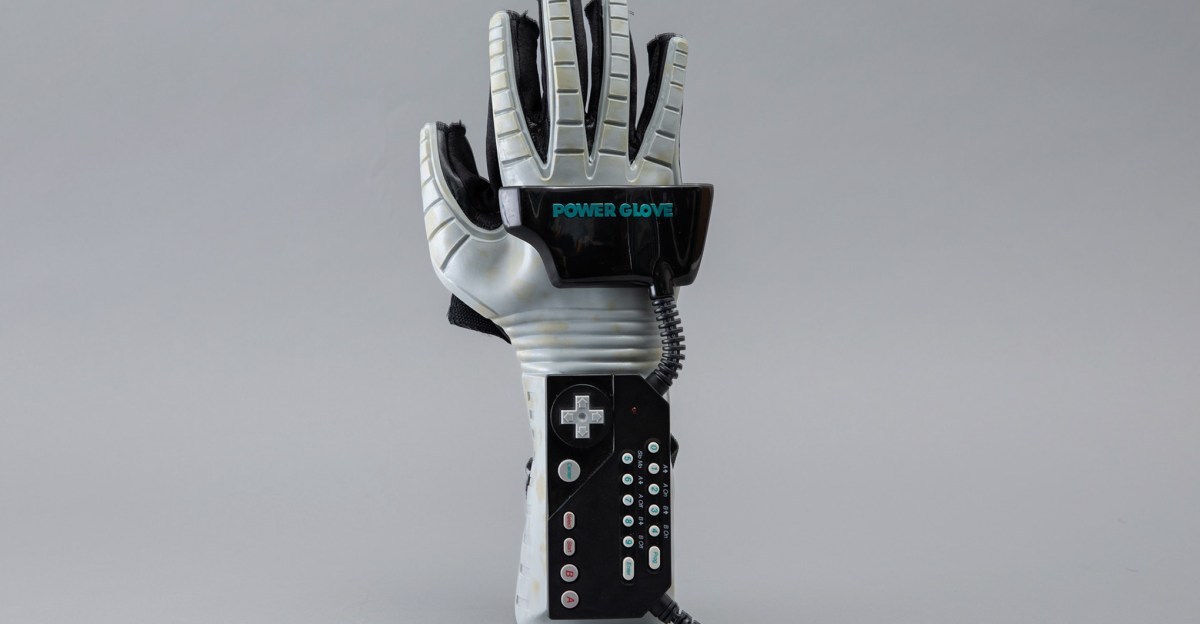
PODCASTS GADGETS GAMING The terrible Nintendo controller that helped make VR happen On Version History: the story of the crappy controller nobody liked but everybody wanted. by David Pierce Dec…
Sources
- The terrible Nintendo controller that helped make VR happen
- Nintendo Power Glove for VR
- The promise of the Nintendo Power Glove
- Success Born of Failure: The Nintendo Power Glove
Related posts
- Ask HN: Readers Share Their Favorite Podcasts of 2025 — Picks and Notes
- Global memory chip shortage reshapes smartphone and PC markets in 2026
- Why the Google Pixel Watch 4 made me enjoy wearing smartwatches again