
TL;DR
French insect-protein company Ÿnsect has been placed into judicial liquidation for insolvency after raising more than $600 million. The company struggled with low revenue, costly industrial bets — notably a massive 'giga-factory' — strategic drift across markets and heavy losses that outpaced funding.
What happened
Ÿnsect, once a high-profile French insect-protein startup, was recently placed into judicial liquidation for insolvency after amassing over $600 million in financing. The company pivoted between producing protein for animal feed, pet food and, via the 2021 acquisition of Protifarm, human food — without settling on a clear, revenue-generating focus. Reported revenue for its main entity peaked at €17.8 million in 2021, a figure that included significant internal transfers, while net losses reached €79.7 million in 2023. Ÿnsect invested hundreds of millions in a large-scale production site dubbed Ÿnfarm in northern France and later shifted emphasis toward pet food, but that refocus arrived after heavy capital had already been deployed. Leadership changes followed, with Shankar Krishnamoorthy taking over as CEO from founder Antoine Hubert. The company also closed the Protifarm production plant and reduced headcount before the insolvency filing. Investors included impact and public backers such as Astanor Ventures, Bpifrance and Robert Downey Jr.’s FootPrint Coalition.
Why it matters
- Shows the risks of scaling heavy industrial capacity before proving unit economics in emerging foodtech markets.
- Highlights a funding pattern in Europe: strong backing for ambitious pilots but weaker support for industrialization and factory scaling.
- Underscores the challenge of selling sustainability in commodity-driven markets like animal feed, where price often outweighs environmental claims.
- Signals that failures of prominent startups don’t automatically invalidate an entire sector; some competitors are pursuing smaller, incremental scaling strategies.
Key facts
- Ÿnsect raised more than $600 million from a mix of private and public investors.
- The company was placed into judicial liquidation for insolvency.
- Revenue for Ÿnsect’s main entity peaked at €17.8 million in 2021, a figure that included internal transfers between subsidiaries.
- Reported net loss for 2023 was €79.7 million.
- In 2021 Ÿnsect acquired Dutch mealworm company Protifarm, adding human-food ambitions to its portfolio.
- Ÿnfarm, a large industrial production facility in northern France, consumed hundreds of millions in funding.
- The company pivoted toward pet food and higher-margin segments in 2023, but the shift was too late to reverse losses.
- Leadership changes saw Shankar Krishnamoorthy replace founder Antoine Hubert as CEO amid cost cutting and plant closures.
- Investors included impact-focused funds and public bodies, with names cited such as Astanor Ventures, Bpifrance and Robert Downey Jr.’s FootPrint Coalition.
What to watch next
- The outcome of liquidation proceedings and whether Ÿnsect’s assets (including Ÿnfarm) attract buyers — not confirmed in the source.
- How competitors that opted for smaller, incremental scaling—such as Innovafeed—perform in the coming quarters; Innovafeed was reported as holding up better.
- Whether policy or investor responses in France and Europe change to better support industrial-scale deep-tech projects (Start Industrie was co-founded by Antoine Hubert, but effects are not confirmed in the source).
Quick glossary
- Judicial liquidation: A court-ordered process that winds up a company’s operations and sells assets to pay creditors because the firm is insolvent.
- Insect protein: Protein derived from farmed insects, used in animal feed, pet food and, in some cases, human food products.
- Giga-factory: A very large, capital-intensive industrial production facility designed for high-volume manufacturing.
- Unit economics: The direct revenues and costs associated with a single business unit, product, or customer used to assess profitability at scale.
Reader FAQ
Why did Ÿnsect fail?
The company combined weak revenue growth and large losses with heavy capital spending on a large-scale factory and mixed market targets (animal feed, pet food, human food), leaving unit economics unreconciled before expansion.
Did Robert Downey Jr. back Ÿnsect?
Robert Downey Jr. promoted the company publicly and his FootPrint Coalition is listed among investors in the company.
Does this mean insect farming is a bad idea?
Not necessarily; the article notes competitors that started smaller and scaled incrementally are faring better, so execution and economics — not the concept itself — were central to Ÿnsect’s troubles.
What will happen to Ÿnfarm and other assets?
not confirmed in the source
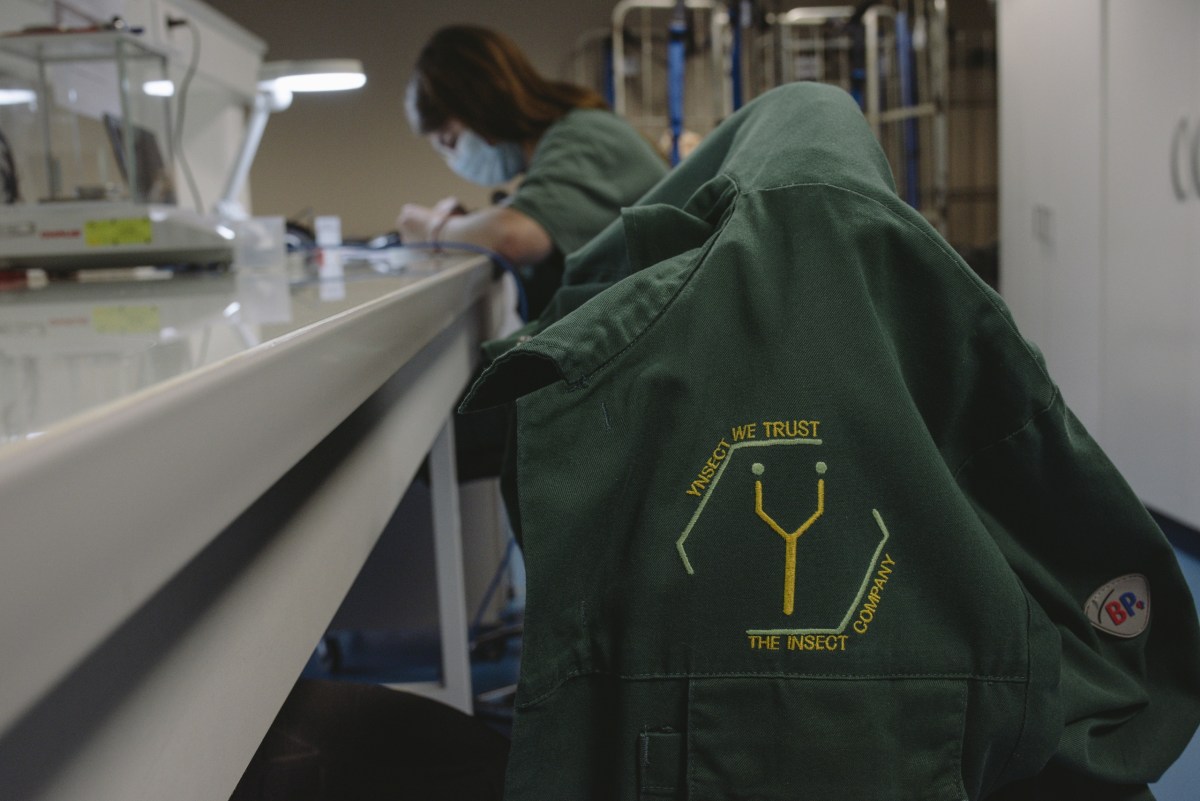
French startup Ÿnsect shot into the spotlight when “Iron Man” star Robert Downey Jr. touted its merits on the Late Show during Super Bowl weekend 2021. Now, nearly four years…
Sources
- How reality crushed Ÿnsect, the French startup that had raised over $600M for insect farming
- Tech.eu – Transistor
- Topic: CES
Related posts
- Aqara FP300 Presence Multi-Sensor Adds Thread, Motion, and Room Sensors
- Rodeo aims to simplify planning with friends you already have using AI
- What’s Ahead for Startups and Venture Capital in 2026, Investors Weigh In