
TL;DR
Spaced repetition, a longstanding cognitive technique, improves long-term retention by scheduling reviews with increasing intervals rather than massed cramming. Research and user reports show it scales to very large knowledge sets and is widely used in domains like language learning and medical study, with software tools (SRS) automating schedules and employing active recall.
What happened
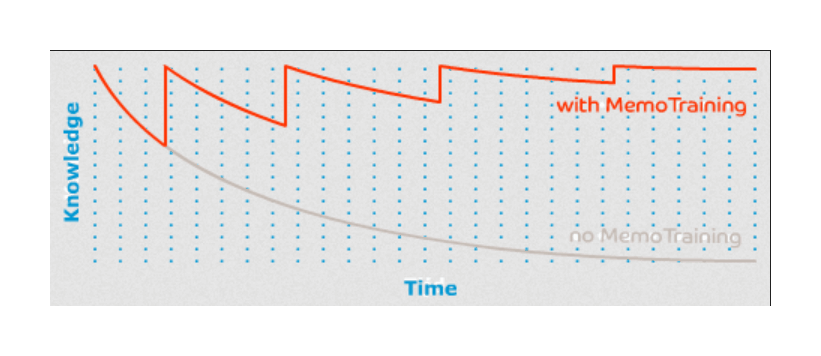
The source is a literature review and practical guide to spaced repetition and related phenomena such as the testing effect. It summarizes decades of cognitive research showing that distributing study attempts over days, weeks and months produces much stronger long-term memories than massed practice (cramming). The review notes active recall is superior to passive exposure and cites evidence that spaced schedules enhance neurobiological processes linked to long-term potentiation in animal models, though the precise mechanisms remain unresolved. It also surveys software tools that implement spaced-repetition scheduling (SRS), reports real-world scaling — from thousands to hundreds of thousands of flashcards — and gives usage tips for workloads, when to review, and what to add. Examples include traders and quiz champions who used spaced learning and the prevalence of SRS among medical students and language learners facing large factual burdens.
Why it matters
- Greater retention: spacing delivers substantially longer-lasting memory than cramming for the same number of study attempts.
- Scalability: because it uses gradual, scheduled reviews, spacing can handle very large collections of items that would quickly decay under massed study.
- Efficiency: SRS automates scheduling so learners spend review time on items most in need of reinforcement, improving study productivity.
- Relevance for training-heavy fields: domains that require memorizing many facts (medical education, foreign languages) benefit especially from spaced approaches.
Key facts
- Spaced repetition is based on the spacing effect: distributing study attempts across longer intervals improves retention versus massed practice.
- Active recall (testing yourself) is more effective than passive exposure for forming durable memories.
- Software known as spaced-repetition systems (SRS) schedules reviews at increasing intervals as items are learned.
- Spaced learning can scale to thousands or even hundreds of thousands of items; users report decks in the tens of thousands and larger.
- Medical students are a major user group of SRS due to the volume of factual material in medical training.
- Historical and anecdotal examples include Edward O. Thorp and quiz show champions who used spaced methods to memorize large corpora.
- Neurobiological studies in animal models show differences between massed and spaced practice, with spacing enhancing long-term potentiation, but full mechanistic explanations are still open questions.
- Cramming often delivers strong short-term performance, which helps explain its persistence despite poorer long-term retention.
- Learners commonly experience an illusion that massed study is more effective shortly after studying, even when spaced practice yields better later recall.
What to watch next
- Further neuroscience work clarifying the biological mechanisms that make spacing effective (some animal-model evidence exists, but deeper explanations remain open).
- Adoption trends of SRS in professional and higher-education settings, especially in medicine and language programs.
- Mainstream integration of spaced repetition into standard school curricula — not confirmed in the source.
Quick glossary
- Spacing effect: A cognitive phenomenon where spreading study attempts over time produces better long-term retention than massed study sessions.
- Spaced-repetition system (SRS): Software that schedules reviews of information at increasing intervals to optimize long-term memory retention.
- Testing effect: The finding that actively retrieving information (testing) strengthens memory more than passive review.
- Forgetting curve: A model describing how memory strength declines over time without review; spacing aims to counteract this decay.
- Long-term potentiation (LTP): A neurophysiological process associated with strengthening synaptic connections and long-term memory formation; some studies link LTP enhancement to spaced training.
Reader FAQ
What is spaced repetition?
A study method that schedules reviews of material across increasing intervals instead of massing reviews close together, improving long-term retention.
Is spaced repetition better than cramming?
Yes for long-term memory: spacing produces more durable retention, while cramming often gives superior immediate recall but rapid forgetting later.
Which areas benefit most from spaced repetition?
Foreign language learning and medical studies are highlighted as especially well-suited because they require retaining large volumes of factual material.
Do we fully understand why spacing works biologically?
Not completely; animal studies show neurochemical differences and enhanced long-term potentiation with spaced practice, but the precise mechanisms remain unresolved.
Spaced Repetition for Efficient Learning Haskell, nootropic, psychedelics, spaced repetition Efficient memorization using the spacing effect: literature review of widespread applicability, tips on use & what it’s good for. 2009-03-11…
Sources
- Spaced Repetition for Efficient Learning
- Spacing Repetitions Over Long Timescales: A Review and a …
- Benefits of spaced learning are predicted by the re- …
- Spaced repetition and the 2357 method
Related posts
- Nabokov’s blunt guide for foreigners attempting to learn Russian
- A century before e-scooters: London rode petrol-powered Autopeds in 1917–1922
- Scaling Enterprise Permission Systems for SaaS: Patterns and Trade-offs