
TL;DR
The Learning Company began in the early 1980s as a small group of educators and engineers creating character-driven learning software like Reader Rabbit and Rocky's Boots. The firm grew into a major edtech publisher, went public in 1992, and later experienced management and financial shifts that led to a dramatic decline by 2000.
What happened
The Learning Company (TLC) originated from a Portola Valley startup formed by educators and engineers who saw early personal computers as a teaching tool. Founders and early contributors included Ann McCormick, Teri Perl, Warren Robinett and Leslie Grimm. Initial grants and a $300,000 venture infusion supported early titles released under the Alternative Learning Technologies name; the business rebranded as The Learning Company in 1982. Rocky’s Boots established the firm’s reputation for innovative logic-based software, while Reader Rabbit, introduced in 1984, became a mass-market literacy franchise with dozens of spin-offs and millions of copies sold. Throughout the late 1980s and early 1990s the company scaled sales, benefited from CD-ROM distribution and shifted leadership into more commercially focused management under CEO Bill Dinsmore (1985–1995). TLC went public in 1992, but the article notes that by 2000 the company was in serious financial trouble and involved in a disastrous business deal.
Why it matters
- TLC was an early pioneer in using personal computers for classroom-style feedback and interactive learning.
- Reader Rabbit helped define character-driven educational software and reached a large consumer audience.
- The company’s shift from development-focused founders to business-oriented management illustrates broader industry tensions between pedagogy and commercialization.
- TLC’s later financial collapse—referenced in the source—shows how rapid growth and corporate decisions can destabilize influential edtech firms.
Key facts
- The business began as Alternative Learning Technologies in Portola Valley, California.
- Founding contributors included educator Ann McCormick, mathematician Teri Perl, and programmer Warren Robinett.
- Leslie Grimm created Reader Rabbit; the franchise spawned more than 30 spin-offs and sold at least 14 million copies.
- Rocky’s Boots was an early breakthrough product that showcased logic concepts for young learners.
- McCormick earned early support from an Apple Education Foundation grant and later $130,000 from the National Science Foundation and National Institute of Education.
- A $300,000 venture capital injection arrived in late 1981, enabling full-time development hires.
- Under Bill Dinsmore (CEO 1985–1995) the company prioritized sales and marketing, benefiting from CD-ROM distribution.
- The Learning Company completed an initial public offering in 1992.
- The article states that by 2000 the company was financially troubled and linked to a widely criticized business deal.
What to watch next
- How companies balance research-and-development investment versus marketing spend in edtech—a tension evident in TLC’s history.
- not confirmed in the source
Quick glossary
- Educational software: Computer programs designed specifically to teach skills or deliver instructional content to learners.
- CD-ROM: A compact disc format that allowed distribution of larger multimedia software packages in the late 1980s and 1990s.
- Venture capital: Private funding provided to startups and early-stage companies in exchange for equity, used to accelerate growth.
- Initial public offering (IPO): The first sale of company stock to the public, used to raise capital and provide liquidity to early investors.
- Logic gates: Fundamental building blocks of digital circuits; in educational software, they can be presented as puzzle elements to teach logical reasoning.
Reader FAQ
Who founded The Learning Company?
The company grew from a team including Ann McCormick, Teri Perl and Warren Robinett; Leslie Grimm was an early and influential developer.
When did Reader Rabbit debut?
Reader Rabbit was published in 1984, per the source.
Did The Learning Company own titles like Carmen Sandiego and Oregon Trail?
The article says TLC at one point controlled many well-known titles, including The Logical Journey of the Zoombinis, Where in the World Is Carmen Sandiego? and Oregon Trail.
What happened to The Learning Company in the end?
The source reports that by 2000 the company was in financial shambles and involved in a major, widely criticized business deal; specifics are not confirmed in the source.
Is Reader Rabbit still available today?
not confirmed in the source
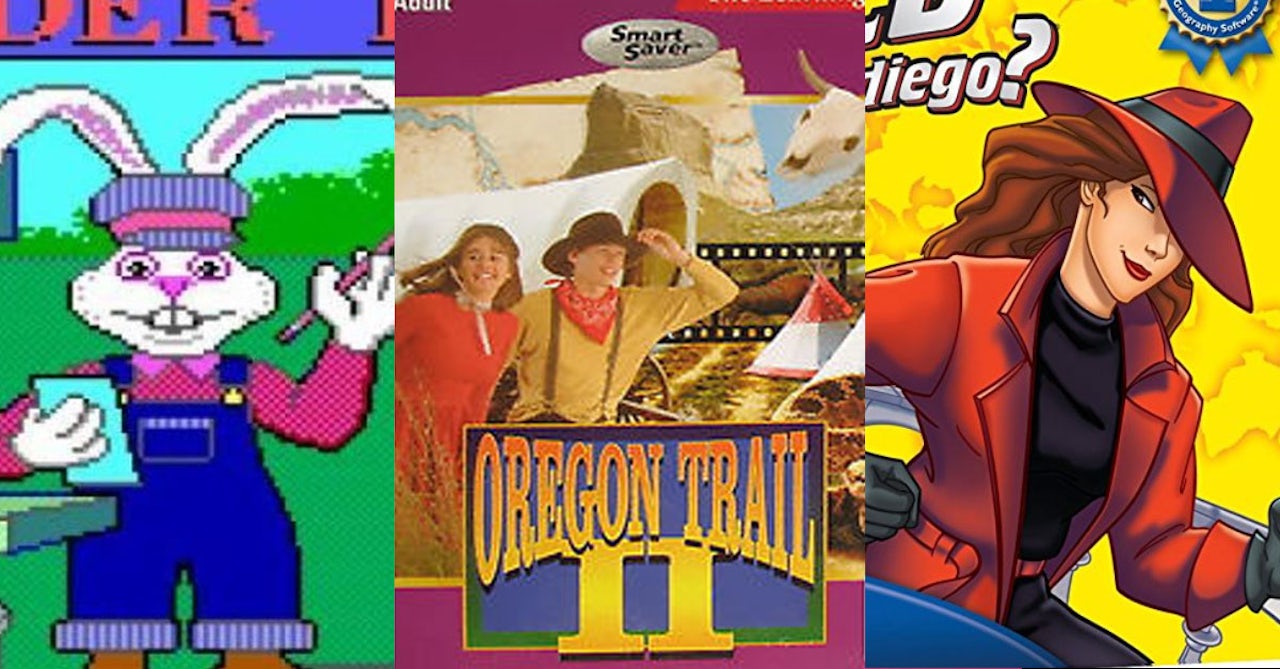
Abigail Cain SEP—26—2018 11:32AM EST Each May, as the elementary school year was winding down, our teachers would send us home with a new educational CD-ROM — hoping, I assume,…
Sources
- The rise and fall of the company behind Reader Rabbit (2018)
- Game-based learning in education: A quick history
- Reader Rabbit
- Is the Educational Games Industry Falling Into the Same …
Related posts
- At CES 2026: A roundup of the most memorable and unusual robots
- SandboxAQ Says Ex-Executive’s Suit Is Extortion; Denies Allegations Against CEO
- Revealed: AI Startup Hark Hired Apple’s iPhone Air Designer in January