
TL;DR
Morten Høi Jensen’s study traces Thomas Mann’s long composition of The Magic Mountain and frames the author as a figure of deep contradictions. Jensen offers a concise, contextual account of the novel’s creation and reception while occasionally faltering when contesting established biographical claims.
What happened
Morten Høi Jensen’s book, The Master of Contradictions, offers an accessible account of how Thomas Mann produced The Magic Mountain. Jensen begins with Mann’s own modest expectations — a 1924 letter suggesting the book might be too German and unwieldy for wider readership — and follows the novel’s evolution from a planned novella into a vast modernist work. Mann started writing in 1913 but completed the book more than a decade later; the experience of the First World War changed the novel’s scale and its author’s political outlook. Jensen highlights the novel’s central episode — Hans Castorp’s extended stay at a Davos sanatorium — and the philosophical clashes within it, exemplified by Settembrini and Naphta. The reviewer notes Jensen’s strength in contextualising the era and producing a brisk overview, while also pointing out weaker moments when Jensen challenges previous biographical judgments about Mann’s private life.
Why it matters
- Illuminates the creative and historical forces behind a major work of literary modernism.
- Shows how political upheaval can reshape an author’s project and the themes of a novel.
- Reassesses Thomas Mann’s public image by foregrounding contradictory personal and artistic traits.
- Offers a concise, readable guide to a dense and frequently studied text, useful for readers and students.
Key facts
- Jensen’s book is titled The Master of Contradictions: Thomas Mann and the Making of the Magic Mountain.
- Thomas Mann wrote in 1924 that he did not expect many to read his new novel, thinking it too German and large for Europe.
- The Magic Mountain was accepted across Europe and reached American readers about three years later.
- The novel follows Hans Castorp, who visits a tuberculosis sanatorium in Davos and ends up staying for seven years.
- Mann began the project in 1913 and did not finish it until more than a decade later; the First World War altered the book’s size and tone.
- Characters Lodovico Settembrini and Leo Naphta represent opposing philosophical and political positions that contest the protagonist’s outlook.
- Jensen argues Mann embodied personal contradictions — for example, a public bourgeois persona alongside repressed private life — and uses these to frame his study.
- The reviewer notes Jensen’s attempts to rebut claims about Mann’s parenting and marriage but finds some of those counterarguments insufficiently supported.
- The book is published by Yale and listed at £22 in the review.
What to watch next
- Whether further scholarship will substantiate Jensen’s challenges to established claims about Mann’s family life — not confirmed in the source.
- Debate over how far Mann’s shifting politics during and after WWI should be read into The Magic Mountain’s themes — not confirmed in the source.
- Potential responses from other Mann scholars to Jensen’s readings of biographical evidence — not confirmed in the source.
Quick glossary
- The Magic Mountain: A long novel by Thomas Mann, set largely in a Swiss sanatorium, often regarded as a landmark of literary modernism.
- Tuberculosis sanatorium: A medical facility where patients with tuberculosis historically received prolonged rest and treatment, commonly used as a setting in early 20th-century literature.
- Weimar Republic: The democratic German state established after World War I, in existence from 1919 until 1933.
- Modernism: A broad literary and artistic movement in the late 19th and early 20th centuries characterized by experimentation with form and a focus on subjective experience.
- Novella: A written, fictional prose narrative that is shorter than a novel but longer than a short story.
Reader FAQ
Did Jensen argue that The Magic Mountain is unreadable outside Germany?
No. Jensen cites Mann’s own 1924 remark that the book might be too 'German' and large for Europe, but the reviewer notes the novel was embraced beyond Germany.
How long did Mann take to write The Magic Mountain?
Mann began the work in 1913 and completed it more than a decade later.
Does Jensen defend Mann against claims he was a poor or cruel parent?
Jensen disputes the oft-repeated claim that Mann was indifferent or cruel as a parent, but the reviewer criticises Jensen for relying on limited evidence in that rebuttal.
Does Jensen provide a deep literary analysis of the novel’s mysteries?
No. The reviewer describes Jensen’s book as a brisk, confident overview rather than a deep excavation of the novel’s enigmas.
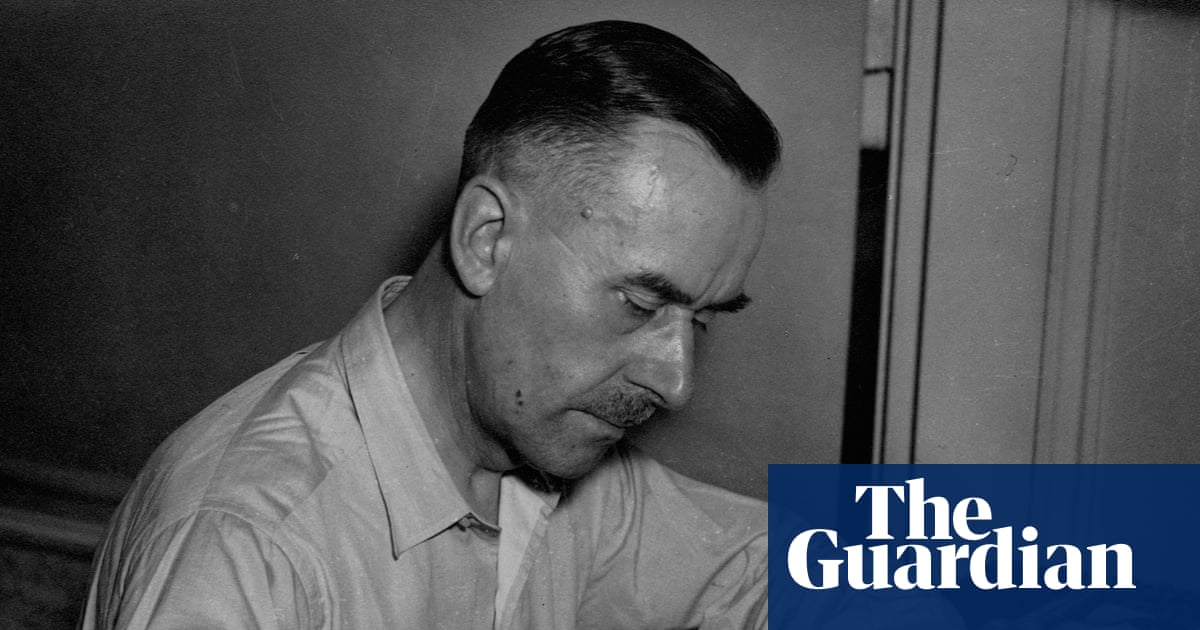
View image in fullscreen Thomas Mann. Photograph: Library of Congress/Corbis/VCG/Getty Images Thomas Mann Review The Master of Contradictions by Morten Høi Jensen review – how Thomas Mann wrote The Magic…
Sources
- How Thomas Mann Wrote the Magic Mountain
- The Master of Contradictions
- The Master of Contradictions: Thomas Mann and …
- Master of Contradictions: Thomas Mann and the Making …
Related posts
- Worst-Case Optimal Joins: Mapping Graphs to Relational Join Bounds
- Why The Great Gatsby Remains the Most Misunderstood Novel Today
- The Vietnam War: The Press on the Front Lines, 1945–1975 Exhibition