
TL;DR
As protests grow, law enforcement has powerful tools to monitor attendees, from cell-tower surveillance to face recognition. The article outlines practical steps — phone choices, encryption, biometric settings, masks and clothing — to reduce the digital traces you leave at demonstrations.
What happened
Following a high-profile police shooting that sparked nationwide demonstrations, security reporters updated guidance on how protesters can limit digital exposure to modern surveillance tools. Authorities can compel carriers for location logs, deploy IMSI-catcher devices that impersonate cell towers, and use license-plate readers and face-recognition systems to identify people in crowds. Experts advise reconsidering whether to bring your primary smartphone, or if you must use a device, to keep it powered off as much as possible, store it in a Faraday bag, or carry a secondary device stripped of personal accounts. Encrypted messaging apps with disappearing messages are recommended for coordination. Protesters should enable full-disk encryption, prefer long passcodes over biometrics, and learn emergency methods to disable biometric unlocking. To frustrate face recognition and social-media identification, the piece also suggests face coverings, sunglasses, and plain clothing without distinctive logos or colors.
Why it matters
- Modern surveillance tools can turn a single protest appearance into a searchable record that law enforcement can use later.
- Phone metadata, intercepted wireless signals, and facial-ID systems can link individuals to specific times and places even without direct evidence of wrongdoing.
- Simple operational security choices can significantly reduce the risk that your communications or presence at a protest will be exposed or used against you.
- Understanding the limits of tools like burner phones and masks helps protesters make realistic plans for privacy and safety.
Key facts
- Law enforcement can obtain carrier records showing what cell towers a phone connected to and when.
- IMSI-catcher devices, sometimes called stingrays, impersonate cell towers and can capture subscriber identifiers from nearby phones.
- Keeping a primary phone at home or powered off reduces the chance it will be tracked or connected to a rogue hotspot.
- Faraday bags block a device's radio communications and can be used to prevent a phone from contacting cellular networks or Wi‑Fi while stored.
- Encrypted messaging apps with end-to-end encryption and disappearing messages (for example, Signal is cited) are recommended for secure coordination.
- iOS devices have full-disk encryption enabled when an access passcode is set; Android users should enable disk encryption via their security settings.
- Long passcodes are advised over biometric unlocks because an officer could coerce biometric access more easily than extracting a passcode.
- Burner or prepaid phones are not automatically anonymous if you provide identifying information to the carrier at purchase.
- Face-recognition systems are a major identification risk; simple surgical masks or KN95s may not defeat advanced face‑tracking technology.
- Clothing with distinctive colors or prominent logos makes individuals easier to track in photos and video.
What to watch next
- Police deployment of IMSI-catcher/stingray devices and other wireless interception tools at demonstrations.
- Advances in face-recognition accuracy and broader adoption of facial-ID by law enforcement — not confirmed in the source.
- Changes in laws or agency policies that affect how and when authorities can compel carriers or seize devices — not confirmed in the source.
Quick glossary
- IMSI catcher (stingray): A device that impersonates a cell tower to trick nearby phones into connecting, exposing device identifiers and metadata.
- Faraday bag: A pouch made from radio‑blocking materials that prevents a device from sending or receiving wireless signals while enclosed.
- End-to-end encryption: A method of securing messages so only the communicating parties can read the content; intermediaries cannot decrypt it.
- Full-disk encryption: Encryption that protects all data stored on a device, requiring an access passcode to decrypt and read its contents.
- Biometric unlocking: Device access methods based on physical traits, such as fingerprints or facial recognition, which can be faster but are vulnerable to coercion.
Reader FAQ
Should I bring my phone to a protest?
The source recommends leaving your main phone at home if you want anonymity; if you bring a device, keep it off when possible, use a secondary device with minimal accounts, or store it in a Faraday bag.
Is Signal a good app for protest coordination?
Yes; the article cites Signal as having a strong record for encrypted messaging and recommends using apps with end-to-end encryption and disappearing messages.
Can police force me to unlock my phone with my fingerprint or face?
The piece advises preferring a long passcode over biometrics because officers may be able to coerce biometric unlocks; it also notes emergency methods to disable biometrics on some phones.
Are burner phones a reliable way to stay anonymous?
No; burner or prepaid phones can still be linked to you if you provide identifying details to the carrier—so they are not guaranteed to be anonymous.
Is wearing a surgical mask enough to defeat face recognition?
Not necessarily; the article cautions that some advanced face-tracking tools may still identify masked faces and suggests fuller coverings or costume-style masks for stronger protection.
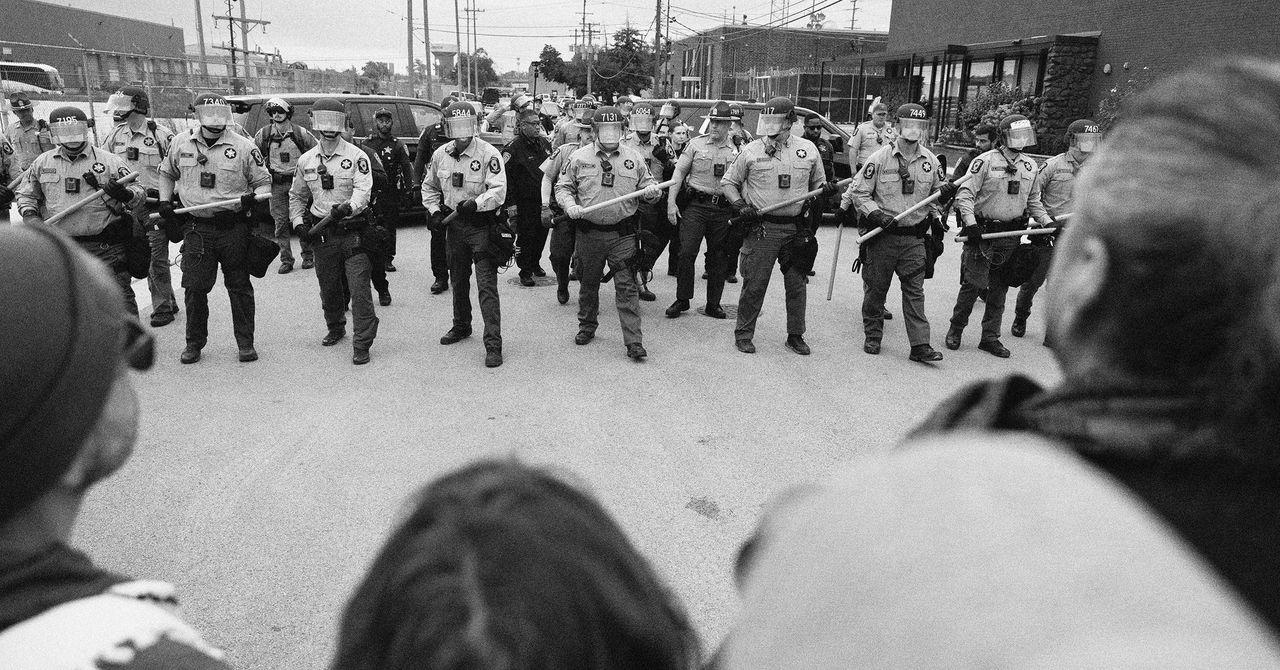
ANDY GREENBERG LILY HAY NEWMAN SECURITY JAN 8, 2026 12:34 PM How to Protest Safely in the Age of Surveillance Law enforcement has more tools than ever to track your…
Sources
- How to Protest Safely in the Age of Surveillance
- The Protesters' Guide to Smartphone Security – Articles
- How to Defend Against Police Surveillance at Protests
- Protest Surveillance — S.T.O.P.
Related posts
- Illinois agency left personal data of over 700,000 residents exposed for years
- Why colocation providers cluster in cities while hyperscalers pick rural sites
- ICE Acquired Tool That Monitors Phones Across City Neighborhoods