
TL;DR
At a December Humanoids Summit in Mountain View, developers and investors showcased humanoid robots while warning that interest and capital are outpacing the technology and public readiness. Speakers cited progress in locomotion and funding growth but flagged major obstacles—dexterity, cost, safety, data needs and worker resistance—that will slow large-scale deployment.
What happened
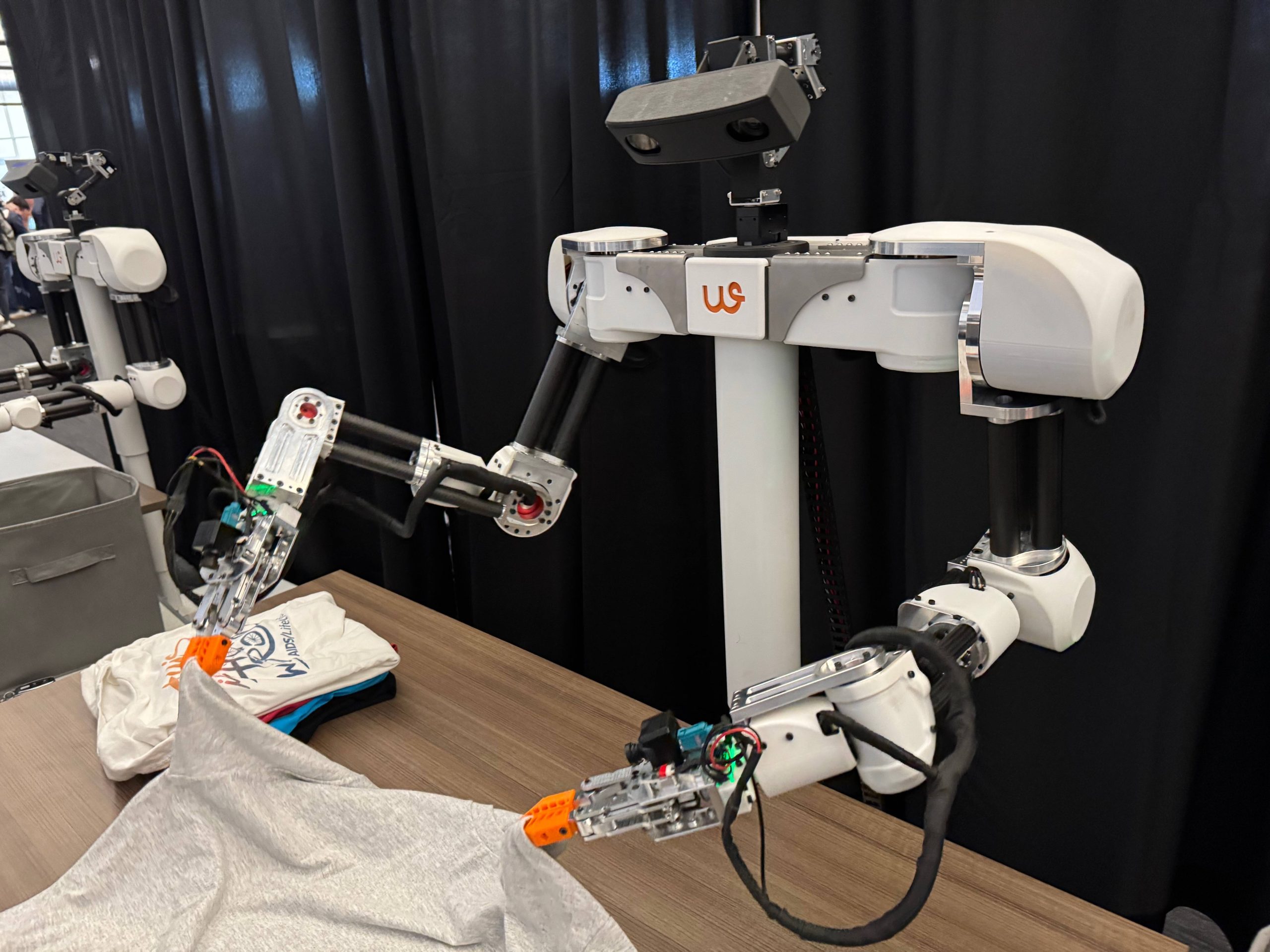
Humanoid robots were on display at the Humanoids Summit held December 11 at the Computer History Museum in Mountain View, California, where companies, investors and consultants discussed progress and limits. Demonstrations and videos showed robots performing complex actions under human supervision; one company showed work aimed at teaching robots to climb stairs. Panelists and presenters described a surge of interest and money in the field but urged realism. McKinsey partners highlighted that only a small share of U.S. factories have robotics at scale and contrasted that with much higher installation rates in China. Conference speakers estimated roughly 50 companies pursuing humanoid designs worldwide. Cautionary anecdotes underscored fragility and cost issues—a theater-serving robot jammed on popcorn, an AMR damaged by a rodent, and a slow robot torso struggling with shirt-folding. Panelists singled out manual dexterity, data availability and social acceptance as key remaining barriers to commercial viability.
Why it matters
- Rapid funding and hype risk outpacing engineering and practical deployment timelines.
- Businesses weigh ROI against uptime, maintenance costs and the challenge of brittle early systems.
- Worker resistance and potential sabotage can block adoption even when hardware is functional.
- Incomplete capabilities (notably dexterity) and limited training data constrain where robots can replace or augment humans.
Key facts
- Event: Humanoids Summit, December 11, at the Computer History Museum in Mountain View, California.
- About 50 companies are described as credibly pursuing humanoid robots: ~20 in China, ~15 in North America, ~7 in EMEA and ~7 in Asia outside China.
- McKinsey presenters said roughly 6% of U.S. factories have applied robotic automation at scale and that China installs about ten times more robots per year than the U.S.
- Investors and founders showed demos and videos; some demonstrations relied on human handlers or teleoperation.
- Speakers warned that costs, safety, data scarcity and social acceptance remain barriers to large-scale commercial use.
- Anecdotes at the conference included a wheeled theater robot that sucked up popcorn and an autonomous mobile robot whose internals were damaged by a mouse.
- Panelists described manual dexterity as the 'last frontier' for humanoid capability.
- Some buyers focus on ROI and may prioritize price and uptime over whether a robot is autonomous or teleoperated.
What to watch next
- Whether robots achieve reliable, human-level manual dexterity in practical settings (not confirmed in the source).
- How commercial uptime and maintenance costs evolve as companies scale deployments—affecting ROI calculations (not confirmed in the source).
- The pace at which social acceptance and workforce integration strategies are developed to reduce resistance and sabotage (not confirmed in the source).
Quick glossary
- Humanoid robot: A robot designed with a body plan or features that resemble the human form, often intended to perform tasks in environments built for people.
- Locomotion: The ability of a robot to move through an environment, including walking, climbing stairs and navigating uneven terrain.
- Dexterity: A robot's skill at manipulating objects with precision and versatility, including tasks that require fine motor control.
- Autonomous mobile robot (AMR): A wheeled or tracked robot that navigates and performs tasks in an environment with little or no human teleoperation.
- ROI (Return on Investment): A measure of the financial benefit gained from an investment compared with its cost, often used to assess the business case for automation.
Reader FAQ
Are humanoid robots ready for mass commercial deployment?
No. The summit coverage described them as ready for marketing and experimentation but not for large-scale commercial deployment; significant technical and social hurdles remain.
How many companies are working on humanoid robots?
The report cites about 50 credible companies globally, with regional counts provided by presenters.
Will companies replace human workers with humanoid robots?
Buyers are ROI-driven and may seek replacement; some industry speakers argue robots should augment and redesign work rather than simply displace workers.
Is locomotion a solved problem for humanoids?
Some attendees claimed progress and one investor said locomotion was 'solved,' but the conference coverage treated that as an overstatement and emphasized remaining challenges.
AI + ML 2 Humanoid robots are still novelty acts, but investment is surging to make them real tomorrow Investment and interest have outpaced technology and society Thomas Claburn Thu 25 Dec 2025…
Sources
- Humanoid robots are still novelty acts, but investment is surging to make them real tomorrow
- Humanoid robots have gotten an AI upgrade
- Humanoid robots: Novelty acts today, but investment surging
- Investors Warn That Humanoid Robots Are the Next …
Related posts
- Hollywood cozied up to AI in 2025 and had nothing good to show for it
- Nvidia to Acquire Groq Assets for About $20 Billion in Cash Deal
- AMD Strix Halo versus Nvidia DGX Spark: Comparing two 128 GB AI workstations