
TL;DR
Baek Jin-eon, a researcher at the Korea Institute for Advanced Study, has published a paper arguing that Joseph Gerver’s 1992 figure is the largest rigid shape that can navigate a right-angled corner in a unit-width L-shaped corridor. The 119-page arXiv preprint, completed after seven years of work, uses analytical reasoning rather than heavy computer estimates and is under review at the Annals of Mathematics.
What happened
The long-standing moving sofa problem, first posed by Leo Moser in 1966, asks how large a rigid planar shape can be while still turning a right-angled corner in an L-shaped corridor of constant width one. Over the decades researchers improved candidate shapes and narrowed the possible maximum area: John Hammersley proposed a shape in 1968 with area about 2.2074, and Joseph Gerver presented a more complex curved candidate in 1992 with area near 2.2195 that became the leading contender. Baek Jin-eon, a 31-year-old research fellow at the June E Huh Center for Mathematical Challenges (Korea Institute for Advanced Study), released a 119-page paper on arXiv in late 2024 after seven years of work. Baek argues that Gerver’s construction attains a hard upper bound for the problem, relying on logical, non–computer-heavy arguments. The manuscript is now under review at one of the field’s top journals, the Annals of Mathematics.
Why it matters
- Resolves a concrete, accessible geometric problem that has remained open for almost 60 years.
- Provides a rigorous, analytical argument for optimality rather than depending chiefly on numerical computation.
- Clarifies a boundary case in planar geometric optimization, which may influence related research in shape optimization.
- Highlights contributions from South Korea’s mathematical community and attracted wider recognition (Scientific American’s top-10 list).
Key facts
- The moving sofa problem asks for the largest rigid planar shape that can move around a right-angled corner in an L-shaped corridor of width 1 meter.
- Leo Moser posed the problem in 1966.
- John Hammersley proposed a candidate shape in 1968 with area about 2.2074 square meters.
- Joseph Gerver’s 1992 curved figure has an area of roughly 2.2195 square meters and was the leading candidate for maximality.
- Baek Jin-eon authored a 119-page preprint posted on arXiv in late 2024 claiming Gerver’s figure is an upper bound.
- Baek spent seven years on the research and emphasized logical reasoning over heavy computer assistance.
- Baek is a 31-year-old research fellow at the June E Huh Center for Mathematical Challenges, Korea Institute for Advanced Study.
- He completed his doctorate at the University of Michigan and solved the problem at age 29 while a postdoctoral researcher at Yonsei University.
- The paper is currently under review at the Annals of Mathematics.
- Scientific American included Baek’s work among its top 10 mathematical breakthroughs of 2025.
What to watch next
- Outcome of the peer review process at the Annals of Mathematics (paper is currently under review).
- Whether the broader geometry community accepts Baek’s analytical proof and its techniques (not confirmed in the source).
- Potential follow-up work extending the methods to related optimization or corridor-shape problems (not confirmed in the source).
Quick glossary
- Moving sofa problem: A mathematical puzzle asking for the planar shape of largest area that can be moved around a right-angled corner in an L-shaped corridor of fixed width.
- Optimization problem: A problem that seeks the best solution according to a specified criterion, often maximizing or minimizing a numerical value under constraints.
- arXiv: An open-access repository where researchers post preprints of scholarly papers before (or during) formal peer review and journal publication.
- Annals of Mathematics: A highly selective, peer-reviewed mathematics journal that publishes research across a wide range of mathematical fields.
Reader FAQ
What is the moving sofa problem?
It asks how large a rigid planar shape can be and still be carried around a right-angled corner in an L-shaped corridor of unit width.
Who is Baek Jin-eon?
Baek is a 31-year-old research fellow at the June E Huh Center for Mathematical Challenges, Korea Institute for Advanced Study; he earned a doctorate at the University of Michigan.
Did Baek prove which shape is maximal?
Baek’s 119-page arXiv paper argues that Joseph Gerver’s 1992 figure attains a hard upper bound, claiming optimality for that construction.
Has the proof been peer reviewed and accepted?
The paper is under review at the Annals of Mathematics; final acceptance and community consensus are not confirmed in the source.
Did the work rely on computers?
Baek emphasized relying on logical reasoning rather than heavy computer-assisted estimates.
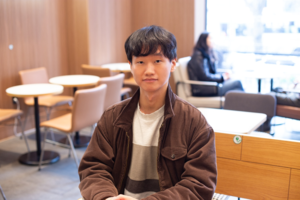
Print edition National Politics Seoul Education Social Affairs Courts and Law Foreign Affairs Military North Korea Diplomatic Circuit Health National Six-decade math puzzle solved by Korean mathematician Six-decade math puzzle…
Sources
- Six-decade math puzzle solved by Korean mathematician
- South Korean mathematician solves 60-year-old maths …
- Korean Researcher Solves 60-Year Moving Sofa Problem …
Related posts
- Local-first: Why the Term Defies a Clean Definition and Needs Nuance
- Is I/O still the bottleneck for word counting on modern systems?
- Strange.website: Poetic, Uneasy Reflections on Websites, AI and Dark UX