
TL;DR
At a CES 2026 All-In podcast taping, McKinsey's Bob Sternfels and General Catalyst's Hemant Taneja told host Jason Calacanis that AI is accelerating change across technology, investment and work. They urged ongoing reskilling, highlighted tensions inside companies over when to adopt AI, and outlined how firms may redeploy staff as AI tools scale.
What happened
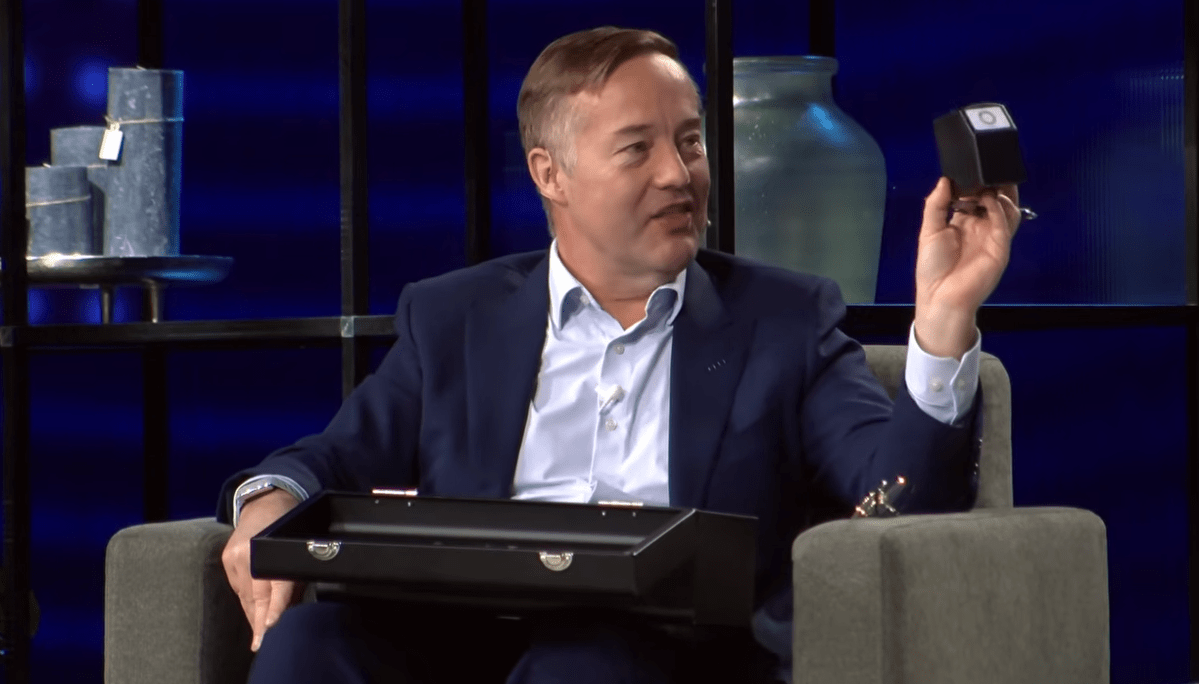
During a live All-In podcast recording at CES 2026, host Jason Calacanis spoke with Bob Sternfels, McKinsey's global managing partner, and Hemant Taneja, CEO of General Catalyst, about AI's rapid impact on industry and labor. Taneja pointed to unusually fast valuation jumps among AI startups, noting Anthropic’s leap from about $60 billion last year to “a couple hundred billion” this year, and argued we could soon see new trillion-dollar companies. Sternfels described a common executive dilemma: CFOs, skeptical of short-term returns, advise caution while CIOs warn that failing to adopt AI risks disruption. All three stressed that AI will change job requirements, making lifelong skilling essential. Sternfels said McKinsey expects to have as many personalized AI agents as employees by the end of 2026 and plans to shift headcount composition—expanding client-facing roles by 25% while reducing back-office roles by the same proportion.
Why it matters
- Companies are weighing rapid AI adoption against uncertain near-term returns, creating strategic tensions at the executive level.
- Workers may need continuous reskilling rather than relying on front-loaded education and long tenure in a single role.
- Rapid valuation shifts in AI startups could reshape investment priorities and market concentrations.
- Professional services firms are already planning to restructure roles around AI tools, affecting hiring and career paths.
Key facts
- The conversation took place on the All-In podcast during CES 2026 with Jason Calacanis, Bob Sternfels (McKinsey) and Hemant Taneja (General Catalyst).
- Taneja said Anthropic’s valuation rose from about $60 billion last year to what he described as “a couple hundred billion” this year.
- Taneja predicted the potential emergence of new trillion-dollar companies, naming Anthropic and OpenAI among notable examples.
- Sternfels described a recurring executive question: whether to heed CFOs urging caution or CIOs warning of disruption if AI is not adopted.
- Panelists warned about impacts on entry-level roles and argued that judgement and creativity remain critical human skills.
- Taneja said the model of learning only when young and then working for decades is broken; reskilling will be ongoing.
- Calacanis noted it may take less time to build an AI agent than to train a new worker, emphasizing the need for initiative and drive.
- Sternfels said McKinsey expects to have as many personalized AI agents as employees by the end of 2026.
- McKinsey plans to increase client-facing headcount by 25% while reducing back-office roles by the same percentage.
What to watch next
- Corporate decisions where CFOs and CIOs clash over timing and scale of AI investments.
- How firms implement large-scale reskilling programs to align employees with AI-augmented roles.
- The pace and valuation changes of leading AI startups mentioned by investors, such as Anthropic and OpenAI.
Quick glossary
- AI agent: A software system that performs tasks or decisions autonomously or semi-autonomously on behalf of a user or organization.
- Valuation: An estimate of the monetary value of a company, often used in investment and fundraising contexts.
- CIO (Chief Information Officer): An executive responsible for an organization’s information technology strategy and operations.
- CFO (Chief Financial Officer): An executive responsible for managing a company's financial actions, including budgeting, forecasting and investment decisions.
- Reskilling: The process of learning new skills so workers can perform different tasks or adapt to changing job requirements.
Reader FAQ
Did the speakers say AI will eliminate jobs?
They discussed concerns about displacement, especially at entry levels, but emphasized that judgement and creativity remain important; they did not present a definitive claim that AI will eliminate jobs.
Will McKinsey reduce headcount?
Sternfels said headcount will not necessarily fall; the firm plans to shift composition by increasing client-facing roles by 25% and reducing back-office roles by the same percentage.
Are trillion-dollar AI companies guaranteed?
Taneja argued we are on the verge of such companies and named some candidates, but this was presented as his view rather than a certainty.
Did the panel discuss regulation or policy responses to AI?
not confirmed in the source
If there is one point of consensus among the CES 2026 keynote speakers, it is that AI is reshaping technology with a speed and scale unlike any previous technological revolution….
Sources
Related posts
- Lenovo unveils Qira, a cross-device AI assistant for laptops and phones
- 30B Qwen model runs in real time on a Raspberry Pi 5 using ByteShape
- Snowflake integrates Google Gemini into Cortex AI for in-platform LLM access