
TL;DR
A meditation practitioner frames relaxation as a wakeful skill and explores a theory—vasocomputation—that vascular smooth-muscle tension helps stabilise mental states. The post reviews the idea of long-lived smooth-muscle "latches," practical methods people propose for releasing them, and the author's experiment tuning meditation toward deep, coordinated relaxation.
What happened
In a reflective Substack post, the author describes a period of deliberate practice aimed at cultivating "wakeful relaxation," reporting recurring bodily tension and emotional resistance when trying to relax. They draw on Michael Edward Johnson's vasocomputation framework, which proposes that vascular smooth-muscle contractions form patterned "stances" that stabilise neural and experiential states. The author summarises Johnson's suggestion that smooth muscle can enter a low-energy "latch" state, potentially sustaining tonic contraction for long periods, and cites physiology texts that describe a latch mechanism allowing prolonged contraction with reduced ATP consumption—textbooks typically frame the latch as lasting hours rather than months or years. The post explores why directing attention, thermal contrast (sauna and cold plunges), deliberate clench–release cycles, and psychedelics are proposed ways to disrupt latches, and sketches the author's intention to adapt slow body-scan Vipassana and clench–release practice toward relaxing smooth muscle. The author also notes they have not independently verified the strongest claims about multi-month or multi-year latches.
Why it matters
- If vascular tension helps stabilise mental patterns, relaxation techniques may need to address smooth muscle, not only skeletal muscle.
- Long-lived smooth-muscle latches could offer a physiological account for some forms of persistent bodily tension and associated suffering, per the vasocomputation proposal.
- Practical interventions (thermal contrast, focused attention, and specific meditative methods) are being suggested as ways to alter these tension patterns, which could change how meditation and somatic therapies are taught.
- Verifying or refuting latch-timescales affects claims about chronic conditions and the durability of somatic changes produced by practice.
Key facts
- The author is experimenting with "wakeful relaxation" and reports frequent involuntary tension and spasms when trying to relax.
- Vasocomputation, as presented by Michael Edward Johnson, frames vascular clenches as stabilising neural patterns and producing discrete 'stances' of feeling.
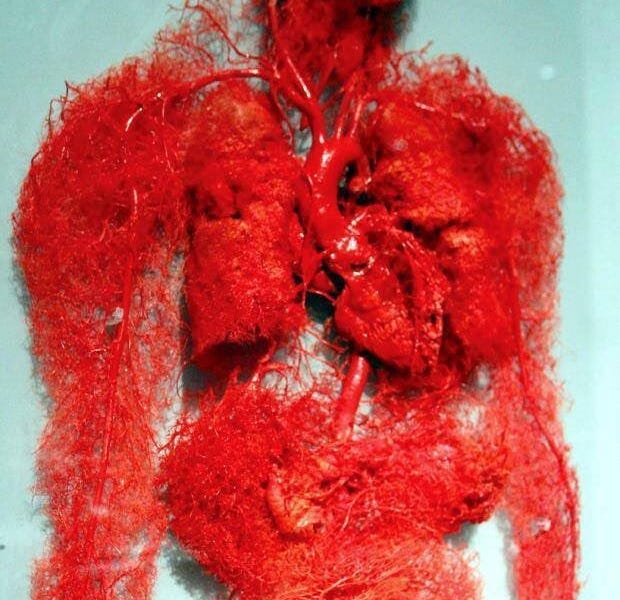
- Smooth muscle lines blood vessels and operates differently from skeletal muscle; it is not under direct voluntary control.
- Physiology texts describe a smooth-muscle "latch" mechanism that can sustain tension with relatively low energy expenditure; textbooks typically reference timescales of hours.
- Johnson's stronger claim that latches can persist for months or years is noted by the author but has not been independently verified in this post.
- Suggested methods for releasing latches include sauna plus cold plunges, attentive bodywork (attending to latched tissues), deliberate clench–release cycles, and, according to Johnson, psychedelics.
- The author observed that deeper relaxation often reduces reactivity, worry, and friction in social interaction, suggesting phenomenological changes when tension releases.
- The author plans to experiment with ultra-slow body-scan Vipassana and contrast-based clench–release practices to target smooth-muscle relaxation.
What to watch next
- Empirical studies that test whether smooth-muscle latches can persist for months or years and their relation to chronic symptoms — not confirmed in the source
- Controlled trials comparing thermal contrast (sauna/cold) or attention-based methods with other interventions for releasing vascular tension — not confirmed in the source
- Results from the author's ongoing practice experiments and any follow-up reports on whether targeted meditation measurably alters subjective reactivity or reported latch patterns — not confirmed in the source
Quick glossary
- Smooth muscle: Muscle tissue lining internal structures such as blood vessels and organs; it is generally not under direct conscious control and operates differently from skeletal muscle.
- Latch state: A physiological mode in some smooth muscles allowing sustained contraction with relatively low energy consumption, often described in physiology literature.
- Vasocomputation: A proposed theoretical framework that vascular tension patterns contribute to computation in the body by stabilising neural and experiential states.
- Body-scan Vipassana: A meditative technique of slowly directing sustained attention through bodily sensations to increase somatic awareness and equanimity.
- Clench–release cycle: A deliberate practice of alternately tensing and relaxing muscle groups to highlight, dislodge, or reset habitual tension patterns.
Reader FAQ
Does the post claim smooth-muscle 'latches' cause chronic pain or headaches?
The author cites a claim that inappropriate vascular smooth-muscle contractions could underlie conditions like migraines, but notes this rests on the vasocomputation hypothesis and is not independently verified here.
Are long-term (months/years) smooth-muscle latches proven?
Textbooks referenced describe latch states with low energy use and timescales typically measured in hours; multi-month or multi-year persistence is presented as a stronger claim by Johnson and is not confirmed in the post.
What practical methods are suggested for releasing latches?
Proposed techniques include sauna plus cold plunges, focused attention on latched tissues, deliberate clench–release cycles, and, per Johnson, psychedelics; the author plans to experiment but does not report definitive outcomes.
Will regular meditation alone relax smooth muscle?
The author reports that intentional relaxation is difficult and often triggers redistributed tension; they propose combining slow somatic attention with contrast-based practices but do not claim meditation alone reliably unclenches smooth muscle.
Discover more from psychotechnology Techno-Buddhist Tantra, future and present psychotechnologies: from meditation to mindmelding Subscribe By subscribing, I agree to Substack's Terms of Use, and acknowledge its Information Collection Notice…
Sources
- Meditation as Wakeful Relaxation: Unclenching Smooth Muscle
- Actually… – Robust Enough
- Awakening is not a metaphor: the effects of Buddhist …
- Principles of Vasocomputation: A Unification of Buddhist …
Related posts
- US Job Openings Fall to Lowest Point in Over a Year, Report Shows
- LaTeX ‘Coffee Stains’ package documentation (PDF) — comments and notes
- Why Language Design Alone Falls Short: Prioritize Library Crafting Over New Languages