
TL;DR
MIT mechanical engineering PhD student Erik Ballesteros is developing wearable robotic arms called SuperLimbs to help astronauts work and recover from falls during extravehicular activities. The project, advised by Harry Asada, has attracted collaboration with JPL and is slated for practical testing with astronauts at Johnson Space Center within the next year or two.
What happened
Erik Ballesteros, who grew up near NASA’s Johnson Space Center, has turned a lifelong interest in space into a graduate research project at MIT. Under advisor Harry Asada, Ballesteros has been developing SuperLimbs: a pair of robotic arms mounted to a backpack that extend to assist an astronaut, with enough strength in design to lift a person and to ‘‘crab-walk’’ around a vehicle for inspections or repairs. Ballesteros’ path to the project included internships at Lockheed Martin, multiple roles at Johnson and Kennedy Space Centers, work at Disney Imagineering on animatronics, and assignments at JPL where he contributed to Mars Perseverance work and a self-diagnosing spacecraft monitoring project. The SuperLimbs concept, first proposed earlier by Asada, was re-presented to engineers at JPL and has led to a partnership to refine the design. The team plans to introduce a fully functional wearable prototype to astronauts at Johnson Space Center in the next year or two for hands-on evaluation.
Why it matters
- Could improve astronaut safety by providing a means to recover from falls during spacewalks or exterior vehicle work.
- May expand astronauts’ mobility and dexterity for inspections and repairs in microgravity environments.
- Illustrates cross-institutional collaboration between academia and NASA centers (MIT, JPL, JSC).
- Represents a convergence of assistive robotics, wearable technology, and human-in-the-loop testing.
Key facts
- Ballesteros grew up in Spring, Texas, near Johnson Space Center, and visited JSC exhibits and training facilities as a child.
- He completed internships at Lockheed Martin, Kennedy Space Center, Johnson Space Center, Disney Imagineering, and NASA’s Jet Propulsion Laboratory.
- At JPL he worked on last adjustments to the Mars Perseverance rover and on a self-diagnosing spacecraft monitoring system.
- Ballesteros began SuperLimbs as a master’s thesis at MIT under Professor Harry Asada and stayed on to pursue a PhD.
- SuperLimbs are a pair of wearable robotic arms that extend from a backpack and are designed to assist astronauts, including lifting a person and enabling crab-walking movements.
- Asada had previously pitched the wearable-arms idea to JPL years earlier; the concept was revisited and has led to renewed collaboration with JPL engineers.
- The team aims to bring a fully functional, wearable design to Johnson Space Center within the next one to two years for practical astronaut testing and feedback.
- Ballesteros is active in MIT’s Robotics Team and leads a Droid Builders sub-group focused on animatronic projects.
What to watch next
- Planned practical testing and user feedback sessions with astronauts at Johnson Space Center within the next year or two.
- Progress of the JPL–MIT collaboration on design refinements and performance demonstrations.
- Timeline for flight qualification or operational deployment — not confirmed in the source.
Quick glossary
- Extravehicular activity (EVA): Work performed by an astronaut outside a spacecraft, commonly known as a spacewalk.
- Wearable robotics: Robotic devices designed to be worn on the body to augment strength, mobility, or capabilities.
- Johnson Space Center (JSC): NASA center in Houston responsible for astronaut training, mission control, and human spaceflight operations.
- Jet Propulsion Laboratory (JPL): A NASA research center managed by Caltech that focuses on robotic space and planetary missions.
Reader FAQ
What are SuperLimbs?
A pair of backpack-mounted, wearable robotic arms under development at MIT to assist astronauts with mobility, lifting, and exterior work.
When will SuperLimbs be tested with astronauts?
The team plans to introduce a fully functional wearable design to Johnson Space Center for testing in the next year or two.
Has NASA approved SuperLimbs for flight or operational use?
not confirmed in the source
Who is leading the project?
PhD student Erik Ballesteros is developing SuperLimbs at MIT under the supervision of Professor Harry Asada, in collaboration with engineers at JPL.
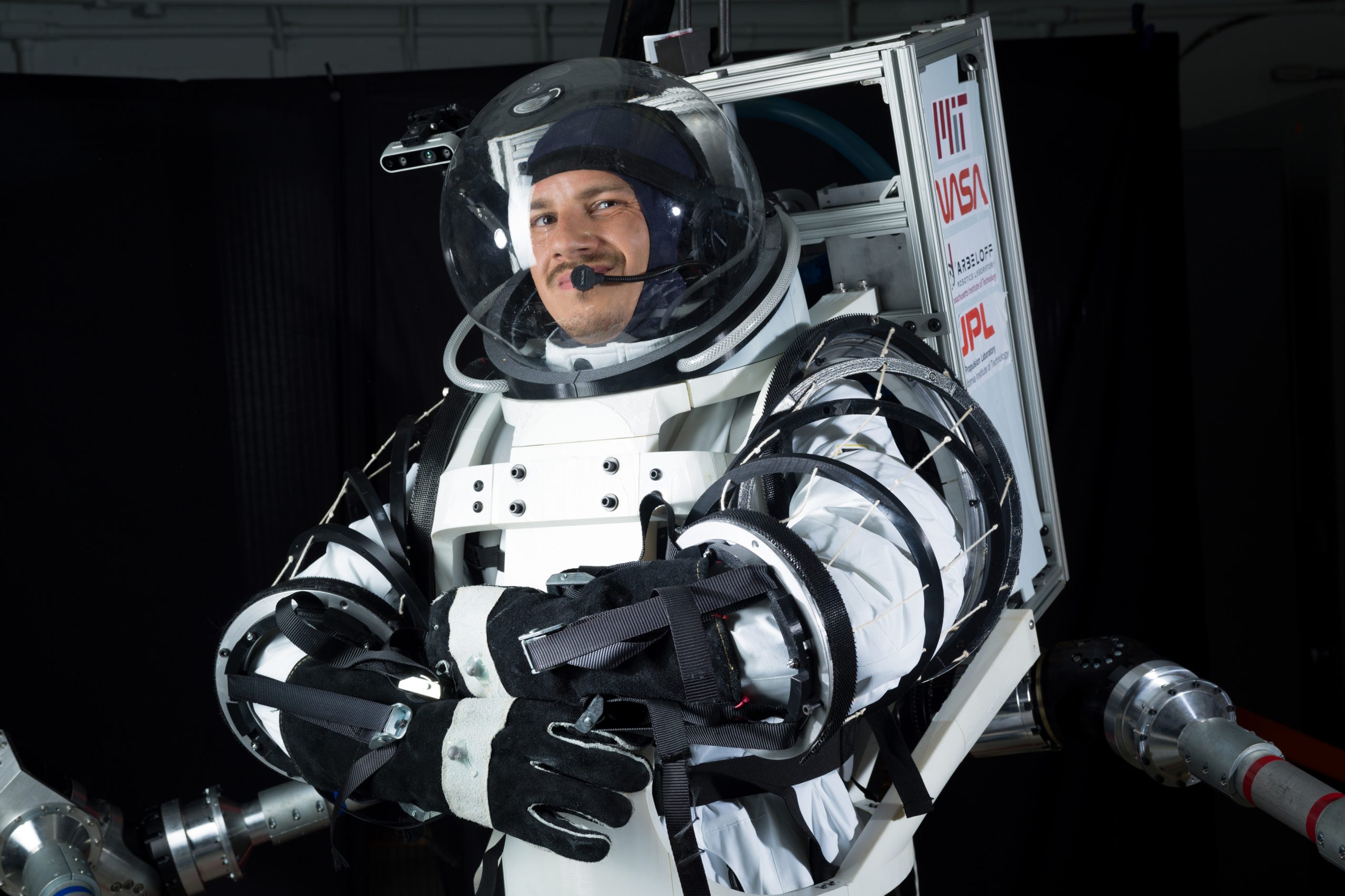
PhD student Erik Ballesteros is building “Doc Ock” arms for future astronauts. Jennifer Chu | MIT News Publication Date : August 26, 2025 PRESS INQUIRIES Caption : “One of the…
Sources
- Engineering fantasy into reality
- Robotic “SuperLimbs” could help moonwalkers recover …
- SuperLimbs for astronauts
- Spotlight: SuperLimbs for astronauts
Related posts
- New MIT framework incorporates component uncertainty into system design
- MIT engineers build hydrogel ‘tendons’ to boost muscle-powered robots
- MIT engineers design microrobot that flies as fast as a bumblebee