
TL;DR
Two long-standing test structures at NASA’s Marshall Space Flight Center in Huntsville were brought down by implosion on January 10, 2026. The Propulsion and Structural Test Facility and the Dynamic Test Stand had been unused for years, carried a $25 million repair backlog, and will be archived and documented before removal.
What happened
NASA carried out coordinated implosions on January 10, 2026 to remove two longtime test facilities at Marshall Space Flight Center’s East Test Area on Redstone Arsenal. The Propulsion and Structural Test Facility (also called the T‑tower, Buildings 4572/4573), erected in 1957, supported multi‑engine firing tests including work on the F‑1 engine and the Saturn V first stage, and later was adapted for shuttle solid rocket motors. The Dynamic Test Stand (Building 4550), completed in 1964, was built large enough to accommodate a fully assembled Saturn V and later hosted the first stacked space shuttle prototype. NASA said both sites had not been used in decades and faced roughly $25 million in deferred repairs. As part of the removal effort, architectural records were archived in the Library of Congress, digital models were produced with Auburn University, and selected artifacts were transferred to the U.S. Space & Rocket Center for preservation.
Why it matters
- Clearing unused, deteriorating infrastructure reduces maintenance costs and safety risks at a major NASA center.
- Removing the stands frees physical space and potentially enables modernization of Marshall’s test and support infrastructure.
- The demolition marks the physical loss of structures tied to Apollo and shuttle-era engineering, making archival preservation important for historical research.
- Documenting and transferring artifacts preserves educational and cultural value even as the buildings are removed.
Key facts
- The Propulsion and Structural Test Facility (the 'T‑tower') was built in 1957 and is identified as Buildings 4572/4573.
- The T‑tower was 175 feet (53 meters) tall and tested the F‑1 engine and Saturn V first stage; it later supported Redstone, Saturn IB first stage testing, and shuttle solid rocket motor tests.
- The Dynamic Test Stand (Building 4550) was completed in 1964 and could hold a full Saturn V (about 363 feet / 111 meters tall).
- Both facilities appeared on the National Register of Historic Places and were designated National Landmarks in the mid‑1980s.
- NASA reported roughly $25 million in needed repairs for the two stands prior to demolition.
- The implosions took place on Saturday, January 10, 2026, at Marshall’s East Test Area on the U.S. Army’s Redstone Arsenal in Huntsville, Alabama.
- The Neutral Buoyancy Simulator (NBS), another historic Marshall facility, began demolition in mid‑December; its tank measured about 75 feet in diameter and 40 feet deep and held nearly 1.5 million gallons of water.
- Architectural summaries, histories, large‑format photographs, and digital models were archived in the Library of Congress’ Historic American Engineering Record, and physical artifacts were moved to the U.S. Space & Rocket Center.
What to watch next
- How Marshall Space Flight Center plans to use the cleared sites and whether specific modernization projects are announced (not confirmed in the source).
- Public access and display plans for artifacts transferred to the U.S. Space & Rocket Center.
- Timelines and lists for the remaining sites identified for removal at Marshall, beyond the Neutral Buoyancy Simulator (not confirmed in the source).
Quick glossary
- Propulsion and Structural Test Facility (T‑tower): A large test stand historically used to fire rocket engines and evaluate structural performance of launch vehicle stages.
- Dynamic Test Stand: A tall structure designed to hold fully assembled rockets or spacecraft stacks for mechanical and vibration testing.
- Neutral Buoyancy Simulator (NBS): A water tank facility used to simulate weightlessness for astronaut training and equipment testing under near‑neutral buoyancy conditions.
- National Register of Historic Places / National Historic Landmark: Federal programs that recognize and document sites, buildings, and structures of historical, architectural, or cultural significance.
- Implosion (demolition): A demolition technique where explosives are used to collapse a structure inward in a controlled manner.
Reader FAQ
Why did NASA demolish these test stands?
NASA said the facilities had not been used in decades, were unsafe, and carried about $25 million in deferred maintenance, prompting strategic demolition to reduce upkeep costs and allow modernization.
When were the demolitions carried out?
The two test structures were demolished by implosion on January 10, 2026.
Were these buildings recognized as historically significant?
Yes. Both stands were added to the National Register of Historic Places and were designated National Landmarks in the mid‑1980s.
What happened to records and artifacts from the sites?
Architectural records and large photos were archived in the Library of Congress’ Historic American Engineering Record, digital models were created with Auburn University, and selected physical artifacts were transferred to the U.S. Space & Rocket Center.
Will new facilities be built on the cleared land?
not confirmed in the source
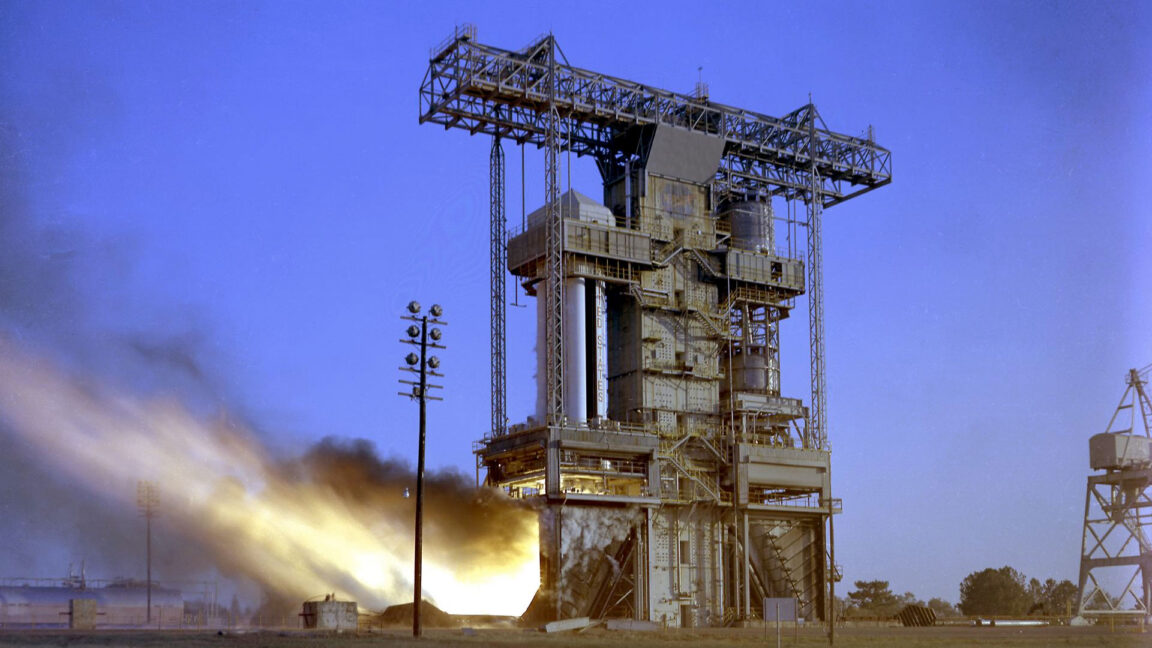
FALLEN BACK TO EARTH… NASA topples towers used to test Saturn rockets, space shuttle The Propulsion and Structural Test Facility and Dynamic Test Facility are no more. ROBERT PEARLMAN –…
Sources
- NASA topples towers used to test Saturn rockets, space shuttle
- NASA's Marshall Space Flight Center demolishes two …
- Historic NASA test structures demolished at Marshall …
- Watch blast demolish what once was tallest man-made …
Related posts
- Five Spotify features no other music streaming app currently gets right
- macOS 26 windows look rounded but their resize regions remain square
- How modern HTML features behave in text-based web browsers — a practical test