
TL;DR
A breath-based glucose sensor called the Isaac has begun human trials and is being evaluated with an eye toward FDA review, renewing hopes for non-invasive blood sugar monitoring on mainstream wearables. The device measures volatile organic compounds in breath — including acetone — but currently requires a short, manual breath test rather than continuous monitoring.
What happened
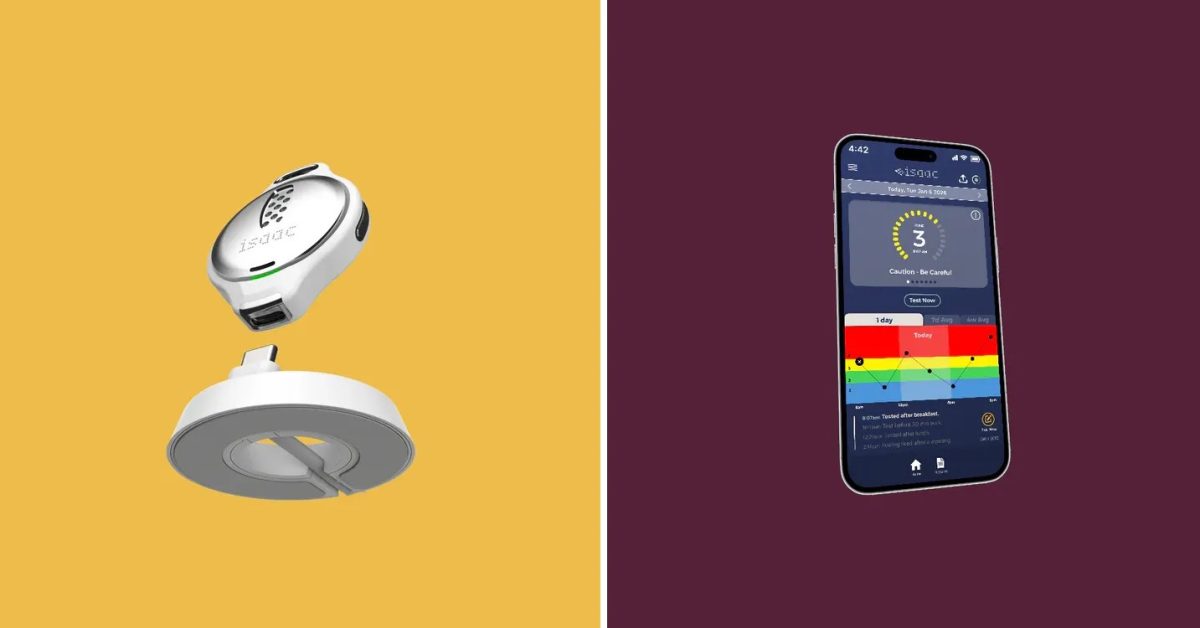
Reports say Apple has long pursued non-invasive glucose measurement for the Apple Watch, and the launch of a new breath-based sensor suggests the technology may be moving closer to mainstream wearables. A device called the Isaac, described as a small pendant-style unit that detects volatile organic compounds such as acetone in exhaled breath, has entered active human clinical trials at Indiana University. The trials are comparing the Isaac’s readings with traditional blood glucose monitoring, beginning with adolescents who have type 1 diabetes and later including adults with type 2 diabetes. The testing approach is a brief, manual breath test rather than continuous sensing — each measurement takes only a few seconds. Investigators and the device maker are conducting the trials with the aim of filing for regulatory review with the US Food and Drug Administration within the coming year. Reporters note that miniaturization remains a key engineering hurdle for embedding this approach in wrist-worn devices.
Why it matters
- Non-invasive glucose measurement could broaden access to early detection for people who avoid invasive finger-prick tests.
- Diabetes affects a significant portion of adults globally, and improved screening could reduce undiagnosed cases and related harm.
- A breath-based method that is fast and simple to use might scale more easily through consumer wearables than current invasive approaches.
- Miniaturization and regulatory approval are critical steps before such sensing can appear in mainstream devices like the Apple Watch.
Key facts
- The Isaac is reported to detect volatile organic compounds in breath, including acetone, which can correlate with rising blood glucose.
- Clinical trials for the Isaac are active at Indiana University and compare its performance to traditional blood glucose monitoring.
- Trials start with adolescents with type 1 diabetes and are planned to expand to adults with type 2 diabetes.
- The Isaac requires a user to hold the device to their mouth and exhale; measurements are not continuous and take only a few seconds per test.
- The trials are being conducted with an eye toward regulatory review by the US Food and Drug Administration in the upcoming year.
- Apple reportedly intended non-invasive glucose measurement for the original Apple Watch, and reports have continued to link the company to the goal of bringing glucose sensing to its wearables.
- Existing common blood glucose monitoring devices are invasive and typically require a skin-prick to obtain measurements.
- The Isaac’s current physical dimensions have been described in different ways in reporting; one description calls it very small, another notes it is roughly the size of an Apple Watch, highlighting miniaturization challenges.
What to watch next
- Whether the Isaac achieves FDA clearance or approval within the upcoming year.
- Progress on miniaturizing breath-based sensor hardware so it could fit into wrist-worn devices.
- Whether Apple will adopt this particular breath-based approach for the Apple Watch — not confirmed in the source.
Quick glossary
- Acetone breath: Acetone detectable in exhaled breath is one volatile compound that can be associated with metabolic states, and has been studied as a potential marker related to blood glucose levels.
- Volatile organic compounds (VOCs): Organic chemicals that easily vaporize at room temperature; some VOCs in breath can serve as biomarkers for physiological conditions.
- FDA review: A regulatory assessment by the US Food and Drug Administration to determine whether a medical device meets safety and effectiveness standards for marketing in the United States.
- Non-invasive monitoring: A method of measuring a physiological parameter that does not require penetrating the skin or entering the body with a needle or other instrument.
Reader FAQ
Can the Apple Watch already monitor blood sugar?
Not confirmed in the source.
What is the Isaac device?
A breath-based sensor described as a small pendant that measures volatile organic compounds like acetone to detect biomarkers correlated with blood glucose.
Is the Isaac FDA approved?
Not confirmed in the source; trials are being run with a view to regulatory review in the upcoming year.
Does the Isaac provide continuous glucose monitoring?
No. The reported method requires a short, manual breath test rather than continuous measurement.
iOS 26 gave Apple Music three of my favorite new features in years Ryan Christoffel Jan 6 2026 APPLE WATCH APPLE HEALTH Apple Watch blood sugar monitoring a step closer…
Sources
- Apple Watch blood sugar monitoring a step closer as new tech launches
- This Is the Blood Glucose Monitor We've Been Waiting For
- Apple Watch Blood Glucose Monitor Could Revolutionize …
- Apple introduces groundbreaking health features
Related posts
- Samsung reveals probe results into Galaxy Ring swelling; no broader battery risk
- Apple launches Back to School offers early in select countries
- Expired developer certificate blamed for Logitech macOS mouse failures