
TL;DR
The NTSB update says investigators found fatigue cracks in an engine mounting bearing and surrounding structure on the MD-11F that crashed in Louisville. Boeing had identified similar failures years earlier and issued a nonbinding service letter in 2011 recommending periodic inspections and an optional revised bearing.
What happened
Investigators probing the November crash of a UPS-operated MD-11F freighter in Louisville reported that a structural bearing and its mounting showed fractures consistent with fatigue. The airplane’s number of deaths is reported as 15 — three crew members and 12 people on the ground — after an engine separated from the wing during the takeoff sequence and the jet crashed into an industrial area. The US National Transportation Safety Board said the cracks found in the engine attachment assembly had been observed previously on other MD-11s. Boeing had investigated similar part failures and in 2011 issued a service letter to operators outlining findings, advising a visual inspection interval every five years, noting changes to maintenance procedures and highlighting an optional revised bearing assembly. Boeing had judged earlier that the problem would not create a safety-of-flight situation. The NTSB emphasizes its inquiry is ongoing and has not issued final conclusions about the accident’s cause.
Why it matters
- Engine attachment components carry primary flight loads; failures can lead to catastrophic outcomes.
- The issue involves an older airframe model still supported by the manufacturer, raising questions about aging-fleet maintenance.
- Prior manufacturer findings and nonbinding guidance could affect assessments of how safety risks were managed.
- Pending investigation findings may influence inspection practices and operator risk assessments for similar aircraft.
Key facts
- The aircraft was an MD-11F freighter operated by UPS that crashed while preparing to take off from Louisville.
- An engine separated from the wing; the aircraft briefly became airborne before crashing into an industrial area.
- Fifteen people died: three crew members and 12 people on the ground.
- NTSB investigators reported fatigue-related fractures in a critical bearing and the mounting structure.
- Boeing had previously observed failures of the same part on four occasions affecting three aircraft.
- In 2011 Boeing issued a service letter recommending inclusion of the part in a general visual inspection every five years.
- The 2011 notice also referenced changes to the maintenance manual inspection procedure and an optional revised bearing assembly.
- The MD-11 was originally produced by McDonnell Douglas; Boeing acquired the company in 1997 and the last MD-11 left the line in 2001.
- Boeing continues to supply parts and support for the MD-11 fleet.
- The NTSB’s investigation is ongoing and it has not released final conclusions about the cause of the accident.
What to watch next
- Final NTSB report with probable cause determinations and safety recommendations.
- Whether Boeing or regulators move to make inspection or retrofit actions mandatory (not confirmed in the source).
- Inspection results and any fleetwide actions for MD-11s or similar installations by operators and maintainers (not confirmed in the source).
Quick glossary
- NTSB: The US National Transportation Safety Board, an independent agency that investigates transportation accidents and issues safety recommendations.
- MD-11: A wide-body commercial aircraft design originally built by McDonnell Douglas; production ended in 2001 and Boeing later provided parts and support.
- Service letter: A nonbinding communication from a manufacturer to operators that highlights inspection, maintenance, or safety findings.
- Fatigue crack: A fracture that develops over time in a material due to repeated cyclic stresses rather than a single overload event.
Reader FAQ
Did Boeing know about the flawed part before the crash?
Yes. The NTSB update says Boeing had identified similar part failures previously and issued a service letter in 2011.
How many people died in the crash?
Fifteen people died: three crew members and 12 people on the ground.
Has the NTSB determined the final cause of the accident?
No. The NTSB investigation is ongoing and a final report has not yet been issued.
Will Boeing make the revised bearing mandatory?
Not confirmed in the source.
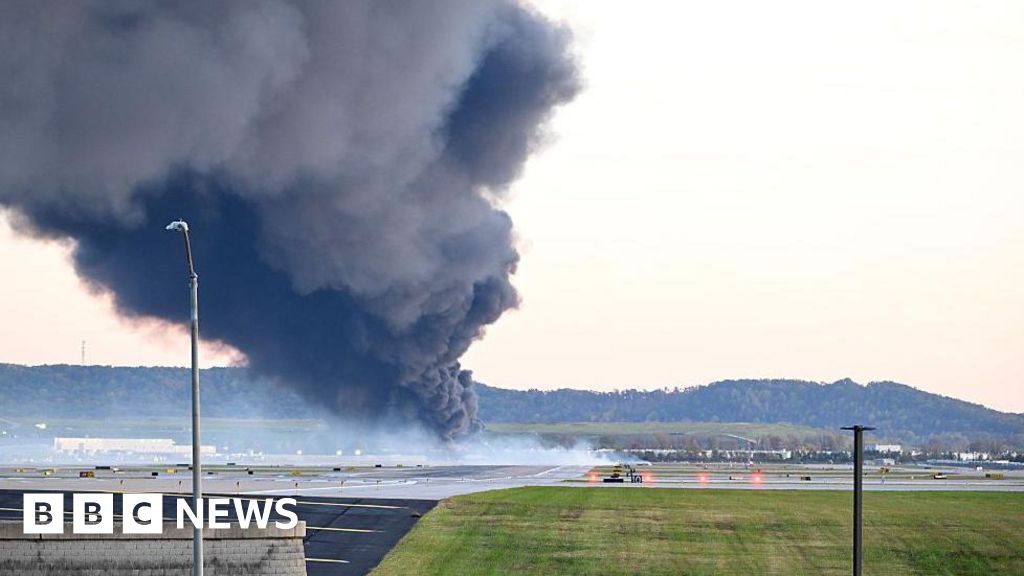
Boeing knew of flaw in part linked to UPS plane crash, US safety board report says 17 hours ago Share Save Theo Leggett International Business Correspondent Getty Images An aircraft…
Sources
Related posts
- Boeing knew of engine‑mount flaw linked to UPS cargo crash, NTSB update
- Cisco patches maximum-severity AsyncOS flaw that was under active attack
- Chinese spies used Maduro’s capture as a lure to phish US govt agencies