
TL;DR
At CES 2026 Nvidia introduced Alpamayo, a set of open-source AI models, simulators and datasets intended to help autonomous vehicles reason through complex driving scenarios. The centerpiece, Alpamayo 1, is a 10-billion-parameter vision-language-action model that uses chain-of-thought reasoning and is available on Hugging Face.
What happened
Nvidia announced Alpamayo at CES 2026, positioning it as a bundled effort of open-source models, simulation tools and datasets aimed at improving decision-making in physical AI for robots and vehicles. The flagship model, Alpamayo 1, is described as a 10-billion-parameter vision-language-action (VLA) model with chain-of-thought reasoning designed to break down driving problems into steps and evaluate options before selecting a safe path. Nvidia made the underlying code available on Hugging Face, and said developers can fine-tune the model into smaller, faster variants or build auxiliary tools—such as auto-labelers and evaluators—on top of it. The company also highlighted integration with its Cosmos generative world models for creating synthetic training data. Alongside the models, Nvidia released an open driving dataset with more than 1,700 hours of footage covering varied geographies and edge cases, and published AlpaSim, an open-source simulation framework on GitHub for validating systems under realistic sensor and traffic conditions.
Why it matters
- Targets a key gap in autonomous systems: reasoning through rare or complex edge cases rather than relying solely on pattern recognition.
- Open-source release could accelerate research and tool development by allowing broader access to models, data and simulators.
- Chain-of-thought capabilities may improve interpretability by producing stepwise reasoning that can be inspected or evaluated.
- Combined package (models, synthetic-data tools, real-world dataset and simulator) supports end-to-end training and validation workflows at scale.
Key facts
- Alpamayo was unveiled at CES 2026 as an open-source family of models, tools and datasets for physical AI.
- Alpamayo 1 is a 10-billion-parameter vision-language-action model that uses chain-of-thought reasoning.
- Nvidia published Alpamayo 1’s code on Hugging Face for developers to access and fine-tune.
- Developers can adapt Alpamayo into smaller, faster models or build tooling such as auto-labelers and decision evaluators.
- Nvidia recommends combining real data with synthetic data generated by its Cosmos generative world models.
- The company released an open dataset containing more than 1,700 hours of driving data covering diverse geographies and complex scenarios.
- AlpaSim, an open-source simulation framework intended to recreate sensors and traffic conditions for large-scale validation, is available on GitHub.
- Nvidia framed Alpamayo as bringing reasoning capabilities to autonomous vehicles so they can address unusual situations without prior direct experience.
What to watch next
- Developer uptake of Alpamayo code and models on Hugging Face and AlpaSim on GitHub — not confirmed in the source.
- How vehicle manufacturers and AV developers integrate Alpamayo into production or testing pipelines — not confirmed in the source.
- Independent benchmarking and safety evaluations of Alpamayo's chain-of-thought reasoning in real-world driving — not confirmed in the source.
Quick glossary
- Vision-Language-Action (VLA) model: A neural model that processes visual inputs and language together to make decisions or generate actions in an environment.
- Chain-of-thought reasoning: A method where a model produces intermediate, stepwise reasoning or deliberation that leads to a final decision or answer.
- Generative world models (Cosmos): AI systems that synthesize representations of physical environments and scenarios for training or testing agents.
- Synthetic data: Artificially generated data used to augment or replace real-world data for training machine learning systems.
- Simulation framework (AlpaSim): Software that recreates sensors, traffic and environment conditions to validate autonomous systems in controlled, repeatable scenarios.
Reader FAQ
Is Alpamayo open-source?
Yes. Nvidia has made Alpamayo 1’s code available on Hugging Face and released the AlpaSim simulator on GitHub.
How large is Alpamayo 1?
Alpamayo 1 is described as a 10-billion-parameter model.
Does Nvidia provide real driving data with Alpamayo?
Yes. Nvidia released an open dataset containing more than 1,700 hours of driving data across varied geographies and scenarios.
Can Alpamayo be used in commercial self-driving cars today?
not confirmed in the source
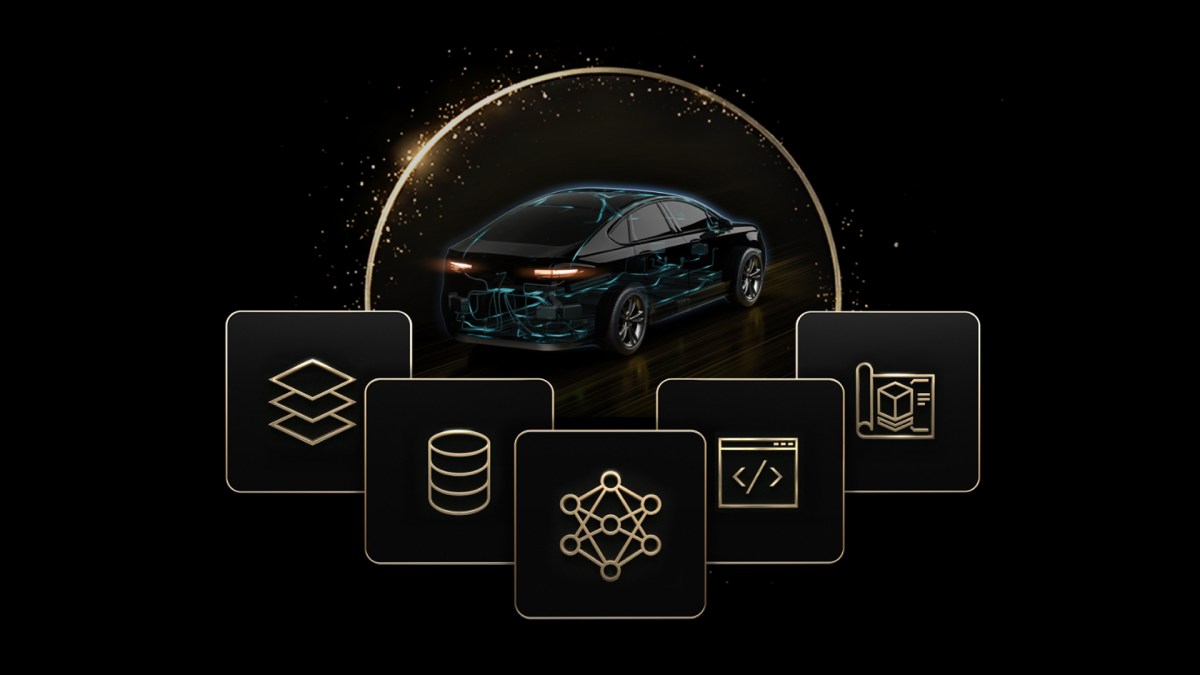
At CES 2026, Nvidia launched Alpamayo, a new family of open-source AI models, simulation tools, and datasets for training physical robots and vehicles that are designed to help usher autonomous…
Sources
- Nvidia launches Alpamayo, open AI models that allow autonomous vehicles to ‘think like a human’
- At NeurIPS, NVIDIA Advances Open Model Development …
- Nvidia Drops First Open AI Model for Self-Driving Cars
- Nvidia announces new open AI models and tools for …
Related posts
- O-Ring Automation: How Task Complementarity Shapes Machine Adoption
- X Blames Users for Grok-Generated CSAM While No Model Fixes Are Announced
- Apple’s LLM-powered Siri expected to debut with iOS 26.4 in March 2026