
TL;DR
Three developers have filed lawsuits after the Department of the Interior issued a stop-work order on five East Coast offshore wind projects valued at about $25 billion. The administration cited national security concerns; developers say construction suspensions are already causing major delays and losses.
What happened
On December 22 the Department of the Interior ordered work to stop on five offshore wind developments off the Eastern Seaboard, prompting litigation from three companies. Ørsted and Equinor filed suits last week challenging the halt to Revolution Wind (704 MW) and Empire Wind (2 GW), respectively, and Dominion Energy sued over its 2.6 GW Coastal Virginia Offshore Wind project. Collectively the projects represent roughly 6 GW of capacity and about $25 billion in investment. Developers say parts of the builds were already well advanced — Revolution Wind is nearly complete and both Empire Wind and the Virginia project are about 60% finished — and Dominion reported daily financial losses tied to the pause. Avangrid’s Vineyard Wind 1, which is nearly half operational, has not yet taken legal action. The administration pointed to national security risks without detailing specific vulnerabilities, while past federal and industry work has examined radar interactions and mitigation strategies.
Why it matters
- The stoppage affects multiple large clean-energy projects that would add gigawatts of offshore capacity to the grid.
- Developers report significant construction disruptions and mounting financial losses tied to the work suspensions.
- The dispute centers on national security and radar interference concerns, highlighting tensions between defense priorities and renewable deployment.
- How regulators, the military and industry resolve mitigation and siting issues could set precedents for future offshore wind approvals.
Key facts
- The Interior Department issued a stop-work order on December 22 affecting five offshore wind projects totaling about $25 billion in investment.
- Three lawsuits were filed: Ørsted and Equinor last week, and Dominion Energy on December 23.
- Affected projects named in the suits include Revolution Wind (704 MW), Empire Wind (2 GW) and Coastal Virginia Offshore Wind (2.6 GW); combined capacity is roughly 6 GW.
- Revolution Wind is nearly 90% complete; Empire Wind and Coastal Virginia are each about 60% complete.
- Dominion said the halt was causing losses of about $5 million per day.
- Avangrid’s Vineyard Wind 1 has not filed suit; the project is nearly half operational.
- The Department of the Interior cited national security concerns as its reason for the pause but did not provide detailed specifics.
- A Department of Energy report from February 2024 discussed radar interference issues and potential solutions for wind projects.
- Government and industry researchers have been working for years on technical approaches to reduce wind turbine impacts on radar systems.
- The Bureau of Ocean Energy Management coordinates project reviews with the Military Aviation and Installation Assurance Siting Clearinghouse to attempt to de-conflict concerns.
What to watch next
- Whether federal courts reverse the Interior Department’s stop-work order — not confirmed in the source.
- If Avangrid or other developers file lawsuits in the coming days — not confirmed in the source.
- Whether the Interior Department provides specific details on the national security concerns or outlines remediation steps — not confirmed in the source.
Quick glossary
- Offshore wind farm: A collection of wind turbines installed in bodies of water, usually on the continental shelf, that generate electricity for onshore grids.
- Stop-work order: An official directive to halt construction or project activities pending further review or action by authorities.
- Bureau of Ocean Energy Management (BOEM): The federal agency responsible for managing development of energy and mineral resources on the outer continental shelf.
- Radar interference: Disruption of radar signals caused by objects or motion that can produce false echoes or reduce the clarity of returns, potentially affecting surveillance or navigation systems.
- Gigawatt (GW): A unit of power equal to one billion watts, commonly used to express large-scale electricity generation capacity.
Reader FAQ
Who filed the lawsuits?
Ørsted, Equinor and Dominion Energy filed suits challenging the stop-work order.
Which projects are affected?
The suits name Revolution Wind (704 MW), Empire Wind (2 GW) and Coastal Virginia Offshore Wind (2.6 GW); Vineyard Wind 1 was paused but its developer has not sued.
Why did the administration halt work?
The Department of the Interior cited national security concerns; it did not provide specific details in the materials cited by the reporting.
How much capacity and investment are at stake?
The projects would total about 6 GW of capacity and were valued at roughly $25 billion.
When will work resume?
Not confirmed in the source.
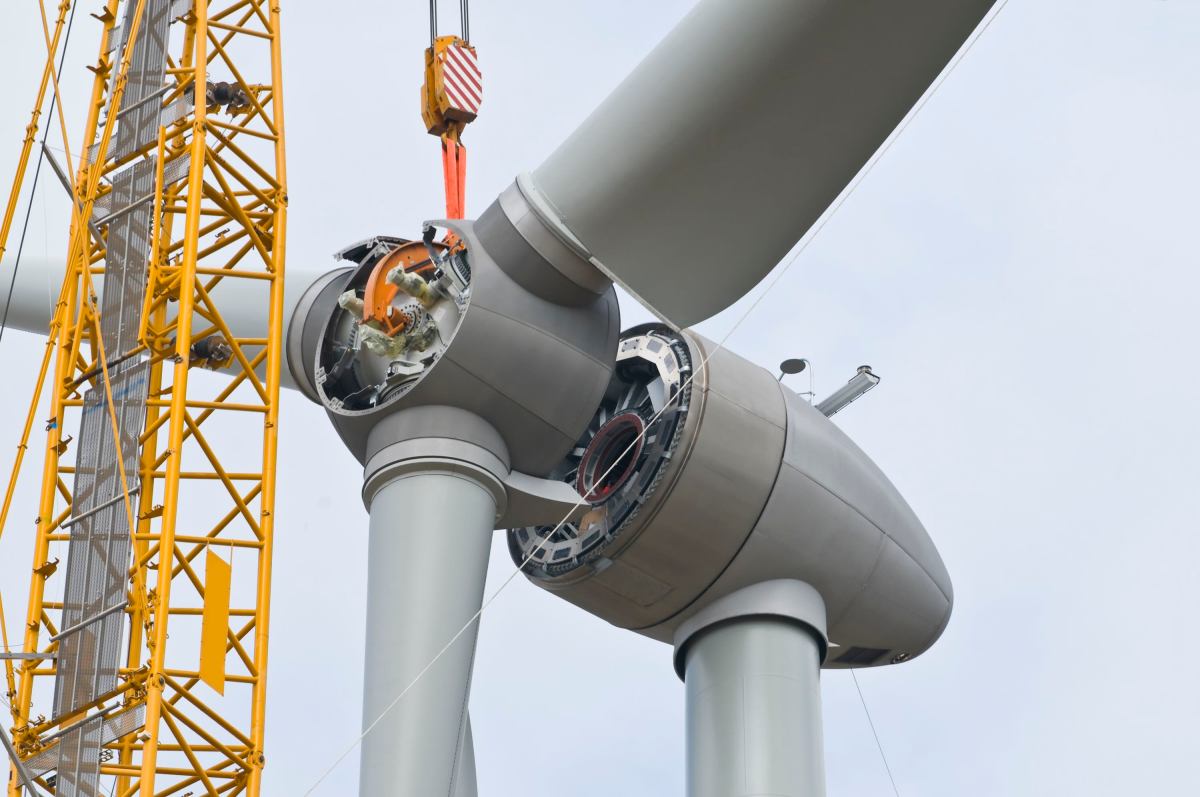
Three offshore wind developers are suing the Trump administration after the Department of the Interior halted five projects worth a total of $25 billion on December 22. If completed, the…
Sources
- Offshore wind developers sue Trump administration for halting $25B in projects
- Offshore wind developers sue Trump administration for …
- Diana DiGangi
- TenneT Awards $25B in Contracts to Build North Sea- …
Related posts
- Web Developer Posts Public Payment-Demand Notice on Client’s Website
- EU will not roll back digital rules over US objections, says bloc
- Starlink offers a free month in Venezuela despite no local service availability