
TL;DR
On January 1, 2026, thousands of U.S. copyrighted works published in 1930 will enter the public domain, and sound recordings published in 1925 will also become public domain. Notable entries include books by William Faulkner and Agatha Christie, early Nancy Drew titles, classic songs, and iconic cartoon characters such as Betty Boop and Pluto.
What happened
On January 1, 2026, a large tranche of creative works published in 1930 became part of the public domain in the United States, permitting free copying, sharing, and reuse. The newly available corpus includes celebrated novels (for example, William Faulkner’s As I Lay Dying and Agatha Christie’s The Murder at the Vicarage), the first four Nancy Drew books, and illustrated children’s editions like The Little Engine That Could. Early film and animation from 1930 also entered the public domain, encompassing appearances by performers such as Marlene Dietrich, Greta Garbo, the Marx Brothers and John Wayne in an early leading role. In addition, sound recordings from 1925 entered the public domain. The Duke Center for the Study of the Public Domain catalogued these entries and provided analysis on their significance, along with explanations of how copyright and trademark law relate to characters, the effects of long copyright terms, and rules for determining public-domain status in the U.S.
Why it matters
- Works in the public domain can be copied, adapted, and republished without seeking permission or paying licensing fees, lowering barriers for creators and educators.
- Public-domain status frees up plotlines, characters, images and musical compositions for new creative treatments, remixes, and scholarly use.
- Preserving and expanding the public domain supports cultural access and historical research by making older works widely available.
- The transition highlights legal complexities: copyright expiration does not automatically resolve trademark or other legal claims tied to characters or brands.
Key facts
- Date: January 1, 2026 is the date works from 1930 entered the U.S. public domain.
- Sound recordings published in 1925 also entered the U.S. public domain on that date.
- Notable books entering the public domain include As I Lay Dying (William Faulkner), The Maltese Falcon (Dashiell Hammett, full book), and The Murder at the Vicarage (Agatha Christie).
- The first four Nancy Drew novels (credited to Carolyn Keene) entered the public domain.
- Early appearances of characters such as Betty Boop, Rover/Pluto, Blondie and Dagwood, and Flip the Frog were among the materials listed.
- Songs and compositions entering the public domain include titles such as I Got Rhythm, Georgia on My Mind, and Dream a Little Dream of Me.
- The Duke Center for the Study of the Public Domain compiled lists and provided legal and cultural analysis; the site focuses on U.S. law.
- Short phrases, names, and titles are not copyrightable under U.S. law and therefore may already be in the public domain.
- The public-domain release spans thousands of works across literature, film, music, and visual art, including pieces by Piet Mondrian and Paul Klee.
What to watch next
- New adaptations, editions, performances, and scholarly editions that draw on these 1930 works and 1925 recordings now that permission and licensing barriers are removed.
- Commercial uses of characters and brands tied to these works — how trademark law and existing registrations may affect merchandising and branding (not confirmed in the source).
- Rights disputes or litigation over character use where copyright has expired but other legal claims (trademark, publicity rights) might be asserted (not confirmed in the source).
Quick glossary
- Public domain: Creative works no longer under copyright or never eligible for it; they may be used, copied, and adapted without permission.
- Copyright term: The legally defined period during which creators (or rights holders) control copying and distribution of a work.
- Sound recording: A recorded performance or capture of sound; in U.S. law, recordings have distinct copyright and may enter the public domain on a different schedule than underlying compositions.
- Trademark: A form of intellectual property that protects brands, names, logos, and identifies the source of goods or services; separate from copyright.
- Derivative work: A new work built from one or more existing works (such as adaptations or remixes) that may have its own copyright if enough new material is added.
Reader FAQ
When did these works enter the public domain?
Works published in 1930 entered the U.S. public domain on January 1, 2026; sound recordings from 1925 entered the public domain the same day.
Can I freely use characters like Betty Boop or Pluto now?
Their earliest appearances from 1930 are in the public domain, permitting reuse of those original depictions; how trademark or later copyrights affect specific uses is addressed by legal doctrines (the site explains these issues, but detailed outcomes depend on context).
Does this apply outside the United States?
No — the Duke resource focuses only on U.S. law; copyright terms and public-domain status can differ in other countries.
Are titles, names, or short phrases protected by copyright?
Under U.S. law, names, titles and very short phrases are not subject to copyright and are therefore generally in the public domain.
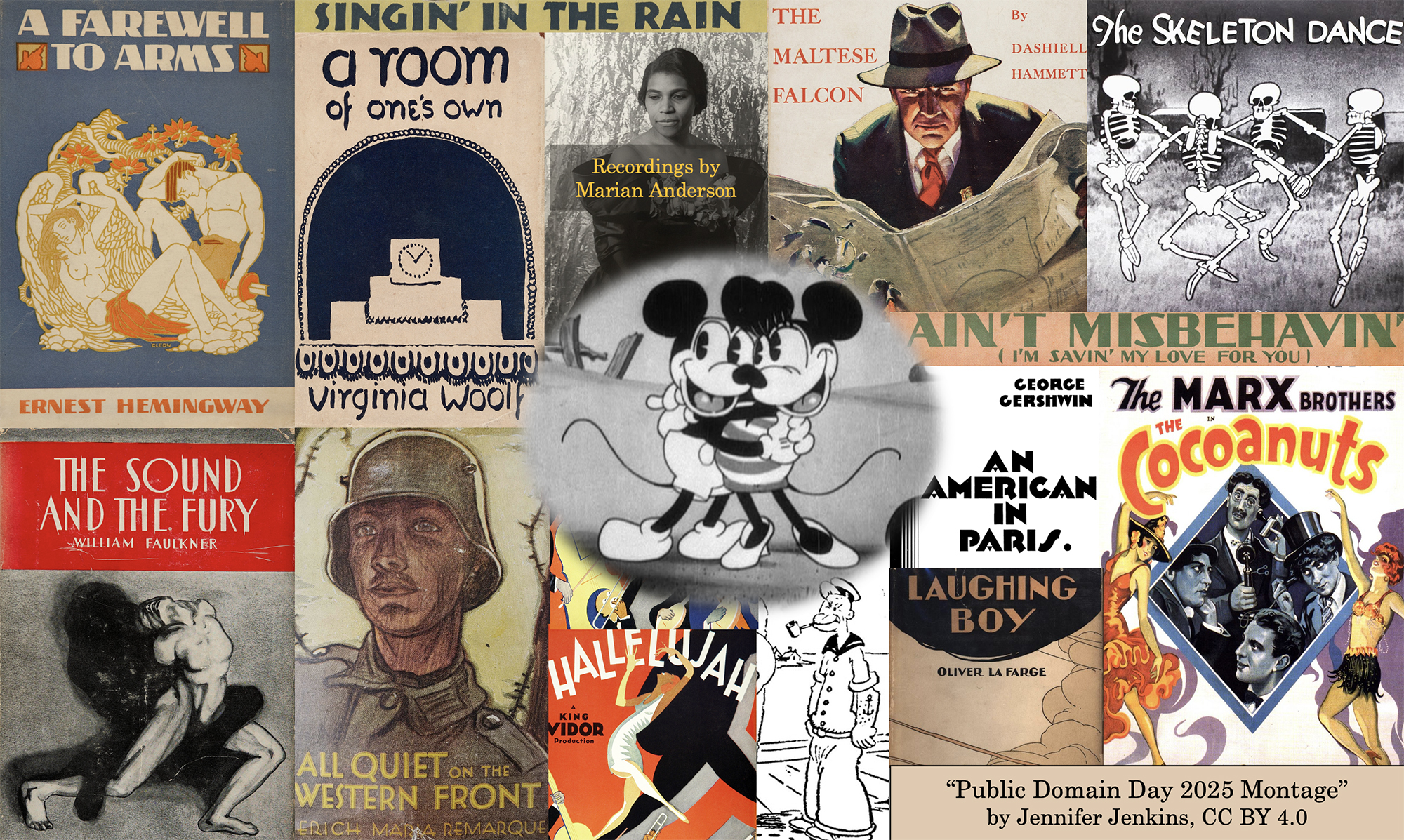
Duke Law > Centers & Programs > You are here Center for the Study of the Public Domain > Public Domain Day 2026 January 1, 2026 is Public Domain Day:…
Sources
- Public Domain Day 2026
- Celebrate the Public Domain with the Internet Archive: 2026
- Public Domain Day 2026 Is Coming: Here's What to Know
- The cultural works becoming public domain in 2026, from …
Related posts
- Hungryroot Promo Codes and Coupons: Save 30% on Your First Weekly Box
- C -> Java isn’t the same as Java -> LLM: why source code remains central
- One-page printable yearly calendar that auto-fits any paper size