
TL;DR
Razer unveiled Project AVA, a desktop AI companion with a holographic display, at CES 2026 and faced heavy online ridicule. Critics have focused on the device's appearance and concept, but the article argues voice synthesis choices and platform selection pose the more significant hurdles to mainstream acceptance.
What happened
At CES 2026 Razer showed Project AVA, a cylindrical desktop AI companion that projects a 5.5-inch “holographic” avatar and uses a built-in camera for eye tracking, expression recognition and personalized interaction. Razer positions AVA partly as a gaming copilot that can watch gameplay, offer advice and cheer users on, while also handling translation, organization and real-time conversation. After the reveal, social media and commentators mocked the device, leaning into familiar ‘waifu’ tropes and derision of AI companions. The coverage highlights a bigger concern in the article: the demo’s voice work appears to be AI-generated and was widely criticized for being grating and off-putting. The story also notes Razer’s use of xAI’s Grok LLM in the demo, a choice the author describes as problematic, and that Razer’s FAQ says the product will support other AI platforms. Razer is taking reservations for $20 and targets a sale window toward the end of 2026.
Why it matters
- Public perception can shape whether AI companion devices become socially acceptable or remain niche curiosities.
- Voice design and performance are crucial to user comfort and long-term attachment to AI companions, potentially more so than visuals.
- Choice of underlying AI platform affects trust and reputational risk before a product reaches market.
- High-profile missteps at a major trade show can influence investor, developer and consumer reactions to a product category.
Key facts
- Project AVA is a desktop AI companion shown by Razer at CES 2026.
- The device projects a 5.5-inch holographic avatar from a cylindrical desktop enclosure.
- A built-in camera enables eye tracking, expression recognition and personalized interaction.
- Razer describes gaming features: observing gameplay, offering advice and cheering users on.
- Avatars shown include generic 'gamer' characters plus figures billed as Faker and Sao.
- The demo appears to use AI-generated character voices, which critics and the author found off-putting.
- Razer used xAI's Grok LLM in the demo; the article characterizes that choice as problematic.
- Razer’s FAQ states Project AVA will support other AI platforms; no full list or final software partners were provided.
- Reservations are open for $20; Razer has not announced a retail price and aims for a release toward the end of 2026.
What to watch next
- Whether Razer replaces or reworks the demo voices and whether professional voice actors are used.
- If and when Razer announces alternative AI platform integrations beyond xAI's Grok.
- The final retail price and any hands-on reviews when pre-release units are available.
- not confirmed in the source: whether celebrities shown as avatars (Faker, Sao) will personally provide their voices.
Quick glossary
- AI companion: A software agent designed to interact conversationally with a user, often with persona-like characteristics and continuous engagement features.
- Large language model (LLM): A type of AI trained on large text datasets to generate human-like language and handle conversational or text-processing tasks.
- Holographic display: A display technique that creates the appearance of three-dimensional imagery; implementations vary and often use optics to simulate depth.
- Eye tracking: Technology that measures where a user is looking, which can enable gaze-based interaction or personalized responses from software.
- Voice synthesis: The use of AI or software to generate synthetic speech, ranging from rule-based systems to neural text-to-speech models.
Reader FAQ
What is Project AVA?
A Razer desktop AI companion that projects an avatar on a 5.5-inch holographic display and uses a camera for interaction.
When will it be available and how much does it cost?
Razer aims to sell Project AVA toward the end of 2026; a retail price was not announced. Reservations are available for $20.
Why are people mocking Project AVA?
Online reactions focused on the device's appearance and concept, with many mocking its avatar aesthetics and 'waifu' associations.
Will the avatars be voiced by the celebrities shown?
not confirmed in the source.
Which AI model does Project AVA use?
The demo used xAI’s Grok LLM, and Razer’s FAQ says the product will support other AI platforms.
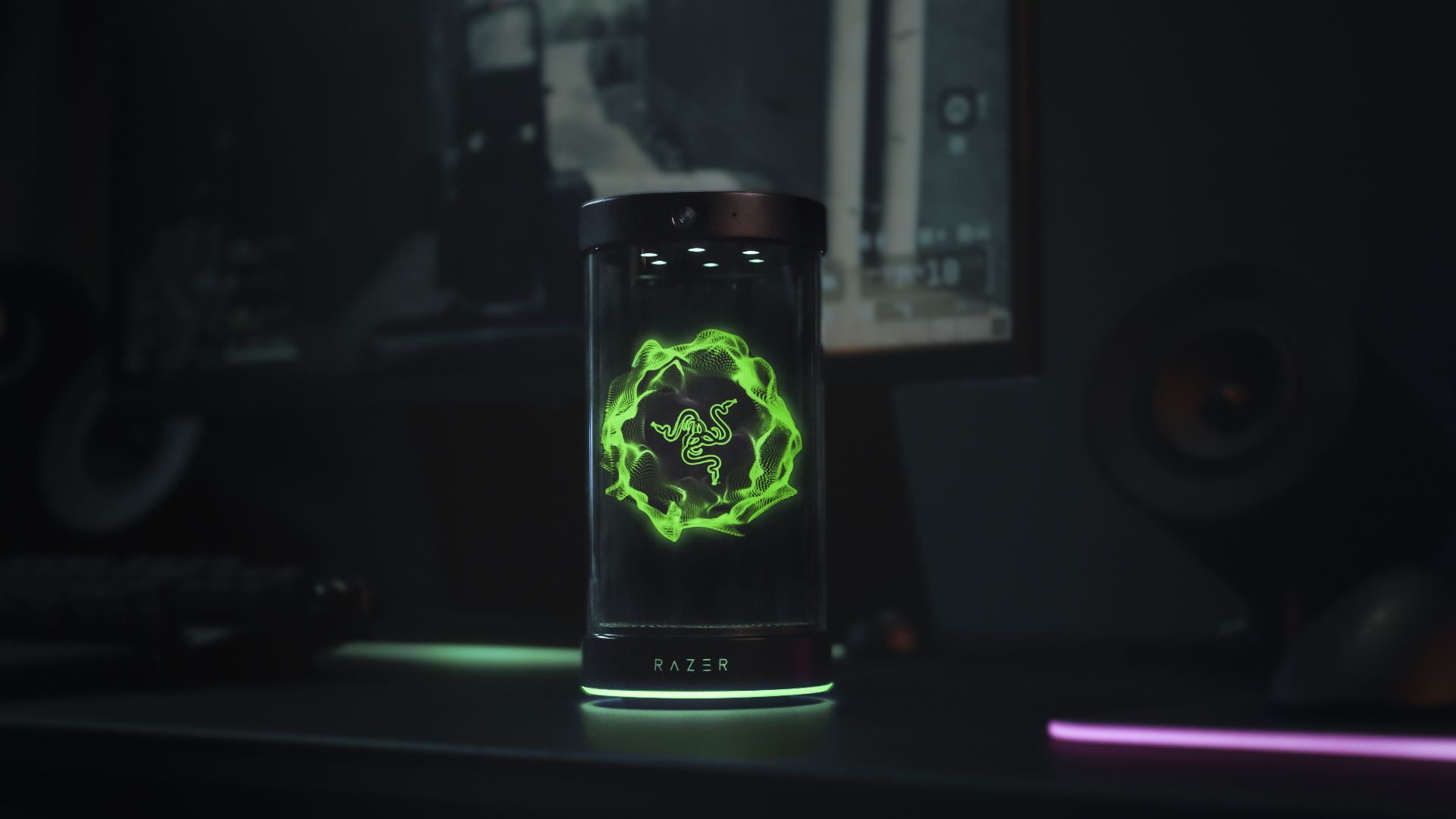
The internet hates Razer's outrageous AI companion, but for all the wrong reasons Credit: Razer By Andy Boxall Published 19 minutes ago Andy is a seasoned technology journalist with more than…
Sources
- The internet hates Razer's outrageous AI companion, but for all the wrong reasons
- Razer Project Ava hands-on: A creepy AI companion no …
- Razer is making an AI anime waifu hologram for your desk
- Project AVA: 3D Hologram AI Desk Companion
Related posts
- Show HN: Is AI hijacking your intent? Formal control algorithm to measure it
- Google warns against ‘bite-sized’ content chunking to boost search rank
- Best Heat Protectant Sprays for Wet and Dry Hair — Tested Picks 2026