
TL;DR
Razer unveiled Project Motoko at CES, a concept AI wearable that looks like wireless headphones and integrates two eye-level cameras and multiple microphones. The prototype runs on an unspecified Qualcomm Snapdragon chip and is designed to work with major AI models such as OpenAI, Google Gemini and Grok, though Razer says the design is only a concept with no guarantee of commercial release.
What happened
At CES, Razer introduced Project Motoko, a concept headset that combines the company’s familiar headphone form factor with on-board AI features. The design places dual first-person-view cameras at roughly eye level inside the ear cups to capture what the wearer naturally sees, alongside multiple microphones for voice and ambient audio input and hands-free audio controls. Razer says the current iteration is powered by an unspecified Qualcomm Snapdragon chip and will be compatible with a range of large AI models, including OpenAI, Google Gemini and Grok. The company positions headphones as a practical housing for an AI wearable—arguing the size avoids the compromises of trying to cram camera hardware into glasses and pointing to a reportedly large headset user base. Razer also cautions that Project Motoko is a concept and may not become a shipped product.
Why it matters
- Integrating eye-level cameras and mics into a common headphone form could enable continuous, contextual AI assistance tied to what a user sees and hears.
- Compatibility with multiple major AI models suggests the device is intended to act as a general-purpose assistant rather than a single-vendor service.
- Using a headphone form factor sidesteps design constraints of smart glasses, potentially offering more internal space for components.
- As a concept, the announcement highlights industry interest in wearable AI but does not guarantee a consumer product will follow.
Key facts
- Project name: Project Motoko; presented by Razer at CES.
- Form factor: resembles wireless headphones, similar to Razer’s Barracuda headset design.
- Cameras: dual first-person-view lenses positioned at eye level inside the ear cups.
- Processing: current iteration runs on an unspecified Qualcomm Snapdragon chip.
- Audio: multiple microphones for voice and environmental audio and hands-free controls for audio settings.
- AI compatibility: designed to work with OpenAI, Google Gemini and Grok.
- Razer’s claim: headset form factor offers more space and less conspicuousness compared with glasses.
- Market context: Razer referenced an "untapped" market of roughly 1.4 billion headset users.
- Product status: Project Motoko is a concept with no guarantee it will become a commercial product.
What to watch next
- Whether Razer decides to move Project Motoko from concept to a commercial product — not confirmed in the source
- Exact chipset model and detailed hardware specifications (camera resolutions, battery life, sensors) — not confirmed in the source
- Timing, pricing and availability for any potential consumer release — not confirmed in the source
- How integrations with the listed AI models will work in practice (on-device vs. cloud processing, privacy controls) — not confirmed in the source
Quick glossary
- AI wearable: A device worn on the body that uses artificial intelligence to provide features like contextual assistance, speech recognition, or environment-aware functions.
- First-person-view (FPV) camera: A camera positioned to capture the perspective of the wearer, commonly used to record or analyze what the user is looking at.
- Qualcomm Snapdragon: A family of mobile system-on-chip (SoC) processors commonly used in smartphones, tablets, and other portable devices.
- Form factor: The physical design and dimensions of a device, which influence usability, component placement and user acceptance.
- Hands-free controls: Input methods that allow users to operate a device without using their hands, often via voice commands, gestures, or physical buttons positioned for easy reach.
Reader FAQ
Is Project Motoko a shipping product?
No — Razer presented it as a concept and said there is no guarantee it will become a commercial product.
What processor does the wearable use?
Razer says the current iteration uses an unspecified Qualcomm Snapdragon chip.
Which AI models does Motoko support?
Razer says Motoko is designed to be compatible with OpenAI, Google Gemini and Grok.
Will it be more discreet than smart glasses?
Razer argues headphones offer more internal space and avoid the compromises of fitting camera hardware into glasses, but whether it is more discreet in practice is not confirmed in the source.
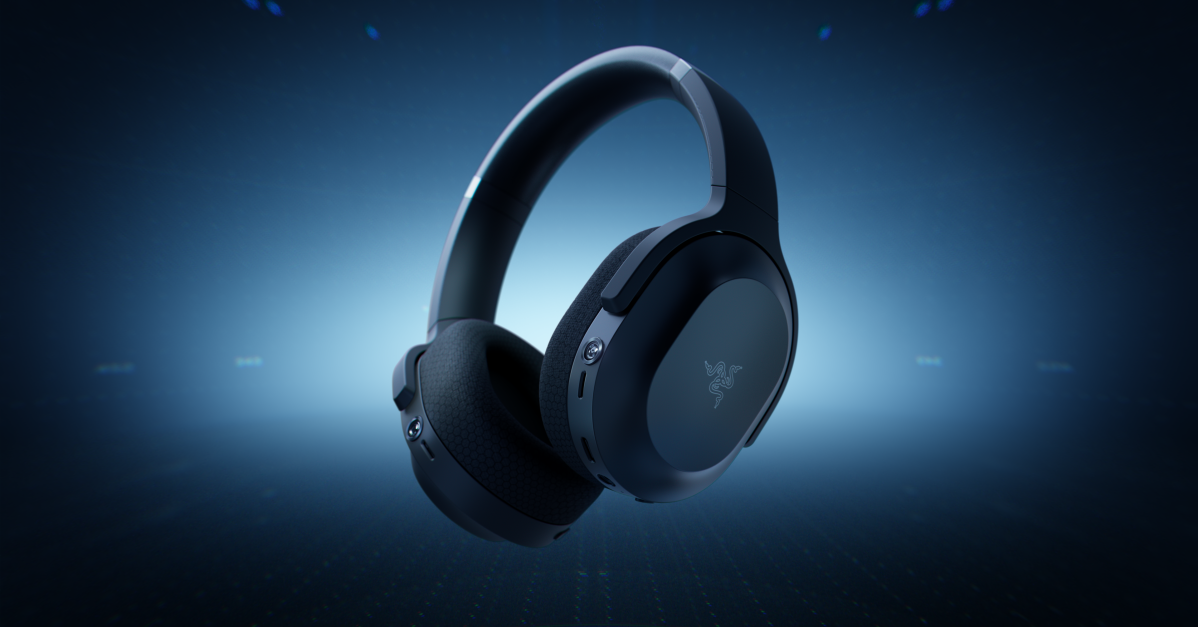
TECH AI NEWS Razer’s AI wearable is a headset with built-in cameras Say hello to the Snapdragon-powered ‘Project Motoko’ concept. by Jess Weatherbed Jan 6, 2026, 2:00 PM UTC 0…
Sources
- Razer’s AI wearable is a headset with built-in cameras
- Razer's new concept headphones have built-in cameras …
- Razer Thinks AI Headphones With Cameras Can Take On …
- Razer Unveils AI Gaming Ecosystem and Next-Gen …
Related posts
- Tracking every watch I wear in 2026: which watch-tracking app I chose
- Ugreen expands into AI-powered smart-home surveillance with SynCare
- Chamberlain’s myQ Secure View lock pairs 2K HDR doorbell with face-aware locking