
TL;DR
Scientists have identified a previously undescribed mushroom, Lanmaoa asiatica, sold in Yunnan markets and reported to induce vivid 'little people' (lilliputian) hallucinations when undercooked. DNA and chemical screening found no known psychoactive compounds, and identical effects have been reported independently in the Philippines and Papua New Guinea.
What happened
Field researchers sampled mushrooms sold openly in Kunming's markets after local buyers and sellers pointed them to a commonly eaten species known regionally as Jian shou qing. DNA sequencing of market specimens established the organism as a species new to science, formally named Lanmaoa asiatica. Ethnographic accounts and hospital records link consumption—especially when undercooked—to a distinct syndrome in which people perceive numerous tiny, autonomous figures (called xiao ren ren locally). Independent reports of the same visual phenomenon came from communities in the Northern Cordillera of the Philippines, where the mushroom is called Sedesdem; DNA work there matched the Philippine specimens to the same species. Chemical and genomic tests carried out so far did not detect any previously identified psychoactive molecules, and examinations of some commercial dried packages labelled as Jian shou qing revealed mixtures that included poisonous species and lacked the targeted mushroom.
Why it matters
- Points to an unknown bioactive compound that reliably produces a rare, specific hallucination type, offering a new target for chemical and neurological research.
- Consistent reports across distant cultures suggest a biological mechanism rather than a purely cultural or placebo effect.
- Widespread sale in open markets and evidence of mislabeled or mixed commercial packages raise food safety and public-health concerns.
- Clarifying the mushroom's chemistry and taxonomy could affect clinical diagnosis of mushroom-related hallucinations and poisoning.
Key facts
- The mushroom formally described is Lanmaoa asiatica, previously sold locally as Jian shou qing.
- Consumption, particularly when undercooked, is associated with lilliputian hallucinations—perceptions of many tiny people interacting with the environment.
- Independent ethnographic reports of the same hallucination type come from Papua New Guinea (nonda) and the Philippines (Sedesdem); DNA matched Philippine specimens to Lanmaoa asiatica.
- Genetic and chemical analyses to date did not detect any known psychoactive compounds in samples tested.
- Lanmaoa asiatica is more closely related to porcini-type mushrooms than to classic 'magic mushroom' species.
- Market-sourced dried packages labeled as Jian shou qing were found to contain multiple poisonous species and sometimes lacked the psychoactive species entirely.
- Yunnan province hosts large wild-mushroom markets where hundreds of species are sold, making accurate identification and safe preparation important.
- Hospital records cited indicate 96% of patients affected by this mushroom reported seeing 'little people' or similar visual phenomena.
What to watch next
- Identification and chemical characterization of the specific compound(s) responsible for the lilliputian hallucinations — not confirmed in the source.
- Any published clinical or neuroimaging studies linking the mushroom’s active compounds to the neural mechanisms of lilliputian hallucinations — not confirmed in the source.
- Regulatory or market responses addressing mislabeling and poisonous contaminants in dried mushroom packages — not confirmed in the source.
Quick glossary
- Lilliputian hallucinations: A perceptual syndrome in which a person sees numerous miniature people or figures interacting in their environment.
- DNA sequencing: Laboratory method used to determine the order of bases in an organism's genetic material, which helps identify species and relationships.
- Psychoactive compound: A chemical substance that affects the brain and can alter perception, mood, consciousness, cognition, or behavior.
- Lanmaoa: A genus of fungi; in this context, Lanmaoa asiatica is the species newly described from market specimens.
Reader FAQ
Is Lanmaoa asiatica the same as classic 'magic mushrooms'?
No. The species is taxonomically different and is reported to be more closely related to porcini-type fungi than to well-known psilocybin-containing mushrooms.
Do we know what chemical makes people see tiny people?
Chemical and genomic analyses so far did not detect any known psychoactive molecules; the active compound has not been identified.
Are these hallucinations common among people who eat the mushroom?
Local accounts and hospital records cited in the research indicate a high frequency of lilliputian hallucinations among affected cases; one source reported 96% of patients describing such visions.
Is it safe to buy Jian shou qing from markets?
Not confirmed in the source.
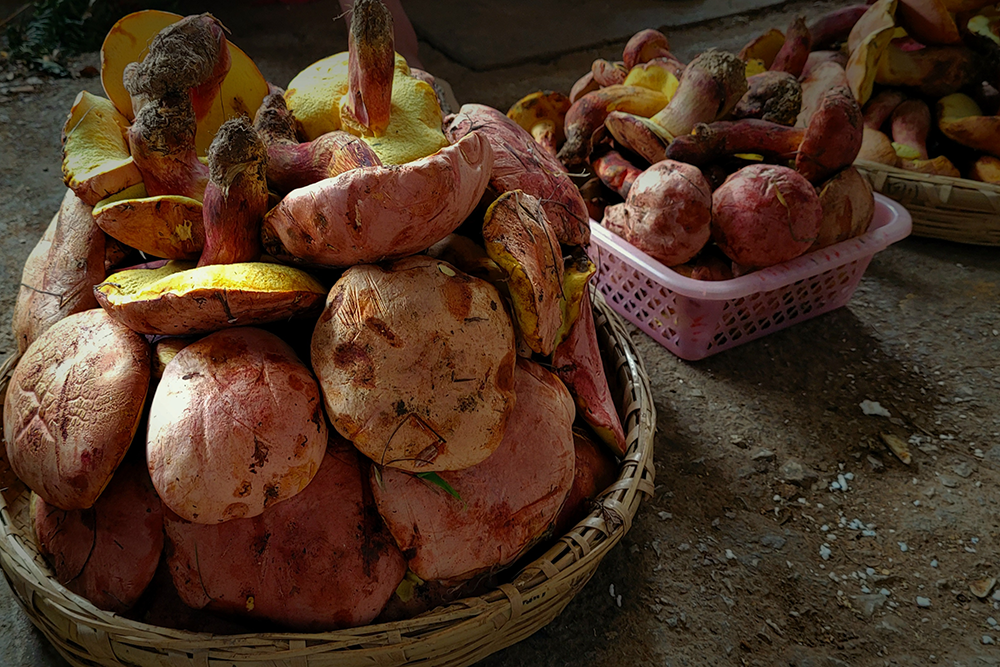
Mushroom markets are scattered throughout the capital city of Kunming, ranging in size from a few street blocks to no less than the largest wild mushroom market in the world,…
Sources
- Experts Explore New Mushroom Which Causes Fairytale-Like Hallucinations
- The Hallucinogenic Mushroom That Makes You See …
- 5 Questions with mushroom researcher Colin Domnauer
- Scientists Investigate Mushroom That Causes Visions of …
Related posts
- Proclamation: Restoring the Em—Dash and Reclaiming Punctuation from AI
- How to Embed Files in C/C++ Binaries: Tools, Preprocessor, and ASM
- C/C++ Embedded Files: Methods to Include Resource Data Inside Binaries