
TL;DR
Schmidt Sciences announced the Lazuli Space Observatory at an American Astronomical Society meeting; the project is backed by Eric and Wendy Schmidt and could become the largest privately funded space telescope. Lazuli will carry a 3.1-meter mirror and multiple instruments, and is part of a broader Schmidt Observatory System that includes three ground facilities and a pledge to share data and software widely.
What happened
Schmidt Sciences revealed plans for the Lazuli Space Observatory at a recent meeting of the American Astronomical Society. The space-based telescope is designed around a 3.1-meter primary mirror, which would exceed the Hubble Space Telescope’s mirror size though remain smaller than the James Webb Space Telescope. Lazuli will host four primary instruments including a wide-field camera, a broadband integral-field spectrograph and a coronagraph. Those tools are intended to support studies ranging from exoplanets to supernovae, and the observatory is described as capable of "rapid response" observations to follow up objects identified by other facilities. Lazuli is one element of the Schmidt Observatory System, which also comprises three ground-based projects—the Argus Array, the Deep Synoptic Array (DSA) and the Large Fiber Array Spectroscopic Telescope (LFAST). Schmidt Sciences says the system will default to open science: data and software will be broadly shared, and researchers worldwide will have access. All four observatories could be operational before the end of the decade.
Why it matters
- A privately funded space telescope of this scale could shift how large astronomical facilities are financed and operated.
- A 3.1-meter mirror offers greater light-collecting capability than Hubble, expanding observational reach for many science cases.
- Rapid-response capability would strengthen follow-up observations for transient events discovered by other instruments.
- An explicit commitment to open data and software could broaden access to high-quality astronomical datasets for the global research community.
Key facts
- Project announced by Schmidt Sciences at an American Astronomical Society meeting.
- Eric and Wendy Schmidt are investors in the Lazuli Space Observatory.
- Lazuli’s primary mirror is planned to be 3.1 meters in diameter, larger than Hubble’s mirror but smaller than JWST’s.
- Planned instruments include a wide-field camera, a broadband integral-field spectrograph, and a coronagraph.
- Science goals cited include studies of exoplanets and supernovae, plus rapid-response observations.
- Lazuli is one part of the Schmidt Observatory System alongside Argus Array, Deep Synoptic Array (DSA), and Large Fiber Array Spectroscopic Telescope (LFAST).
- Schmidt Sciences states the program is grounded in a commitment to open science, with data and software broadly shared by default.
- Researchers at all career levels worldwide are intended to be able to use the telescopes and access the collected data.
- Schmidt Sciences says all four observatories could be operational before the end of the decade.
- The project is described as potentially the largest privately funded space telescope in history.
What to watch next
- Whether Lazuli and the three ground-based observatories meet the goal of being operational before the end of the decade.
- Specific launch schedule and selection of launch provider: not confirmed in the source.
- Exact funding totals and financial structure behind Schmidt Sciences’ investments: not confirmed in the source.
- Potential partnerships with NASA, other agencies or academic institutions and how operational access will be managed: not confirmed in the source.
Quick glossary
- Primary mirror (aperture): The main light-collecting surface in a reflecting telescope; larger diameters gather more light and can resolve finer detail.
- Coronagraph: An instrument that blocks light from a bright object, like a star, to enable detection of faint nearby sources such as exoplanets.
- Integral-field spectrograph: A device that obtains a spectrum at each point across an extended field, producing spatially resolved spectral information.
- Wide-field camera: An imaging instrument designed to capture a large area of the sky in a single exposure, useful for surveys and transient detection.
- Open science: Practices that promote sharing of data, software and methods to increase transparency, reproducibility and access for the research community.
Reader FAQ
Who is funding the Lazuli Space Observatory?
The project is backed by Schmidt Sciences with investments from Eric and Wendy Schmidt.
Is Lazuli larger than the Hubble Space Telescope?
Yes — Lazuli’s planned 3.1-meter mirror would be larger than Hubble’s mirror but smaller than the James Webb Space Telescope’s.
When will Lazuli launch?
Not confirmed in the source.
Will the observatory’s data be publicly available?
Schmidt Sciences states data and software will be broadly shared by default, making access available to researchers worldwide.
Is this the first privately funded space telescope?
Not confirmed in the source.
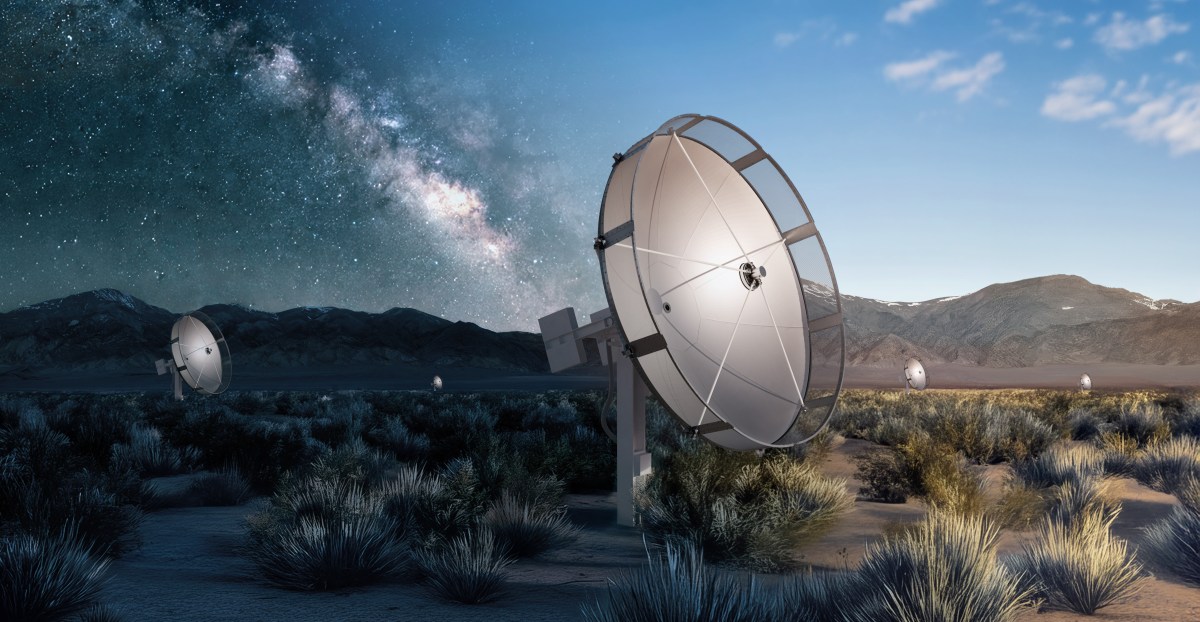
NEWS SCIENCE SPACE The first privately funded space-based telescope is in the works The Lazuli Space Observatory from Schmidt Sciences will be larger than Hubble. by Stevie Bonifield Jan 8,…
Sources
- The first privately funded space-based telescope is in the works
- The First-Ever Private Space Telescope Could Launch …
- Private group unveils plans for large space telescope
- Ex–Google CEO funds private space telescope bigger than …
Related posts
- Tamarind Bio (YC W24) hiring infrastructure engineer to scale model serving
- Satechi unveils Slim EX keyboards with user‑replaceable rechargeable batteries
- Microsoft adds in-chat buy buttons to Copilot for direct purchases