
TL;DR
Researchers report that disabling a single Toxoplasma gondii protein stops the parasite from invading and replicating in lab cells. The protein, TgAP2X-7, appears unique to the parasite, suggesting a possible therapeutic target with less risk to human cells.
What happened
A team led by parasitologists at the Virginia-Maryland College of Veterinary Medicine used a genetic system to make a Toxoplasma gondii protein, TgAP2X-7, susceptible to rapid degradation when exposed to auxin. In cultured human foreskin cells, parasites engineered this way behaved normally until auxin was applied; after degradation of TgAP2X-7 the parasites failed to form plaques, their host-cell invasion rate fell from nearly 100% to under 50%, and replication was substantially impaired. The researchers emphasize that auxin by itself does not affect parasite growth, so the observed effects were attributed to loss of the TgAP2X-7 transcription factor. The study, led by Rajshekhar Gaji with first author Padmaja Mandadi, appears in mSphere and argues that unique parasite transcription factors could provide new avenues for treatment.
Why it matters
- TgAP2X-7 seems essential to the parasite's lytic cycle (invasion, replication, host-cell destruction), so targeting it could interrupt disease-causing processes.
- The protein reportedly has no similarity to human proteins, raising the possibility of interventions that spare host tissues and reduce side effects.
- Current drug options target parasite pathways similar to human biology and carry significant toxicities; a parasite-specific target could expand safe treatment options.
- Interrupting T. gondii activity could be particularly important for people with weakened immune systems and for preventing damage associated with congenital infection.
Key facts
- Toxoplasma gondii infects an estimated 40 million people in the United States, with most infections asymptomatic.
- Cats are the only known hosts in which T. gondii reproduces sexually; infectious forms are shed in feline feces.
- In people with weakened immunity (for example, those with cancer, HIV, or on immunosuppressants) T. gondii can reactivate and cause toxoplasmosis, including brain inflammation.
- Congenital toxoplasmosis occurs when the parasite is transmitted to a fetus and can lead to developmental problems or miscarriage.
- Existing treatments for acute toxoplasmosis act on parasite mechanisms that resemble human processes, which can produce severe side effects.
- The study used an auxin-inducible degradation system to selectively degrade the parasite transcription factor TgAP2X-7 in genetically modified parasites.
- Loss of TgAP2X-7 prevented plaque formation, reduced invasion success from near 100% to below 50% in the lab model, and impaired parasite replication.
- Authors report TgAP2X-7 bears no resemblance to human proteins; the research was published in the journal mSphere.
What to watch next
- Whether TgAP2X-7 can be targeted by drugs or other interventions in animal models and eventually humans — not confirmed in the source.
- Safety and delivery strategies for any therapeutic aimed at this transcription factor, including avoiding off-target effects — not confirmed in the source.
- If follow-up studies will test efficacy against chronic brain-stage parasites and in models of congenital transmission — not confirmed in the source.
Quick glossary
- Toxoplasma gondii: A single-celled parasite that can infect many warm-blooded animals and commonly persists in human tissues, including the brain.
- Transcription factor: A protein that regulates the expression of genes by influencing which genes are turned on or off.
- Auxin-inducible degradation system: A laboratory technique that tags proteins so they can be rapidly and selectively degraded in the presence of the plant hormone auxin.
- Plaque (cell culture): A visible region of cell destruction in a cell monolayer caused by successful replication and spread of a pathogen in vitro.
- Congenital toxoplasmosis: Infection of a fetus by T. gondii during pregnancy, which can cause developmental problems or pregnancy loss.
Reader FAQ
How common is Toxoplasma infection in the U.S.?
The article cites an estimated 40 million Americans with the parasite.
Does Toxoplasma usually make people sick?
Most infected people are asymptomatic; the parasite is a serious risk primarily for immunocompromised individuals and in congenital infections.
Does this study mean there's a new cure?
Not confirmed in the source.
How did researchers show the protein is essential?
They engineered parasites whose TgAP2X-7 could be degraded by auxin; degradation stopped plaque formation, reduced invasion rates, and impaired replication in cell culture.
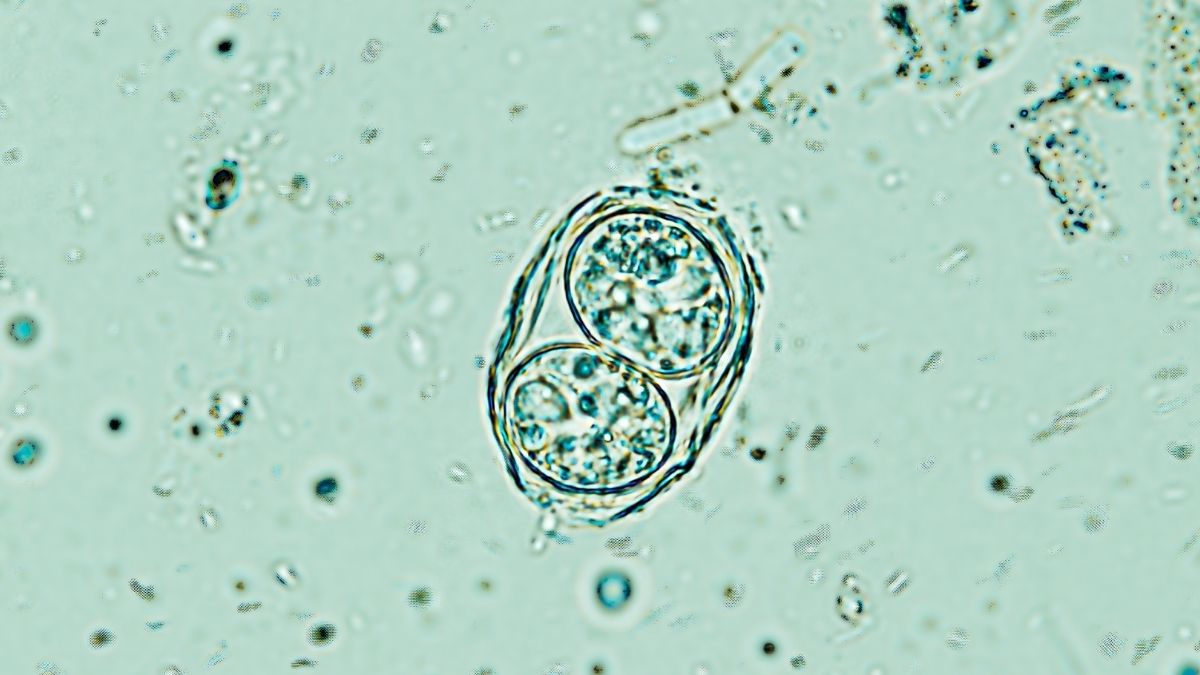
'Off Switch' Discovery Could Help Clear Our Brains of a Common Parasite HEALTH 26 October 2025 ByJESS COCKERILL Toxoplasma gondii oocysts spread through the feces of cats. (Todorean Gabriel/Getty Images)…
Sources
- 'Off switch' discovery could help clear our brains of a common parasite
- Breaking the parasite's code
- Scientists find new way to study toxoplasmosis parasite in lab
- Parasite makes quick exit when researchers 'remove the …
Related posts
- Market Oddity: One Ounce of Silver Is Now Worth More Than a Barrel of Oil
- How a 10-day Netscape Sprint in 1995 Produced the Language That Runs the Web
- How Activists Uncovered the FBI’s COINTELPRO and Security Index