
TL;DR
A literature review outlines spaced repetition as an established learning technique that spaces reviews with increasing intervals to strengthen memory. Software tools (SRS) implement schedules that scale to thousands of items and are commonly used by language learners and medical students; the method trades short-term gains from cramming for superior retention over weeks and months.
What happened
A comprehensive review of the spacing effect and related research summarizes why distributing study sessions beats massed practice for durable memorization. The review covers decades of psychology and education literature (up to roughly 2013), summarizes the testing effect and active-recall benefits, and surveys software implementations that automate spaced schedules. It highlights empirical findings that spaced reviews increase long-term retention, notes biological evidence (e.g., spaced training enhancing long-term potentiation in animal models) while calling deeper mechanisms an open question, and offers practical observations: spaced systems scale to very large corpora of items, are widely adopted by people facing heavy factual loads (notably medical students and foreign-language learners), and coexist with the practical short-term attractiveness of cramming for imminent tests. The author also catalogs available tools, user patterns, and assorted tips for integrating spaced review into study routines.
Why it matters
- Spaced schedules substantially improve long-term retention compared with cramming, changing how learners allocate limited study opportunities.
- Automated SRS tools let users manage very large collections of facts, supporting professional-scale learning demands such as medicine and language study.
- Active recall combined with spacing yields stronger learning than passive exposure, aligning study practice with cognitive research.
- Understanding the trade-off between short-term performance (cramming) and durable knowledge can inform curricula and test design.
Key facts
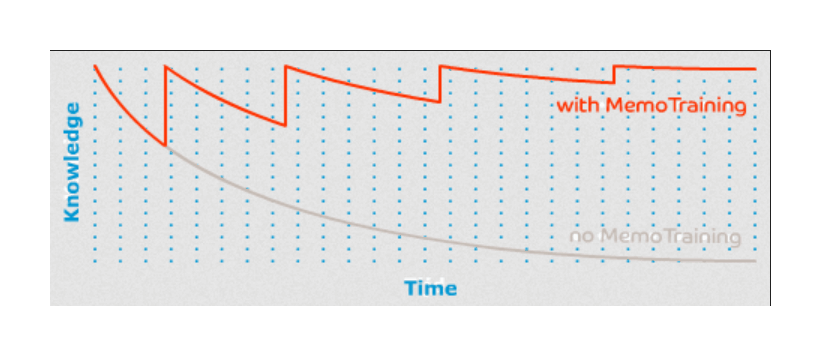
- Spaced repetition is based on the spacing effect: distributing a fixed number of reviews over longer intervals produces better long-term memory than massing them together.
- Active recall (testing oneself) is a stronger learning method than passive study; spacing and testing effects interact positively.
- Animal research indicates spaced training (>1 hour intervals) enhances long-term potentiation compared with massed practice, but full biological explanations remain unresolved.
- Spaced repetition systems (SRS) schedule reviews with increasing intervals as items become better learned, often implemented in software.
- SRS can scale to very large item counts — users routinely keep thousands of cards; some language decks reported tens of thousands and one user reported an auto-generated collection exceeding 700,000 cards.
- Med students are a major demographic for SRS because of large volumes of standardized factual material; many users maintain thousands of cards.
- Notable practitioners cited include Edward O. Thorp and quiz-show competitors who used SRS to memorize large corpora of questions.
- Cramming yields superior short-term recall and can be a rational choice for imminent tests, but those gains decay rapidly compared with spaced schedules.
- Learners commonly misjudge the effectiveness of massed study, perceiving immediate gains that do not predict long-term retention.
What to watch next
- Uptake of SRS in professional and educational settings (medical training, language programs) and how curricula adapt to long-term retention priorities.
- Software feature evolution such as 'extended flashcards' and automation for integrating multimedia and larger corpora into spaced schedules.
- Ongoing research into the neurobiological mechanisms that explain why spacing enhances long-term memory; the review describes this as an open question.
Quick glossary
- Spaced repetition: A study method that schedules reviews of information at increasing intervals to strengthen long-term retention.
- Spacing effect: The empirical observation that distributing study or practice trials over time produces better long-term memory than concentrating them closely together.
- Spaced repetition software (SRS): Software that automates scheduling of reviews according to algorithms designed to optimize intervals for retention.
- Active recall: A learning practice that requires retrieving information from memory (e.g., self-testing) rather than passively re-reading material.
- Forgetting curve: A conceptual curve describing how memory strength declines over time without review.
Reader FAQ
What exactly is spaced repetition?
A technique that spaces reviews of items over increasing intervals so that each review reinforces memory more effectively than repeated massed practice.
Does spaced repetition beat cramming?
For long-term retention, yes: spaced review produces more durable memory. Cramming can produce better immediate recall for an imminent test but decays quickly.
Who uses spaced repetition most?
The review identifies medical students and foreign-language learners as common heavy users, given their large factual workloads.
Do we know why spacing works biologically?
Partially — animal studies suggest spaced practice enhances long-term potentiation compared with massed practice, but the complete biological explanation is described as an open question.
Are there significant downsides to spaced repetition?
Not confirmed in the source.
Spaced Repetition for Efficient Learning Haskell, nootropic, psychedelics, spaced repetition Efficient memorization using the spacing effect: literature review of widespread applicability, tips on use & what it’s good for. 2009-03-11…
Sources
- Spaced repetition for efficient learning (2019)
- Implementation of a spaced-repetition approach to …
- How to Use Spaced Repetition to Boost Learner Retention
- Spaced repetition and active recall improves academic …
Related posts
- How to Build a 100TB TrueNAS NAS in 2025: Complete DIY Storage Guide
- It Is Happening Here — New Republic piece; full text not provided online
- Fabrice Bellard — 2009 Biography (PDF): Overview and Context