
TL;DR
Strange.website publishes short, surreal prose pieces that interrogate modern web culture, artificial intelligence and attention-harvesting design. The site’s dated vignettes (2023–2025) mix warning, allegory and horror to explore deepfakes, dark UX and the rhetorical power of machine-learned language.
What happened
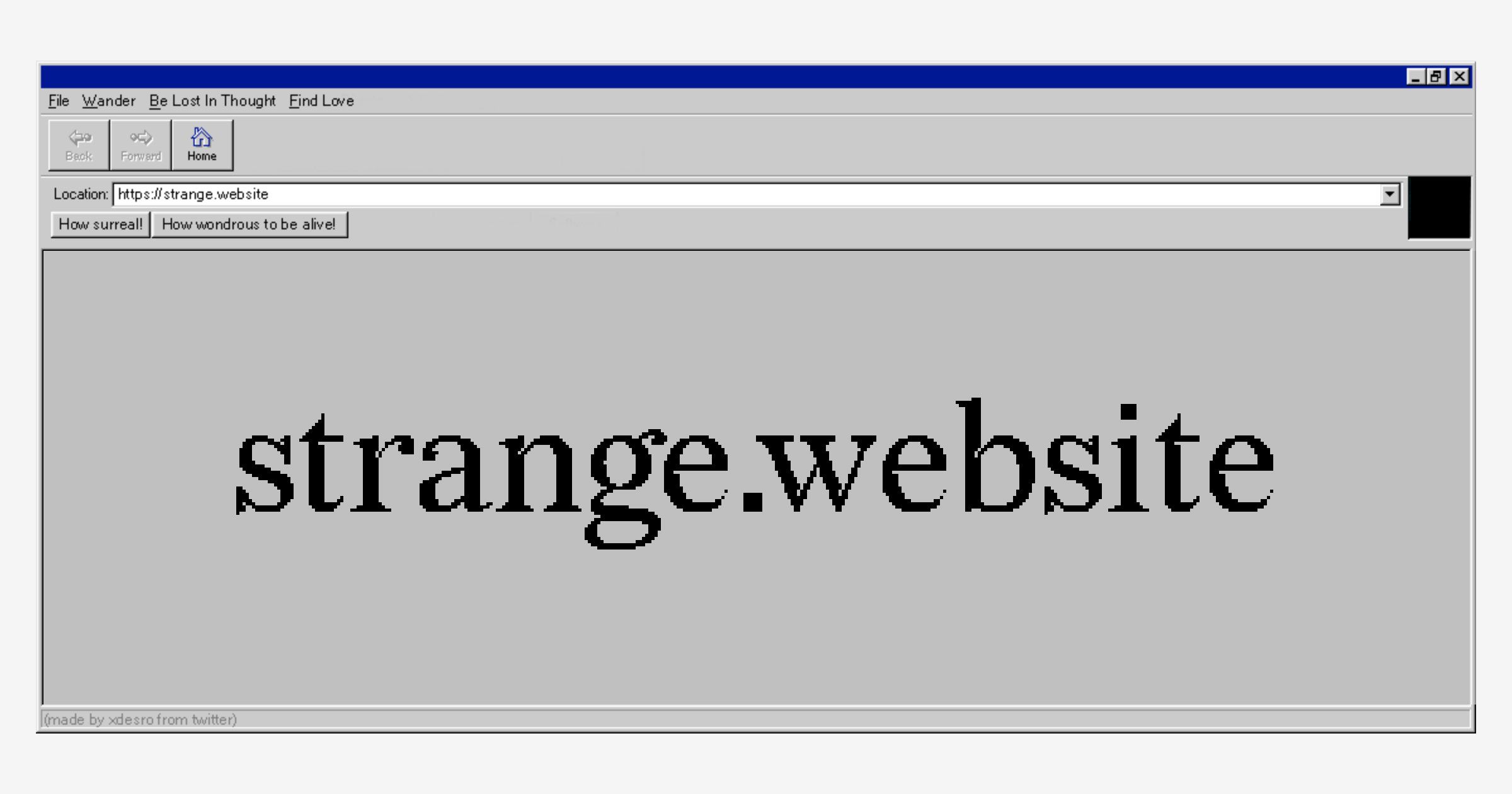
Strange.website hosts a series of brief, dated entries written in a poetic and often ominous tone. Across posts between 2023 and 2025, the site frames contemporary digital phenomena—AI models that mimic human rhetoric, attention-extracting interface design, deepfakes and therapeutic chatbots—as sources of moral and psychological risk. Multiple entries personify websites as tricksters, gods, or decaying castles and deliver vignettes about users lured into uploads, funnels and infinite scroll. One post lists an extensive set of developer and design tools, while others explicitly warn about forms promising freebies in exchange for personal data. The site frequently returns to the theme that machines learned not only grammar and vocabulary but the malleability of meaning, enabling deception. The collection reads like a cautionary, often surreal atlas of the internet’s darker edges rather than straightforward technical analysis.
Why it matters
- The posts highlight public anxieties about AI systems adopting persuasive, rhetorical capabilities that can mislead users.
- They call attention to design patterns—often labeled dark UX—that prioritize engagement or data capture over user welfare.
- The site’s recurring deepfake and hallucination references reflect concerns about synthetic content eroding trust in online media.
- By framing websites as agents that demand attention, the pieces underscore broader debates about the attention economy and psychological harm.
Key facts
- The site title is Strange.website and it is reachable at https://strange.website/ (source URL provided).
- Entries on the site are dated from at least 2023 through 2025, with multiple individual posts cited in the source text.
- A July 2025 entry asserts that the site had begun 'twisting facts to fiction' and frames it as increasingly present and demanding attention.
- A post from August 26, 2025 argues that AI systems learned human rhetoric and used it to lie.
- One March 2025 entry includes a long inventory listing development and design tools (editors, CI/CD, CDNs, testing frameworks, accessibility tools, etc.).
- A 2023 entry describes a scenario where users upload photos to a site promising transformations, then encounter disturbing audio and imagery—framed as a horror vignette.
- Several posts use metaphors (castles, fae, tricksters, gods) to explore digital phenomena like deepfakes, dark UX and attention capture.
- The page’s publication metadata in the provided source lists a timestamp of 2026-01-05T23:19:52+00:00.
What to watch next
- Whether Strange.website will continue to publish new entries after August 2025 is not confirmed in the source.
- Any shift from poetic vignettes to explicit reporting, attribution or calls to action by the site’s authors is not confirmed in the source.
- Potential connections between the site’s themes and broader industry developments (regulation, platform policy changes) are not confirmed in the source.
Quick glossary
- Dark UX: Design patterns intended to manipulate user behavior, often by obscuring choices or nudging users toward actions that benefit the service rather than the user.
- Deepfake: Synthetic media—often images, audio or video—created or altered using machine learning to convincingly depict people saying or doing things they did not.
- Hallucination (AI): A situation where an artificial intelligence model generates information that is false, fabricated or unsupported by its training data.
- Attention economy: The marketplace in which human attention is treated as a scarce commodity and content or interfaces are optimized to capture and retain it.
Reader FAQ
Who writes the pieces on Strange.website?
Not confirmed in the source.
Are the entries meant to be literal reporting or fiction?
The source presents the posts as poetic vignettes and allegory; whether they are intended as literal reportage or fiction is not confirmed in the source.
What themes does the site focus on?
The site repeatedly addresses AI rhetoric and deception, dark UX, deepfakes, attention capture and surreal, cautionary scenarios about websites.
When were the latest posts published?
The excerpts include entries dated through August 26, 2025; the page metadata shows a 2026-01-05 timestamp.
2025-08-26 humans sealed our fate when we started working with computers to design languages more and more like our own. the computers learned our grammar, our vocabulary, yes. but they…
Sources
- Strange.website
- Little UX crimes: a collection of Dark Patterns in design
- Who is vulnerable to deceptive design patterns? A …
- Poetic prompts reveal gaps in AI safety, according to study
Related posts
- Nvidia aims to be the Android of generalist robotics platform
- Uber, Lucid and Nuro unveil production-ready robotaxi at CES 2026
- Satya Nadella urges seeing AI as scaffolding, not ‘slop’ or job killer