
TL;DR
The U.S. and Taiwan reached a trade pact under which Taiwanese semiconductor and tech firms will commit $250 billion in direct investments to U.S. semiconductor manufacturing and provide $250 billion in credit guarantees. The deal, announced by the Commerce Department and tied to a broader U.S. plan to reshore chip production, leaves the investment timetable and some reciprocal details unspecified.
What happened
The Trump administration finalized a trade agreement with Taiwan intended to expand semiconductor manufacturing in the United States, the Commerce Department said. Taiwanese semiconductor and technology companies agreed to invest $250 billion directly into U.S. semiconductor activities, with those funds earmarked for chips as well as related energy and AI production and innovation. Separately, Taiwan will make $250 billion available in credit guarantees to support further investments by those firms. In return, the U.S. committed to investing in multiple Taiwanese sectors — including semiconductors, defense, AI, telecommunications and biotech — though the announcement did not attach a dollar figure to the American contribution. The Commerce Department release did not specify the timeframe for the Taiwanese investment commitments.
Why it matters
- The scale of the Taiwanese financial commitment could materially accelerate U.S. domestic chip capacity expansion.
- Credit guarantees of $250 billion may lower financing barriers and attract additional private investment into U.S. semiconductor projects.
- Shifting production and investment patterns affect broader supply-chain resilience and national-security planning tied to critical technologies.
- The deal sits alongside U.S. tariff measures on advanced AI chips, signaling a broader trade and industrial policy approach toward semiconductors.
Key facts
- Taiwanese semiconductor and tech firms agreed to $250 billion in direct investments into the U.S. semiconductor industry.
- Taiwan will provide an additional $250 billion in credit guarantees for further investments by those enterprises.
- The announcement was issued by the U.S. Department of Commerce and framed as a trade deal with Taiwan.
- The U.S. side plans to invest in Taiwan’s semiconductor, defense, AI, telecommunications and biotech sectors; no U.S. dollar amount was specified in the release.
- The administration’s proclamation accompanying the announcement noted that roughly 10% of semiconductors are currently manufactured in the United States.
- Taiwan presently produces more than half of the world’s semiconductors, according to the Commerce Department release.
- A separate U.S. proclamation imposed a 25% tariff on some advanced AI chips and indicated additional semiconductor tariffs may follow after trade talks conclude.
- The time period over which the Taiwanese investments will be made was not specified in the Commerce Department statement.
What to watch next
- Timeline for when the $250 billion in direct investments and $250 billion in credit guarantees will be deployed — not confirmed in the source.
- Which specific Taiwanese companies will make the investments and the projects they will fund in the U.S. — not confirmed in the source.
- The size and terms of the U.S. investments pledged in return to Taiwan’s industries — not confirmed in the source.
- How additional semiconductor tariffs mentioned in the proclamation will be structured and applied as talks with partners conclude — not confirmed in the source.
Quick glossary
- Semiconductor: A material or device that partially conducts electricity, used as the foundation for integrated circuits and computer chips.
- Credit guarantee: A promise by one party to back loans or financing if the borrower defaults, intended to reduce lender risk and unlock additional funding.
- Tariff: A tax imposed on imported or exported goods, used by governments to influence trade flows and protect domestic industries.
- Supply-chain resilience: The ability of a supply network to withstand disruptions and maintain production and delivery of goods.
Reader FAQ
How much is Taiwan investing directly in the U.S. semiconductor industry?
$250 billion in direct investments, according to the U.S. Department of Commerce.
Is there additional financial support from Taiwan?
Yes. Taiwan will provide $250 billion in credit guarantees to back further investments by semiconductor and tech companies.
When will these investments take place?
Not confirmed in the source.
How much will the U.S. invest in Taiwan as part of the deal?
The Commerce Department release said the U.S. will invest in several Taiwanese industries but did not specify a dollar amount.
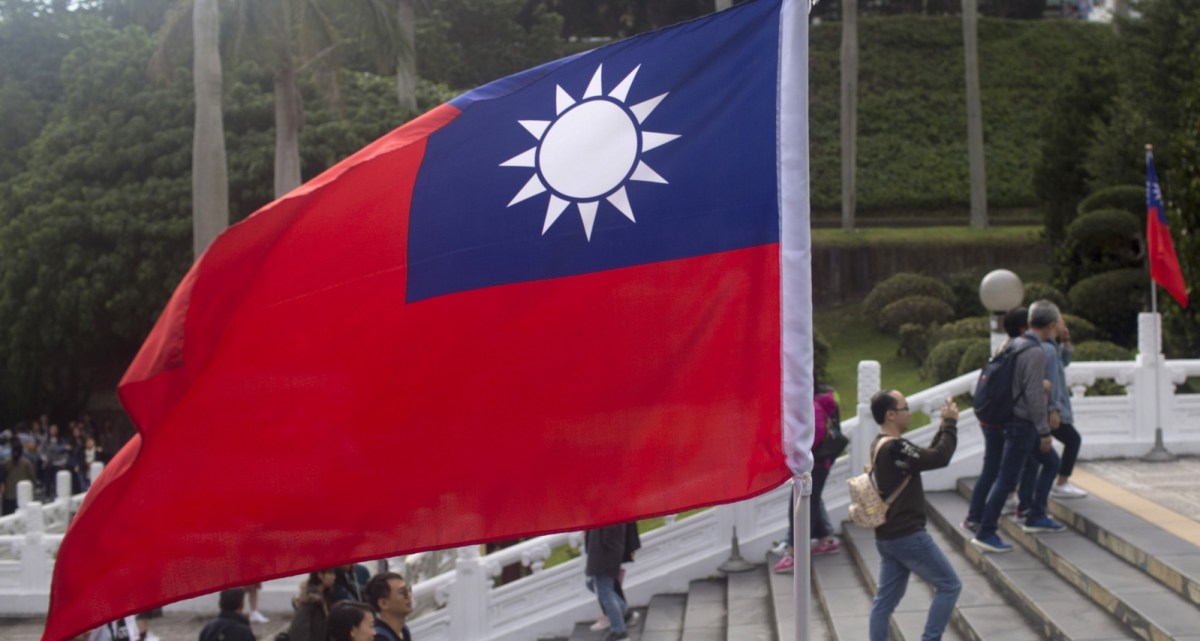
IN BRIEF Posted: 12:52 PM PST · January 15, 2026 IMAGE CREDITS: GETTY IMAGES (IMAGE HAS BEEN MODIFIED) Rebecca Szkutak Taiwan to invest $250B in US semiconductor manufacturing The Trump administration…
Sources
- Taiwan to invest $250B in US semiconductor manufacturing
- Taiwan will invest $250 billion in U.S. chipmaking under …
- TSMC smashes forecasts with record profit, flags more US …
- Taiwan computer chip maker TSMC's to expand investment …
Related posts
- Apple fights for TSMC capacity as Nvidia dominates wafer demand
- Report: Apple now competing for TSMC capacity, facing steep price hikes
- Raspberry Pi’s AI HAT+ 2 adds 8GB RAM and Hailo 40 TOPS for Pi 5