
TL;DR
The Texas Supreme Court has ended the state's reliance on American Bar Association accreditation for law schools, making Texas the first state to do so. The court will now control which schools qualify graduates to sit for the Texas bar, while signaling steps to protect degree reciprocity with other states.
What happened
The Texas Supreme Court issued a formal order ending the American Bar Association's role in approving law schools for eligibility to sit for the Texas bar exam, a responsibility the ABA held for Texas since 1983. The unanimous order finalizes a tentative opinion first signaled in September and signed by all nine justices. The court said it will grant ongoing approval to schools that meet simple, objective and ideologically neutral standards no stricter than current ABA requirements. The decision removes the state-level requirement that aspiring Texas lawyers attend an ABA-accredited program and returns sole authority over approval to the state's highest civil court. The order also states the court intends to preserve the ability of Texas graduates to use their degrees in other states and left open the possibility of later relying on a different multistate accrediting body.
Why it matters
- Shifts control of law-school approval from a longstanding national accreditor to a single state court, altering governance of legal education in Texas.
- Potentially expands the range of law programs whose graduates can qualify for the Texas bar, affecting students’ school choice and admissions planning.
- Raises questions about interstate reciprocity and mobility for lawyers, prompting courts and licensing bodies in other states to weigh responses.
- Signals regulatory and political scrutiny of national accreditation standards, with implications for competition and oversight of professional training.
Key facts
- Texas is the first U.S. state to remove ABA oversight of law school accreditation.
- The ABA had accredited law schools for Texas since the Texas Supreme Court ceded that authority in 1983.
- The court’s final order was unanimous and follows a tentative September opinion and a public comment period that closed Dec. 1.
- The court said it will use objective, non-ideological criteria no more burdensome than current ABA standards to approve schools.
- Graduates in Texas will not be required to attend ABA-accredited law schools to seek licensure in the state.
- The court indicated it does not expect immediate changes to the current list of approved law schools.
- Texas may later adopt a different multistate accrediting mechanism, according to the court’s order.
- The move followed months of public conflict involving the ABA, the federal government and state officials, and drew support from two FTC officials who criticized ABA market power.
- Deans at eight of Texas’s 10 ABA-accredited law schools opposed abandoning ABA accreditation, citing concerns about lawyer mobility and costs; the dean at the University of Texas School of Law did not join that opposition.
What to watch next
- Whether Texas adopts a new multistate accrediting entity or establishes permanent state criteria for approval.
- Responses from other states and bar admissions authorities about accepting Texas law degrees — the court says it intends to preserve reciprocity, but specifics remain to be seen.
- Potential legal or regulatory challenges to the court’s order or subsequent changes in approval standards.
- Whether Florida, Ohio and Tennessee move forward with similar steps; those states are reported to be considering leaving ABA oversight.
Quick glossary
- American Bar Association (ABA): A voluntary national association of lawyers that has set accreditation standards for U.S. law schools since the early 20th century.
- Accreditation: A formal process by which an independent body evaluates whether an educational program meets defined standards for quality and resources.
- Bar exam: A professional licensing test administered by state authorities that law school graduates must pass to practice law in a given state.
- Reciprocity: Arrangements or policies that allow law graduates licensed in one jurisdiction to practice or qualify for licensure in another.
Reader FAQ
Does this mean Texas law graduates no longer need to attend an ABA-accredited school?
Yes. The court’s order removes the requirement that Texas lawyers come only from ABA-accredited programs.
Will Texas degrees still be usable in other states?
The Texas Supreme Court said it intends to preserve graduates’ ability to use Texas degrees in other states, but precise outcomes were not detailed in the order.
Will the list of approved Texas law schools change immediately?
The court said it does not anticipate immediate changes to the current list of approved schools.
Are other states likely to follow Texas?
Florida, Ohio and Tennessee are reported to be considering similar steps.
Will there be a legal challenge to the court’s decision?
Not confirmed in the source.
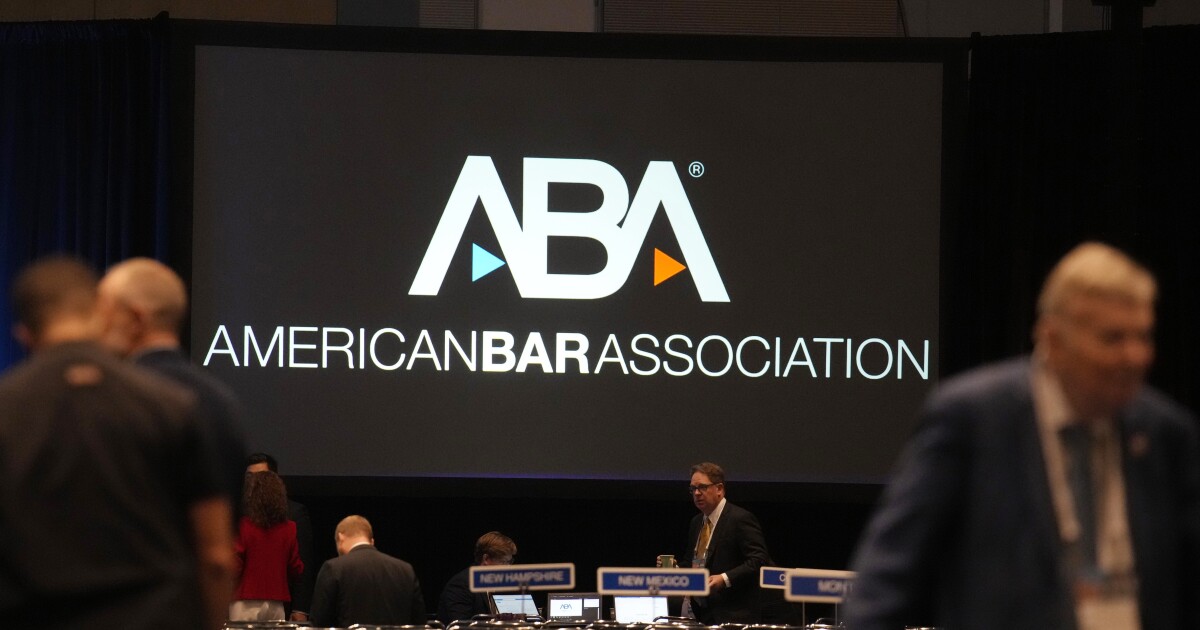
News Texas becomes first state to end American Bar Association oversight of law schools KERA | By Toluwani Osibamowo Published January 6, 2026 at 3:13 PM CST Facebook Twitter LinkedIn Email…
Sources
- Texas First State to End American Bar Association oversight of law schools
- Texas becomes first state to end ABA role in lawyer …
- Texas becomes first state to end American Bar Association …
- Texas Supreme Court Order on Law School Accreditation
Related posts
- Critics Question NSO’s Transparency as Company Seeks US Market Entry
- ICE Acquired Tool That Monitors Phones Across City Neighborhoods
- Minnesota says it was blocked from evidence after ICE killing; FBI leads probe