
TL;DR
Advances in language and speech models helped make dictation apps more accurate and context-aware in 2025. The market now offers a range of options with different trade-offs around privacy, offline capability, free quotas and pricing.
What happened
In 2025 a surge of AI-driven dictation tools matured into broadly usable products that aim to reduce editing and adapt to users’ tones and vocabularies. Several apps highlighted include Wispr Flow, which offers multiple transcription styles and integrations with coding workflows; Willow, which keeps transcripts on-device and allows users to opt out of model training; and Monologue, which supports local model downloads for fully offline transcription. Other entrants focus on flexibility — Superwhisper lets users pick or plug in different speech models and API keys, while VoiceTypr and Handy emphasize offline or open-source operation. Free tiers vary widely, from generous weekly allowances to modest monthly trial quotas, and paid plans span low monthly fees to lifetime licenses. Many apps include custom dictionaries, automated formatting and filler-word removal to produce more polished output with fewer edits required.
Why it matters
- Improved speech and language models are making voice-first writing practical for more users and tasks.
- Local and offline options give users greater control over sensitive transcripts and privacy.
- Diverse pricing and free quotas make it possible to try voice workflows without immediate subscription commitments.
- Integration with developer and productivity tools expands use cases beyond simple note-taking, including coding and templated autofill.
Key facts
- Wispr Flow offers native MacOS, Windows and iOS apps; an Android version is in development.
- Wispr Flow free quota: 2,000 words/month on desktop, 1,000 words/month on iOS; paid plans start at $15/month.
- Willow stores transcripts locally, supports custom vocabulary, and provides 2,000 free desktop words/month; paid plans start at $15/month.
- Monologue lets users download models to run on-device, provides 1,000 free words/month, and charges $10/month or $100/year for subscriptions.
- Superwhisper can transcribe audio/video, lets users download and choose models (including NVIDIA’s Parakeet), and offers a basic free voice-to-text feature plus a 15-minute Pro trial.
- Superwhisper pricing listed in the source: $8.49/month, an annual plan at $84.99 (as stated), or a $249.99 lifetime option.
- VoiceTypr is offline-first, supports over 99 languages, runs on Mac and Windows, and is available as a paid lifetime license ($35 for one device, $56 for two, $98 for four).
- Aqua provides low-latency typing, grammar/punctuation handling, an autofill feature for phrases, and a speech-to-text API; its free tier is 1,000 words/month with paid plans from $8/month (annual billing).
- Handy is an open-source, free transcription tool across Mac, Windows and Linux with basic settings like push-to-talk.
- Typeless offers a high free allowance — up to 4,000 words per week — and a paid tier at $12/month billed annually for unlimited dictation.
What to watch next
- Wispr Flow’s Android release currently in development and its broader platform rollout.
- Adoption of local-model workflows and on-device transcription as emphasized by Monologue, VoiceTypr and Willow.
- not confirmed in the source
Quick glossary
- Large language model (LLM): A machine learning model trained on vast text corpora to generate or transform human-like language and provide contextual understanding.
- Speech-to-text: Technology that converts spoken language into written text using acoustic and language modeling techniques.
- Local model / on-device model: An AI model that runs directly on a user’s device instead of sending audio or text to remote servers, often used for privacy or offline access.
- Transcription quota: A limit set by services on how many words or minutes of speech a user can transcribe within a given time period, usually per month or week.
Reader FAQ
Which apps prioritize privacy and on-device processing?
Monologue supports local model downloads for on-device use; VoiceTypr is offline-first; Willow stores transcripts locally and lets users opt out of model training.
Which apps have the largest free transcription allowance?
Typeless offers up to 4,000 words per week on its free tier; Wispr Flow and Willow each offer 2,000 free words/month on desktop according to the source.
How much do subscriptions typically cost?
Reported entry prices include Wispr Flow and Willow from $15/month, Monologue at $10/month (or $100/year), Superwhisper starting at $8.49/month, and Typeless $12/month (billed annually).
Are there open-source or free alternatives?
Yes — Handy is described as an open-source, free transcription tool that runs on Mac, Windows and Linux.
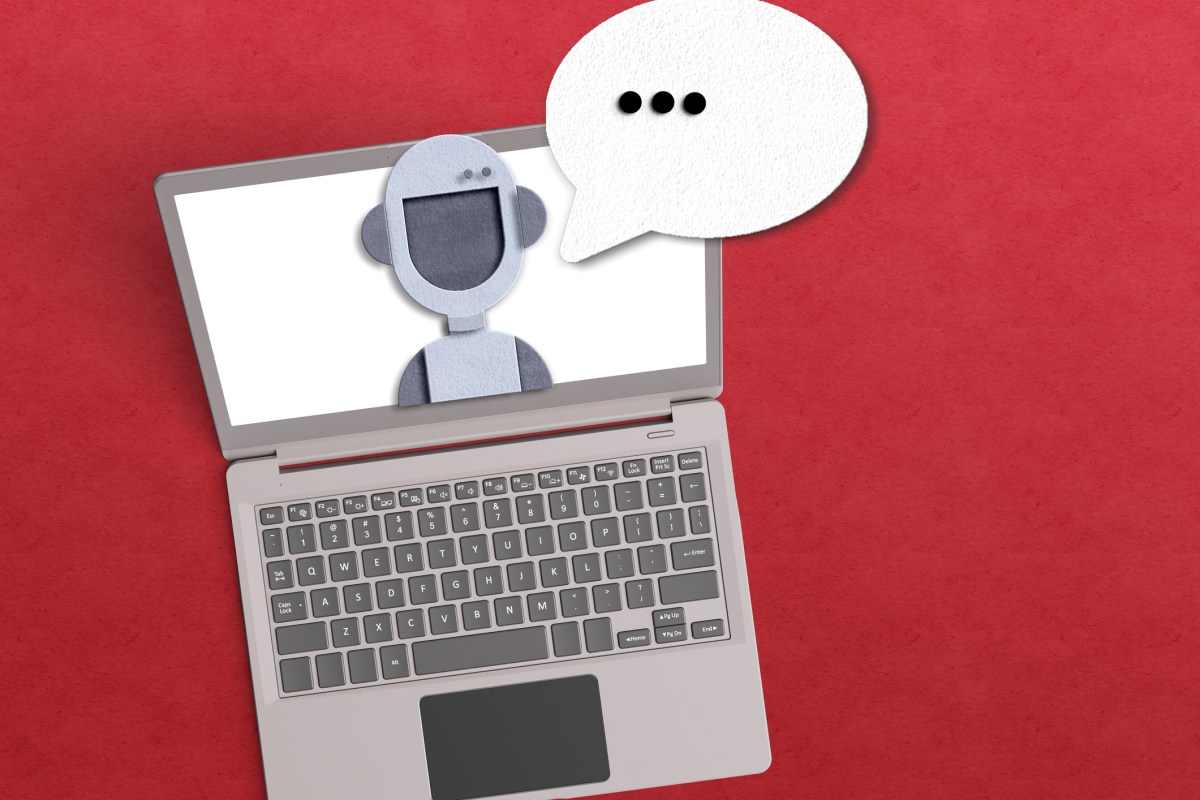
In some ways, 2025 was when AI dictation apps really took off. Dictation apps have been around for years, but in the past they’ve proved slow and inaccurate — unless…
Sources
- The best AI-powered dictation apps of 2025
- Top 10 dictation tools December 2025
- The 9 best dictation and speech-to-text software in 2026
Related posts
- iOS 27 rumors: Seven features expected, from Health+ to Fold multitasking
- Why Google Maps’ one-handed zooming still feels unnecessarily difficult
- Google Gemini is awesome, but it needs to copy these features from ChatGPT