
TL;DR
The Interior Department has again suspended leases for five planned East Coast offshore wind projects, citing emerging national security risks tied to radar interference. The projects total almost 6 gigawatts and include developments off Connecticut, Rhode Island, Massachusetts, Virginia and New York.
What happened
Two weeks after a judge overturned an executive order that had blocked offshore wind development, the Biden-era White House — via the Department of the Interior — announced a new pause on leases for five large offshore wind projects. Interior Secretary Doug Burgum said the move addresses emerging national security risks, pointing to concerns about radar interference and the evolving capabilities of potential adversaries. The projects affected are Revolution Wind (CT/RI), Coastal Virginia Offshore Wind, Vineyard Wind (MA), and Empire Wind and Sunrise Wind (both NY), which together represent nearly 6 gigawatts of planned capacity along an Eastern seaboard corridor that has seen heavy data center investment. The department referenced unclassified government reports and recently completed classified Pentagon reports but did not identify or link to those documents. The statement said the pause will give government and stakeholders time to work through national security issues, while observers note that radar mitigation work has been underway for years.
Why it matters
- Delays affect nearly 6 GW of planned offshore capacity that would serve East Coast power markets.
- The pause highlights tensions between national security concerns and renewable energy deployment.
- Projects sit near a region with concentrated data center development, raising questions about local energy planning.
- The action underscores continuing regulatory and legal uncertainty for the offshore wind industry.
Key facts
- Interior Secretary Doug Burgum announced the pause, citing radar interference and evolving adversary technologies.
- Five projects are affected: Revolution Wind (Connecticut/Rhode Island), Coastal Virginia Offshore Wind, Vineyard Wind (Massachusetts), Empire Wind (New York), and Sunrise Wind (New York).
- Combined, the paused projects represent nearly 6 gigawatts of generating capacity for the Eastern seaboard.
- The department referenced both unclassified government reports and "recently completed classified reports" from the Pentagon but did not name or link to them.
- A federal judge had struck down a previous executive order that blocked offshore wind development two weeks earlier.
- The Department of Energy issued a February 2024 report cataloging mitigation efforts for radar interference and noting that mitigation has enabled deployments, though no technique fully restores radar performance.
- Radar interference from turbines has been studied for more than a decade; mitigation approaches include siting adjustments and advanced signal-processing algorithms.
- Experts note wind turbines create complex Doppler signatures as blades move, which can complicate radar target detection.
- The Interior Department said it will use the pause to allow government and stakeholders to address the cited national security concerns.
What to watch next
- Ongoing government-stakeholder discussions and any technical requirements or conditions the Interior Department attaches to restarted leases.
- Advances or demonstrations of radar interference mitigation technologies and whether they change agency risk assessments.
- Legal responses from developers or industry groups to the new pause, including potential court challenges — not confirmed in the source.
Quick glossary
- Radar interference: Disruption of radar signals or processing caused by reflections or moving objects that produce confusing returns, potentially making it harder to detect or track other targets.
- Doppler signature: The change in frequency of a reflected wave caused by motion of the reflecting object; moving turbine blades produce varying Doppler shifts that can complicate radar interpretation.
- Space-Time Adaptive Processing (STAP): A class of signal-processing techniques used in radar systems to adaptively filter interference and improve target detection in complex environments.
- Wind farm siting: The planning practice of placing turbines to minimize conflicts with other uses, including keeping turbines out of a radar's line of sight when feasible.
- Gigawatt (GW): A unit of power equal to one billion watts, commonly used to express the capacity of large power-generation projects.
Reader FAQ
Which offshore wind projects were paused?
Revolution Wind (CT/RI), Coastal Virginia Offshore Wind, Vineyard Wind (MA), and Empire Wind and Sunrise Wind (both NY) were named as paused.
Why did the Interior Department pause the leases?
The department cited emerging national security risks, including concerns about radar interference and evolving adversary technologies.
Did the department provide the reports it cited?
The Interior Department referenced unclassified reports and recently completed classified Pentagon reports but did not identify or link to them.
Can radar problems be fixed by technology?
A February 2024 Department of Energy report said mitigation techniques have enabled federal radar missions to continue and supported deployments, but no method yet fully restores affected radar performance.
Will this affect data center operations in the region?
not confirmed in the source
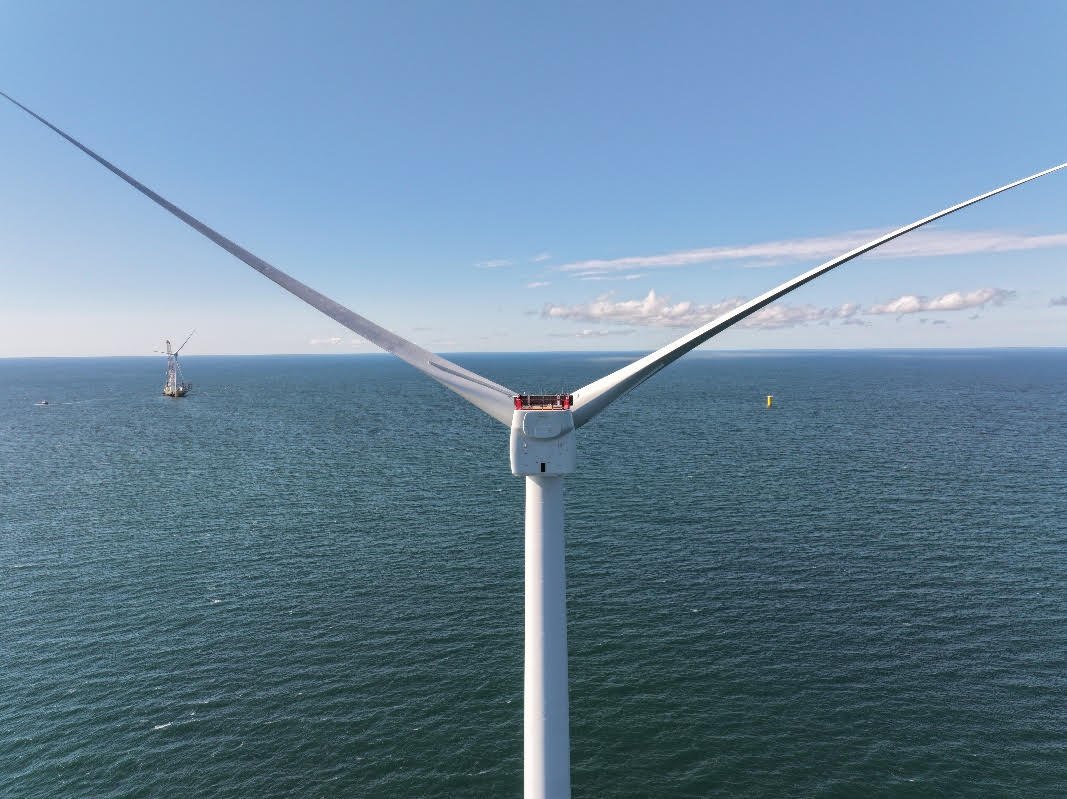
Two weeks after a judge struck down President Donald Trump’s executive order that blocked offshore wind development, the White House is again pausing leases for five large projects, this time…
Sources
- Trump admin halts 6 GW of offshore wind leases again
- Trump administration pauses 5 wind projects off the East …
- Trump Administration Orders Halt to All Major Offshore …
- RPA Statement Regarding the Trump Administration …
Related posts
- Anna’s Archive says it scraped 86 million Spotify tracks and posted metadata
- Uzbekistan’s Nationwide License-Plate Surveillance System Left Publicly Exposed
- Suspected DDoS Disrupts France’s Postal Services and La Banque Postale