
TL;DR
An ESSAY in Wired argues that U.S. policy choices and turmoil at NASA have weakened America’s push to return humans to the moon, while China is methodically advancing its lunar program. Experts interviewed for the piece say the U.S. risks being beaten to a crewed lunar landing.
What happened
Republican political theater, leadership churn at NASA and White House budget moves have coincided with an erosion of U.S. momentum toward returning astronauts to the moon. The article recounts a congressional confirmation scene involving Jared Isaacman and Senator Ted Cruz, then summarizes a period in which nearly 4,000 NASA staff left, a proposed 24% agency cut was floated, an Isaacman nomination was withdrawn, and a part-time acting administrator with an unconventional résumé took control. Those disruptions came even as the Biden and Trump administrations issued competing directives, capped by a Trump executive order aiming for a 2028 lunar return. Meanwhile China has logged robotic successes — including a far-side sample return — and is pressing ahead with a multi-step plan to visit the lunar poles; the China Manned Space Agency has said a crewed mission will launch “before 2030.” Many former U.S. officials interviewed judge that the U.S. program has been mismanaged and is politically fractured, reducing the chance America will reach the lunar surface first.
Why it matters
- Lunar resources (water ice and rare isotopes such as helium-3) could have strategic and technological implications for power, propulsion and industry.
- A crewed lunar landing is a high-profile signal of national scientific and industrial leadership; losing a race would have geopolitical and prestige consequences.
- Delays and institutional instability at NASA could erode the U.S. industrial base, contractor confidence and international partnerships.
- Failure to resolve program architecture and funding issues risks repeating costly, drawn-out development problems rather than delivering a clear, executable mission.
Key facts
- A Wired report says nearly 4,000 NASA employees quit amid recent administration actions.
- The White House proposed a roughly 24% cut to NASA’s budget during the period covered by the article.
- China’s Chang’e-6 returned about four pounds of lunar material from the moon’s far side in a sample-return mission.
- China plans Chang’e-7 to explore the lunar poles and has said the mission should launch in August (year not specified in the source).
- The China Manned Space Agency has stated its crewed lunar mission will occur “before 2030.”
- Experts interviewed told the author they believe China is more likely than the U.S. to land people on the moon first.
- The U.S. Artemis architecture relies on the Space Launch System and the Orion capsule, a combination that has cost taxpayers tens of billions and flown once; a second flight is slotted for February (year not specified in the source).
- Robotic lunar soft landings are technically difficult; Firefly Aerospace is cited as the only company to have achieved a fully successful robotic moon landing, according to the article.
What to watch next
- Progress and launch timing for China’s Chang’e-7 polar mission (the China National Space Administration has said the launch should happen in August).
- The outcome and schedule of Artemis follow-on flights, including the SLS/Orion mission slotted for February.
- Whether China proceeds with a crewed lunar mission before 2030 and how that timing compares to U.S. plans (not confirmed in the source).
Quick glossary
- Artemis: NASA’s program to return humans to the moon and establish a sustainable presence there, using new rockets, landers and international partners.
- Space Launch System (SLS): A heavy-lift rocket developed for deep-space missions; in the current U.S. lunar architecture it is paired with the Orion crew capsule.
- Orion capsule: A crewed spacecraft designed to carry astronauts beyond low Earth orbit, developed with contributions from international partners.
- Chang’e missions: China’s series of robotic lunar missions, named after the Chinese moon goddess, which have included orbiters, landers and sample returns.
- Helium-3: A light isotope proposed as a potential fuel for nuclear fusion research; thought to be more abundant on the moon than on Earth.
Reader FAQ
Is China already ahead of the U.S. to put people on the moon?
Most former U.S. officials and experts interviewed for the piece believe China is more likely to land people first, though a crewed lunar landing by China is not guaranteed.
Why does the article say the U.S. program is struggling?
The reporting cites staff departures at NASA, proposed deep budget cuts, leadership turnover and a contested program architecture as reasons for weakened U.S. prospects.
When will American astronauts next go to the moon?
Not confirmed in the source; the article notes Artemis systems have flown once and a second flight is scheduled, but it does not provide a firm crewed landing date.
Will lunar resources like helium-3 change global power balances?
The article highlights arguments that lunar resources could have major technological and strategic importance, but it does not assert a definitive outcome.
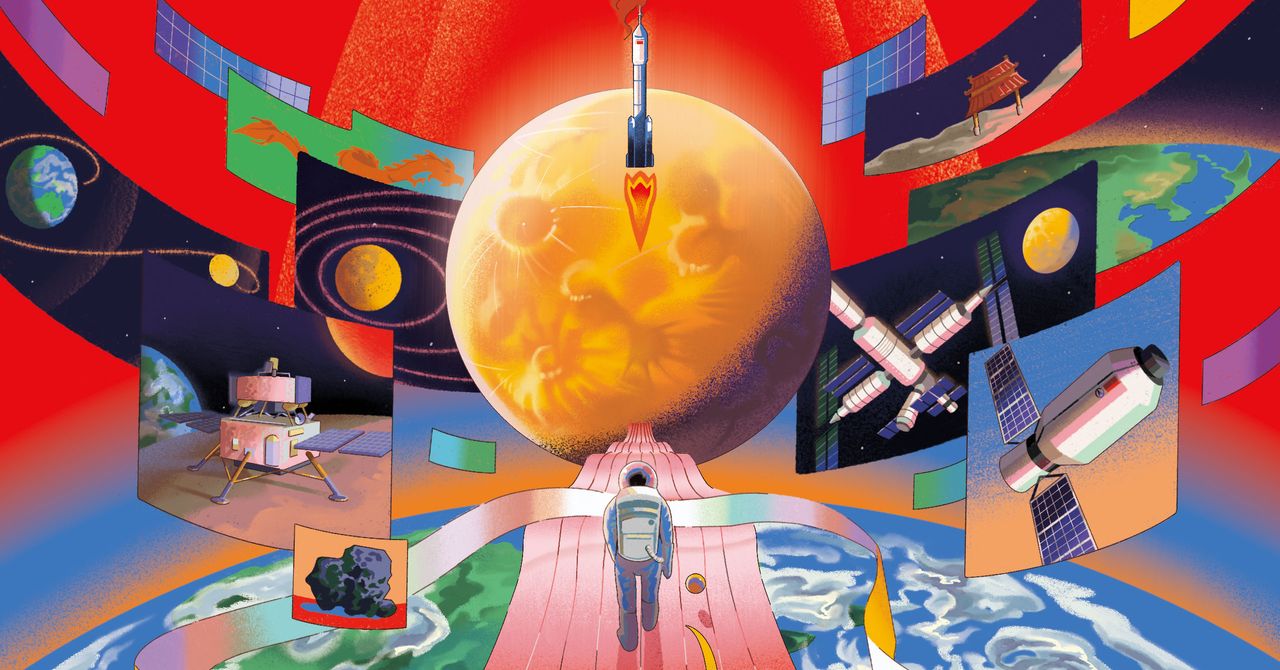
NOAH SHACHTMAN THE BIG STORY JAN 13, 2026 6:00 AM Trump Declared a Space Race With China. The US Is Losing If you want to put people back on the…
Sources
- Trump Declared a Space Race With China. The US Is Losing
- Trump's Nasa pick vows US will beat China back to the moon
- Trump's NASA pick to tell Congress about moon race with …
- US Bravado Won't Win Space Race with China
Related posts
- Justice Delayed Is Justice Denied: The Legal Principle and Its Origins
- U.S. Greenhouse Gas Emissions Rose in 2025 as Coal-Fired Power Rebounded
- UK launches Project Nightfall to fast-track long-range missiles for Ukraine