
TL;DR
Uber, Lucid Motors and Nuro showed a production-intent robotaxi at CES 2026 built on the Lucid Gravity SUV. The vehicle — equipped with cameras, solid-state lidar, radars, a roof-mounted halo and Nvidia Drive AGX Thor compute — is being road-tested and is slated for a commercial rollout in the San Francisco Bay Area later this year.
What happened
At CES 2026 Uber, Lucid Motors and Nuro presented a production-intent robotaxi variant based on the Lucid Gravity SUV. The teams said the vehicle is already undergoing public-road testing ahead of a planned commercial service in the San Francisco Bay Area later this year. The Gravity-based robotaxi integrates high-resolution cameras, solid-state lidar, radars and a roof-mounted “halo” with LED identification lights. Autonomous processing is handled by Nvidia’s Drive AGX Thor platform. Rather than retrofitting vehicles after delivery, Lucid adds the autonomy hardware as the Gravity is assembled at its Casa Grande, Arizona factory, a step the companies say saves time and cost compared with some retrofit approaches. Uber is building the in-car user interface, which includes a halo-facing welcome screen and passenger displays showing trip progress. The partners said production units will begin after final validation, but they did not provide a concrete production timeline.
Why it matters
- Factory integration of autonomy hardware could lower retrofit costs and shorten deployment timelines.
- A collaboration between Uber, Lucid and Nuro adds a notable entrant to the growing robotaxi market, increasing competitive pressure.
- Using high-bandwidth compute (Nvidia Drive AGX Thor) and multi-modal sensors signals a focus on robust perception and processing.
- The Gravity’s roomy interior supports a premium passenger experience that could differentiate Uber’s service offering.
Key facts
- The production-intent robotaxi was unveiled at CES 2026.
- Vehicle is built on the Lucid Gravity SUV platform.
- Sensor suite includes high-resolution cameras, solid-state lidar and radars, plus a roof-mounted halo with LED lights.
- Autonomy compute provided by Nvidia Drive AGX Thor.
- Autonomy hardware is integrated during assembly at Lucid’s Casa Grande, Arizona factory.
- The companies report the vehicle is already being tested on public roads.
- Commercial service is planned for the San Francisco Bay Area later in 2026, per the companies.
- Uber previously invested $300 million in Lucid and committed to buying 20,000 of Lucid’s EVs as part of the broader deal.
- Uber is developing the interior ride interface; demo elements include rider screens with an isometric map view and trip controls.
- Lucid faced software challenges during the Gravity’s first full year but has since reported doubled 2024 production and sales records.
What to watch next
- Completion of the final validation process the companies say is required before full production begins.
- The planned commercial launch in the San Francisco Bay Area later this year and any announced dates.
- How the robotaxi’s software performs in broader public operations given Lucid’s earlier software issues.
Quick glossary
- Robotaxi: A passenger vehicle designed to operate with a high degree of autonomy and provide ride services without a human driver.
- Solid-state lidar: A lidar sensor that uses no moving parts to measure distances by timing reflected laser light, offering compactness and durability.
- Nvidia Drive AGX Thor: A high-performance computing platform from Nvidia for autonomous vehicle perception, planning and control.
- Halo (roof-mounted): A roof-mounted array housing sensors and lights used on autonomous vehicles for sensing and external signaling/identification.
Reader FAQ
When will the robotaxi service start?
The companies said commercial service is planned for the San Francisco Bay Area later this year, but no exact launch date was provided.
Is the vehicle already being tested on public roads?
Yes. The partners said the production-intent vehicle is undergoing public-road testing ahead of commercial deployment.
What sensors and compute power does the robotaxi use?
The vehicle uses high-resolution cameras, solid-state lidar, radars and a roof-mounted halo; autonomy compute is handled by Nvidia Drive AGX Thor.
How many robotaxis will be produced or purchased?
Not confirmed in the source.
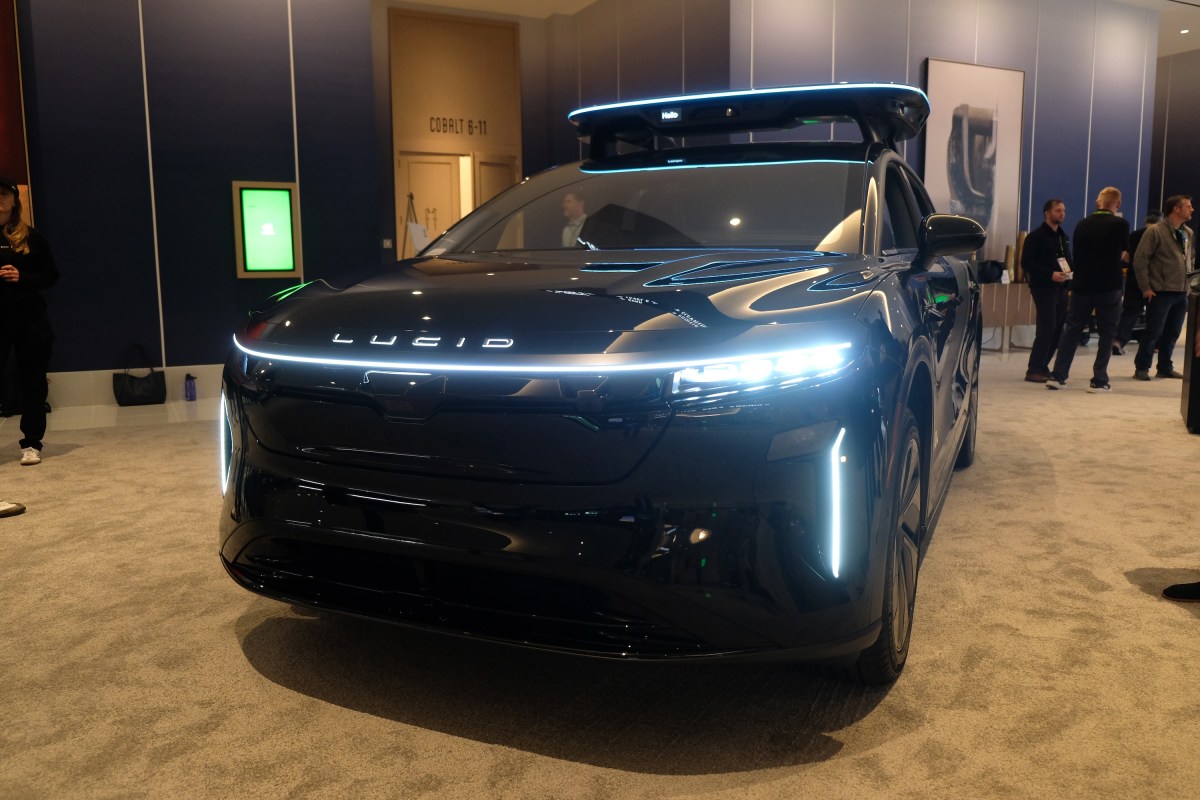
Uber, Lucid Motors, and Nuro have revealed the production-intent version of their collaborative robotaxi at the 2026 Consumer Electronics Show, and TechCrunch got a sneak peek ahead of the reveal….
Sources
- This is Uber’s new robotaxi from Lucid and Nuro
- Lucid, Nuro, and Uber Unveil Global Robotaxi at CES …
- This Is the Robotaxi That Lucid and Nuro Are Building for …
- This is Uber's new robotaxi from Lucid and Nuro
Related posts
- Donut Lab unveils first production-ready all‑solid‑state battery for OEMs
- Nvidia details Vera Rubin CPU and GPU architecture and NVL72 at CES
- Nvidia says DGX Spark performance has more than doubled since launch