
TL;DR
A 1970s nine-track tape containing UNIX V4 — the first edition where much of the kernel was in C — has been imaged and its contents restored. Computer History Museum curator Al Kossow recovered the files; they are available on the Internet Archive and can be run under SimH.
What happened
Software curator Al Kossow of the Computer History Museum successfully extracted the contents of an over-half-century-old magnetic tape discovered at the University of Utah by Professor Robert Ricci. The media was a 1970s nine-track magtape containing UNIX V4, an early release notable for moving large parts of the kernel into the then-new C language. The recovery process used the readtape tool developed by Len Shustek, which records raw magnetic flux transitions (a technique comparable to the Greaseweazle approach used for floppy preservation) and allowed reconstruction of almost all data; only two blocks failed to read directly and were reconstructed from surrounding information. The recovered image—about 1.6 GB because it contains raw flux data though the original tape held roughly 40 MB—has been posted to the Internet Archive. A processed, user-friendly set of files and a README was shared by Angelo Papenhoff, and community instructions for booting the image in the SimH PDP-11 emulator circulate on Reddit. A screenshot of the system running under SGI IRIX was shared on Mastodon.
Why it matters
- Provides a working snapshot of a pivotal development in UNIX history: the early move of the kernel to C.
- Offers researchers and historians primary-source material to study Unix’s design choices and evolution.
- Demonstrates the value of raw-flux imaging and modern archival tools for rescuing aging magnetic media.
- Makes an executable historical artifact accessible to enthusiasts via emulation, supporting reproducible study.
Key facts
- Tape type: 1970s nine-track magtape recovered from the University of Utah.
- Recovery lead: Al Kossow (Computer History Museum); tape originally found by Professor Robert Ricci.
- Tooling: readtape (Len Shustek) was used to sample raw magnetic flux; comparison made to Greaseweazle-style imaging.
- Data integrity: only two blocks failed to read directly and were reconstructed; resulting image file is ~1.6 GB even though original data was ~40 MB.
- Availability: recovered files have been uploaded to the Internet Archive; a processed distribution with a README is available from Angelo Papenhoff.
- Runnable: community instructions describe booting the image in the SimH PDP-11 emulator; a Mastodon user posted a screenshot showing it running under SGI IRIX.
- Contents: UNIX V4 contains roughly 55,000 lines of source, of which about 25,000 are C and around 27 KB of kernel code is noted.
- Historical context: UNIX V4 ran on the PDP-11/45 and is the first release where much of the kernel was rewritten in C; earlier UNIX editions were in assembly on PDP-7 and PDP-11/20.
What to watch next
- Whether additional lost Unix versions or related artifacts are located and recovered — not confirmed in the source.
- Further analysis or annotations of the recovered source by historians and researchers to clarify Unix evolution — not confirmed in the source.
- Any formal provenance or uniqueness determination confirming whether this tape is the only surviving copy of UNIX V4 — not confirmed in the source.
Quick glossary
- UNIX V4: An early release of the UNIX operating system notable for having much of its kernel rewritten in the C programming language.
- C programming language: A general-purpose programming language developed in the early 1970s that became widely used for systems programming.
- PDP-11: A family of 16-bit minicomputers from Digital Equipment Corporation commonly used during the 1970s and 1980s for operating-system development.
- SimH: A portable, multi-system emulator capable of running historical computer system images for research and preservation.
- Nine-track magtape / raw magnetic flux imaging: A magnetic tape format and an archival technique that records raw flux transitions from tape media to reconstruct stored digital data, allowing recovery despite medium-level degradation.
Reader FAQ
Can you run the recovered UNIX V4 image?
Yes. The recovered files are runnable in the SimH PDP-11 emulator; community instructions and a processed package with a README are available.
Where can I get the recovered files?
The raw recovery image has been posted to the Internet Archive; a more user-friendly processed set is offered by Angelo Papenhoff.
How was the data recovered from the tape?
The team used the readtape tool to record raw magnetic flux and reconstruct the digital data; two blocks failed to read directly but were reconstructed.
Who found and who recovered the tape?
Professor Robert Ricci discovered the tape at the University of Utah; Al Kossow of the Computer History Museum performed the data recovery.
Is this the only surviving copy of UNIX V4?
Not confirmed in the source.
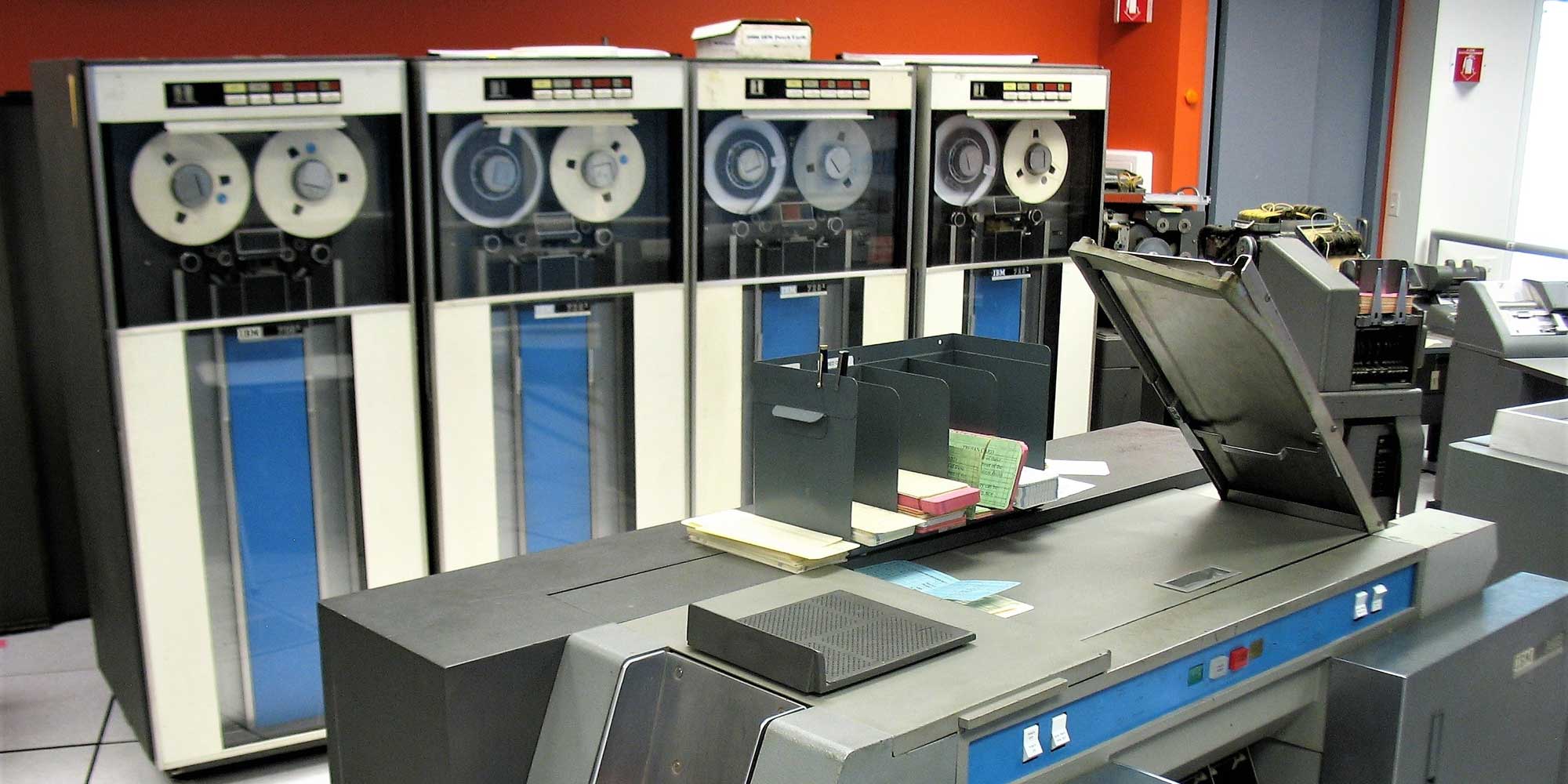
STORAGE 71 UNIX V4 tape successfully recovered: First ever version of UNIX written in C is running again Crucial early evolutionary step found, imaged, and … amazingly … works Liam…
Sources
Related posts
- Practical steps to keep older Windows and macOS systems usable into 2026
- NASA uses Curiosity’s Mastcam to search for wayward MAVEN orbiter
- NORAD marks 70 years of tracking Santa after a 1955 newspaper misprint