
TL;DR
The State Department has announced sanctions that prohibit US entry for five foreign individuals involved in content moderation, including former EU commissioner Thierry Breton and Imran Ahmed of the Center for Countering Digital Hate. US officials warned the list could grow if other foreign actors do not change course.
What happened
On Dec. 24, 2025, the US State Department announced sanctions that block entry to the United States for five foreign individuals it says are involved in content moderation. Among those named in reporting are Thierry Breton, the former EU commissioner for the internal market, and Imran Ahmed, head of the Center for Countering Digital Hate (CCDH). The administration framed the move as retaliation for actions related to online moderation and disinformation; Secretary of State Marco Rubio signaled the list could be expanded if others do not alter their behavior. The announcement included criticism from US officials: Under Secretary Sarah Rogers described Breton as a central figure behind the EU’s Digital Services Act and cited a letter he sent to Elon Musk about platform obligations under that law. The Verge report also notes that Elon Musk previously sued CCDH—an effort that was dismissed by a judge in early 2024.
Why it matters
- The measure targets non-US individuals involved in platform moderation and anti-disinformation work, signaling a US willingness to use travel restrictions in tech policy disputes.
- It could escalate tensions between the US government and foreign regulators, particularly the EU, over how online content is governed.
- Researchers and nonprofits engaged in hate-speech and disinformation work may face new personal and operational risks when interacting with US-based institutions or travel.
Key facts
- The State Department announced sanctions barring US access for five foreign individuals on Dec. 24, 2025.
- Named in reporting are Thierry Breton, former EU Commissioner for Internal Market and Services, and Imran Ahmed, who runs the Center for Countering Digital Hate (CCDH).
- US officials said the action targets people involved in content moderation and disinformation efforts; Secretary Marco Rubio warned the list could be expanded.
- Under Secretary of State Sarah Rogers described Breton as a leading figure behind the EU’s Digital Services Act and cited his letter to Elon Musk about platform obligations under that law.
- Imran Ahmed and the CCDH were previously the target of a lawsuit from Elon Musk that was dismissed in early 2024; a judge concluded X’s suit appeared aimed at punishing CCDH for its critical publications.
- Two other researchers named in reporting are Anna-Lena von Hodenberg and Josephine Ballon, identified as leaders of the nonprofit HateAid.
- The Verge reported the administration intended the action as retaliation in a dispute over content moderation policy and enforcement.
What to watch next
- Whether the State Department follows through on its warning to add more names to the sanctions list — not confirmed in the source.
- Potential legal or diplomatic responses from the EU or the organizations represented by those sanctioned — not confirmed in the source.
- Any legal challenges or public statements from the individuals or groups named about the travel ban and its basis — not confirmed in the source.
Quick glossary
- Digital Services Act (DSA): An EU regulatory framework intended to set rules for online platforms and intermediary responsibility for illegal content and disinformation.
- Content moderation: The processes and policies platforms use to review, restrict, or remove user-generated content that violates laws or platform rules.
- Sanctions (travel): Government measures that restrict an individual’s ability to enter or remain in a country, typically for policy or security reasons.
- Deportable: Subject to removal from a country under immigration laws or administrative orders.
- Center for Countering Digital Hate (CCDH): A nonprofit organization focused on researching and combating online hate and disinformation.
Reader FAQ
Who was sanctioned?
The State Department announced sanctions on five foreign individuals; reporting names include Thierry Breton and Imran Ahmed, with others identified as researchers linked to HateAid.
What consequences do the sanctions impose?
The announcement bars the named individuals from accessing the United States; the report says Imran Ahmed is now deportable.
Why did the US impose these sanctions?
US officials characterized the action as retaliation against foreigners involved in content moderation and disinformation efforts; Secretary Rubio warned the list could expand.
Did the affected organizations or the EU respond?
Not confirmed in the source.
Will the list of sanctioned individuals grow?
Not confirmed in the source.
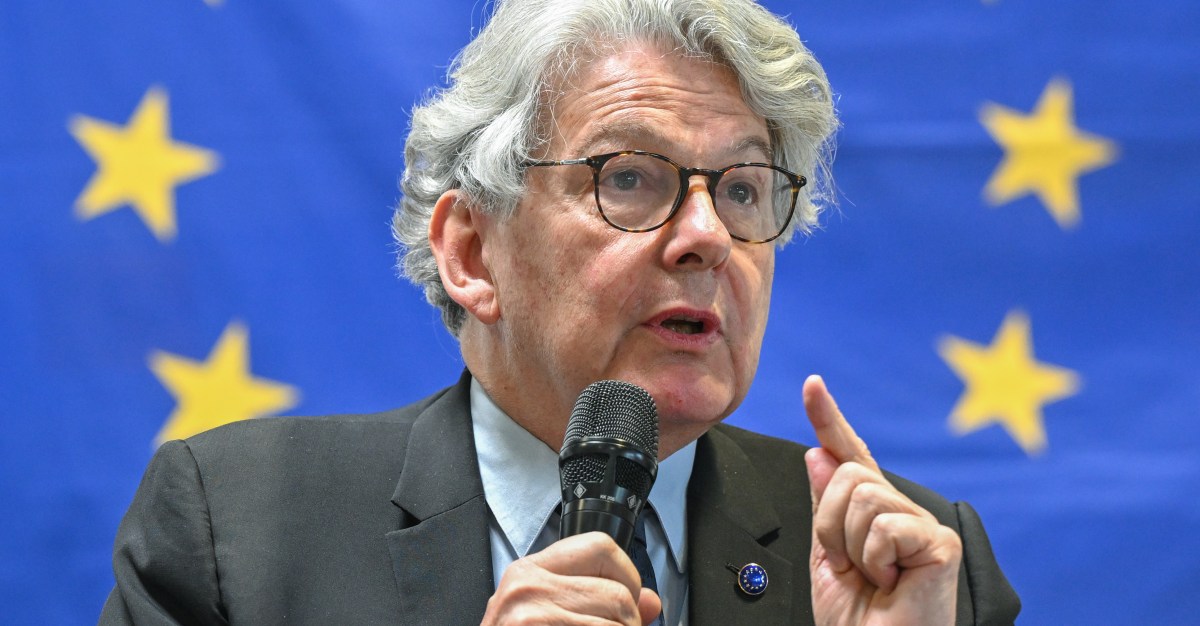
NEWS POLICY TECH Trump administration bars former EU official and anti-disinformation and hate researchers from US The five sanctioned individuals included Thierry Breton and Imran Ahmed, who feuded with Elon…
Sources
- Trump administration bars former EU official and anti-disinformation and hate researchers from US
- U.S. Bars 5 European Tech Regulators and Researchers
- US bans ex-EU commissioner, others over social media rules
- Trump administration bars Europeans from U.S. for …
Related posts
- Trump administration pauses nearly 6 GW of East Coast offshore wind leases
- John Carreyrou and other authors sue six AI firms over pirated book training
- FCC Bans New Foreign-Made Drones in US, New DJI Models Blocked