
TL;DR
A U.S. sanctions decision has targeted French International Criminal Court judge Nicolas Guillou, with U.S. authorities citing his role in authorizing arrest warrants for Israeli officials. Guillou says the measures have disrupted his banking access and daily life and has urged European authorities to step in to mitigate the effects.
What happened
Nicolas Guillou, a French judge at the International Criminal Court (ICC), was placed under U.S. sanctions following a decision announced on August 20 by the administration of Donald Trump, according to reporting. The U.S. Treasury said Guillou was designated in connection with a ruling that allowed the ICC to issue arrest warrants for Israeli Prime Minister Benjamin Netanyahu and former Defense Minister Yoav Gallant; both men are described in the report as indicted for war crimes and crimes against humanity over actions in the Gaza Strip. The sanctions are part of a wider move that has affected six judges and three prosecutors at the court, including ICC Chief Prosecutor Karim Khan. In an interview with Le Monde, Guillou described significant practical effects on his work and personal life and urged European authorities to activate a mechanism that could reduce the impact of the U.S. measures.
Why it matters
- Sanctioning sitting ICC judges raises questions about the practical ability of the court to operate independently when officials face extraterritorial financial restrictions.
- Limits on banking access can impede a judge’s ability to carry out administrative duties, travel arrangements and other routine functions tied to financial services.
- The move highlights tensions between U.S. policy and international judicial institutions, with potential diplomatic repercussions for states that support the ICC.
- Broad use of sanctions against international jurists could set a precedent affecting other courts and international legal cooperation.
Key facts
- Nicolas Guillou is a French judge at the International Criminal Court.
- The U.S. action followed a decision made on August 20 by the administration of Donald Trump, per the source.
- The U.S. Treasury said the designation was linked to a ruling authorizing ICC arrest warrants for Benjamin Netanyahu and Yoav Gallant.
- Netanyahu and Gallant are described in the report as indicted for war crimes and crimes against humanity related to the destruction of the Gaza Strip.
- Six judges and three prosecutors from the ICC have been sanctioned by the U.S.; the list of those sanctioned includes Chief Prosecutor Karim Khan.
- Guillou told Le Monde the measures have affected his work and daily life and that he feels effectively blacklisted by much of the global banking system, according to the report.
- The U.S. sanctions mechanism was originally created to address human rights abuses, terrorism and drug trafficking and now covers nearly 15,000 individuals, the source says.
- Among those on U.S. sanctions lists are members of groups such as Al‑Qaeda and IS, organized crime figures, and leaders of authoritarian regimes; nine ICC judges are reportedly on the list.
What to watch next
- Whether European authorities will activate the mechanism Guillou has called for to limit the impact of U.S. restrictions (not confirmed in the source).
- Any announcements from the ICC, France or EU institutions about concrete steps to protect judges’ ability to carry out their duties (not confirmed in the source).
- Whether the U.S. will expand, adjust or lift sanctions affecting ICC personnel over time (not confirmed in the source).
Quick glossary
- International Criminal Court (ICC): A permanent international tribunal based in The Hague that prosecutes individuals for crimes such as genocide, war crimes and crimes against humanity.
- Sanctions: Restrictive measures imposed by a government or international body intended to change behavior by targeting individuals, entities or states, often through asset freezes and travel bans.
- U.S. Treasury sanctions list: A registry maintained by the U.S. Treasury department that names individuals and organizations subject to U.S. financial restrictions and related penalties.
- Debanking: The process by which a bank closes or refuses to open an account for an individual or organization, often due to regulatory, risk or sanctions considerations.
Reader FAQ
Why was Nicolas Guillou sanctioned by the U.S.?
The U.S. Treasury said the designation related to a ruling authorizing ICC arrest warrants for Benjamin Netanyahu and Yoav Gallant, per the source.
Who else at the ICC was sanctioned?
The source says six judges and three prosecutors have been sanctioned by the U.S., and that Chief Prosecutor Karim Khan is among those targeted.
Has Guillou said how the sanctions have affected him?
In an interview with Le Monde, Guillou described impacts on his work and daily life and said the measures have effectively blacklisted him from much of the global banking system.
Will European governments intervene to help Guillou?
not confirmed in the source
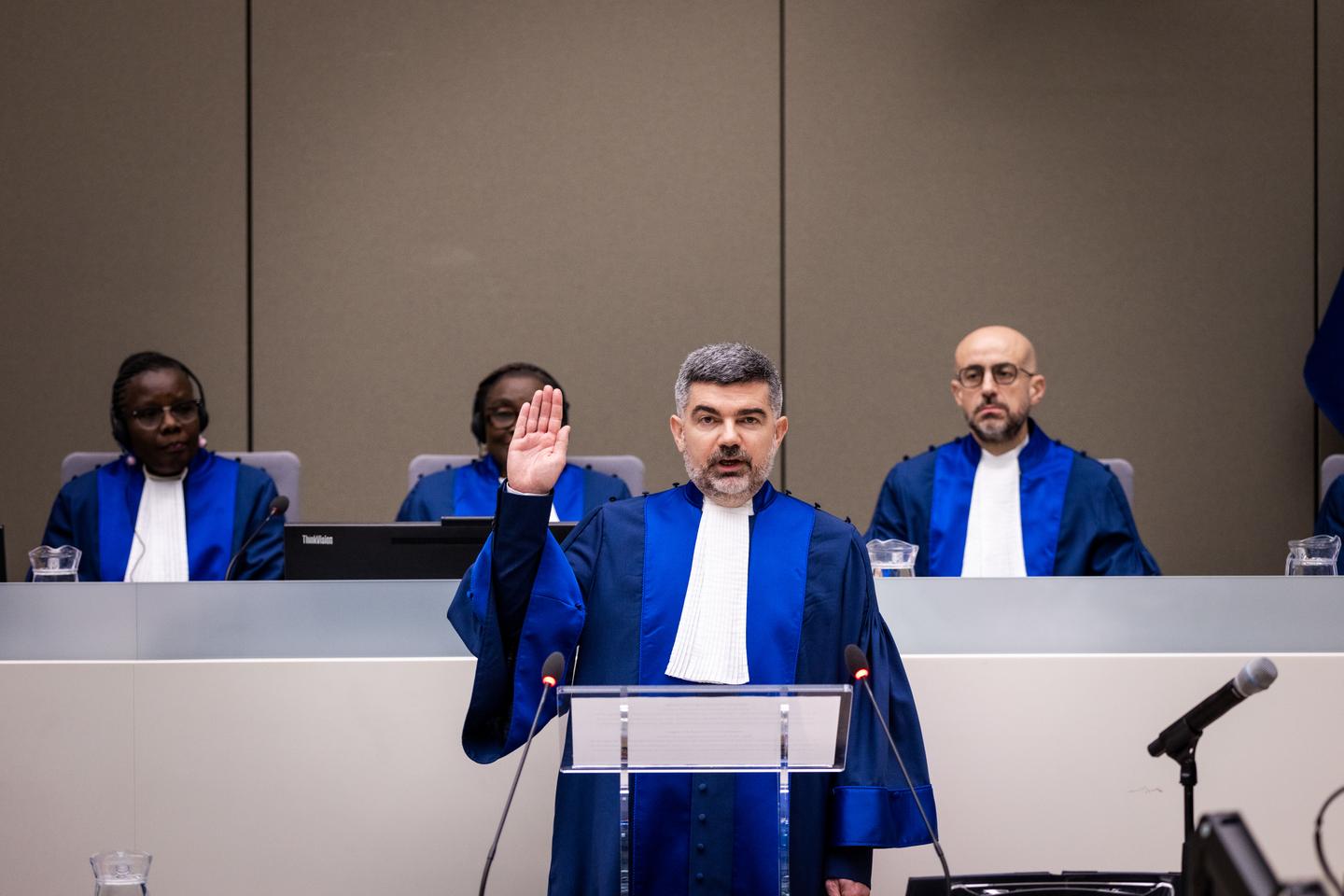
French judge Nicolas Guillou is sworn in at the headquarters of the International Criminal Court in The Hague, Netherlands, on March 8, 2024. COUR PENALE INTERNATIONALE Nicolas Guillou, a French…
Sources
- Nicolas Guillou, French ICC judge sanctioned by the US and "debanked"
- The Sanctioning of Law
- This French judge approved Netanyahu's arrest warrant. …
- ICC Judges & Officials, Under US Sanctions, Live …
Related posts
- The Great Big Power Play: US Shifts to Nuclear as Coal and Data Centers Clash
- China to End Longstanding Tax Exemption, Apply 13% VAT to Contraceptives
- AI Employees Don’t Pay Taxes — How Automation Could Erode Public Revenue