
TL;DR
The Web Design Museum has a curated exhibition that catalogs video game and gaming-related websites from roughly 2000–2003. The listing includes dozens of entries spanning major franchises, developers, publishers and community portals.
What happened
The Web Design Museum published an online exhibition titled “Video Game Websites in the early 00s,” compiling snapshots and entries for many gaming-related sites from around 2000 to 2003. The collection itemizes individual pages and brands by name and year, covering classic titles and companies such as The Sims (2000), Diablo II (2000), StarCraft (2000), World of Warcraft (2002), Grand Theft Auto: Vice City (2002) and several platform holders and publishers including Nintendo, SEGA and Electronic Arts. Community and portal sites appear as well, with entries for Newgrounds, IGN and GameSpot. The gallery groups multiple years and includes repeat entries for certain franchises (for example, Counter-Strike listed in both 2000 and 2001). The page is presented under the museum’s Web Design Exhibitions section and is accessible via the museum’s URL provided in the source.
Why it matters
- Documents many gaming-related web presences from the turn of the millennium in a single archival listing.
- Shows which franchises, developers and portals maintained dedicated web pages in the early 2000s.
- Creates a reference point for researchers tracking web-preservation, gaming history and online marketing practices of that era.
Key facts
- Exhibition title: "Video Game Websites in the early 00s" on the Web Design Museum site.
- Entries span the years 2000 through 2003 based on the list provided.
- Includes games and properties such as The Sims (2000), Diablo II (2000), StarCraft (2000), World of Warcraft (2002) and Grand Theft Auto: Vice City (2002).
- Also lists companies and portals like Nintendo (2001), SEGA (2002), Electronic Arts (2002), IGN (2003) and GameSpot (2003).
- Community and indie-focused entries are present, including Newgrounds (2000, 2003) and The Behemoth (2003).
- Some franchises appear in multiple years (e.g., Counter-Strike entries for 2000 and 2001).
- The exhibition is organized within the museum’s Web Design Exhibitions section (source URL provided).
- Source metadata lists a publication timestamp of 2026-01-06T18:39:21+00:00.
What to watch next
- Whether the museum will expand the exhibition to include other years or additional entries: not confirmed in the source.
- Availability of high-resolution screenshots, archived pages or direct site previews for each entry on the museum page: not confirmed in the source.
- If the exhibition includes explanatory commentary, design analysis or curator notes beyond the listing: not confirmed in the source.
Quick glossary
- Web Design Museum: An online repository that curates exhibitions and examples of web design from different periods.
- Exhibition (web): A curated online collection presenting examples or artifacts—often organized around a theme or historical period.
- Archived website snapshot: A saved copy or record of a website at a particular point in time, used for preservation and study.
- Gaming portal: A website focused on game news, reviews, community content and downloads, such as IGN or GameSpot.
Reader FAQ
What is this exhibition about?
It’s a curated listing on the Web Design Museum that catalogs video game and gaming-related websites from the early 2000s.
Which years are covered by the listing?
The entries in the listed collection are dated from 2000 through 2003.
Does the museum provide screenshots or archived pages for each entry?
not confirmed in the source
Can visitors view commentary or analysis alongside the listings?
not confirmed in the source
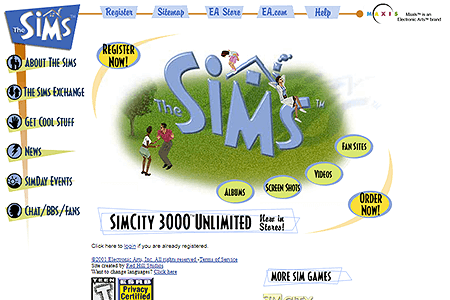
The Sims 2000 Video Game Websites in the early 00s Do you remember what video game developer websites and gaming websites looked like in the early 00s? Home>Web Design Exhibitions>Video…
Sources
- Video Game Websites in the early 00s
- Web Design Museum – Discover old websites, apps and …
- Snapshots of how gaming websites looked in the 2000s
- Websites in 2000
Related posts
- When and How to Use io_uring for High-Performance Database Systems
- Intel Developing a Handheld Gaming Platform with a Dedicated Chip
- Why Large Tech Firms Stumble: Understanding the Stack Fallacy