
TL;DR
Carnegie Mellon professor Austin Z. Henley signed a contract with a major publisher in early 2023 to produce a collection of classic programming project tutorials but ultimately canceled the deal. He ran into disputes over editorial direction, modest financial terms, mandated formatting and content requirements, and a push from the publisher to include AI material.
What happened
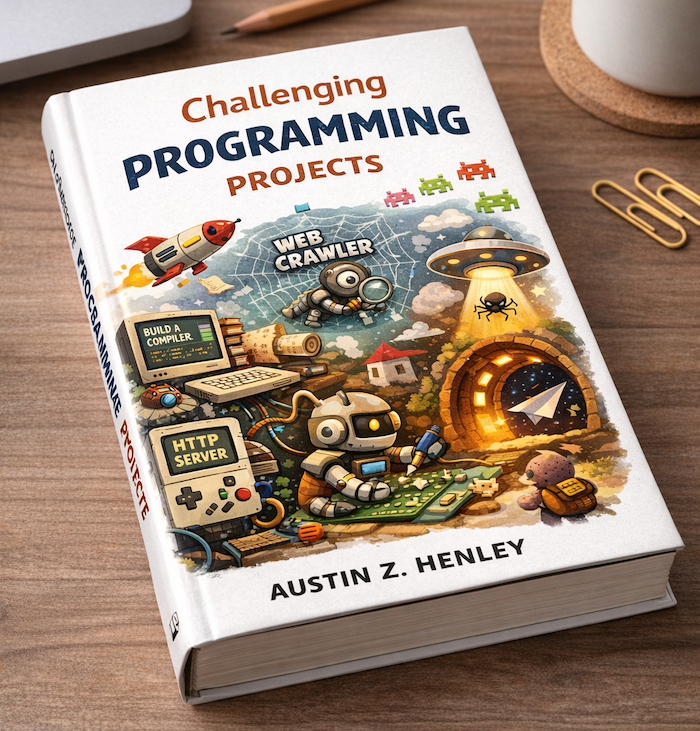
Henley began talks with a large trade publisher after his programming blog attracted sizable traffic. The publisher and author agreed on a project: a set of self-contained tutorial projects (including a web crawler, 2D game, compiler, HTTP server, drawing app and CHIP-8 emulator) intended to teach enduring computing concepts. Contract terms specified a detailed table of contents, a target length of roughly 115,500–132,000 words (about 350–400 pages), 10–30 illustrations, use of AsciiDoc or Word (LaTeX disallowed), and milestones for draft delivery. The publisher offered a $5,000 advance in two payments, standard royalty steps (12% up to the first 7,000 copies, 15% thereafter) and 50% translation royalties. Editorial friction grew over stylistic changes, requests to simplify the text, and a later mandate that AI be represented in every new title. Missed deadlines, changes in editorial contacts and continuing disagreements led Henley to cancel the arrangement.
Why it matters
- Highlights tensions between authors’ creative goals and trade publishers’ commercial formulas.
- Shows how modest advances and royalty structures can affect the economics of technical books.
- Signals growing pressure from publishers to include AI themes across diverse titles.
- Illustrates practical frictions in the production process (format requirements, editorial control, review milestones) that affect authors’ timelines and choices.
Key facts
- Project kickoff occurred in early 2023.
- Planned book projects included: web crawler, 2D game, compiler (revising his 'Teeny Tiny compiler' series), HTTP server, drawing app, CHIP-8 emulator, plus mini-projects.
- Contract specified 115,500–132,000 words, roughly 350–400 printed pages, and 10–30 illustrations.
- Publisher required manuscript drafts in AsciiDoc or Microsoft Word; LaTeX was not permitted.
- Advance offered was $5,000, split with half on approval of the first third and half on final manuscript acceptance.
- Royalties negotiated to 12% of sales for print and e-book on the first 7,000 copies and 15% after that; 50% royalty on foreign translation sales.
- Author receives 25 complimentary copies and can purchase additional copies at a 50% discount.
- Publisher would solicit external reviewers and retained the right to cancel based on their feedback.
- Publisher disclosed that its median book sells in the single thousands and that only a few titles reach the hundreds of thousands mark.
What to watch next
- Whether major trade publishers continue requiring AI content in new titles (not confirmed in the source).
- How compensation and royalty norms for technical trade books evolve amid self-publishing alternatives (not confirmed in the source).
- If authors with established audiences increasingly choose self-publishing over traditional deals (not confirmed in the source).
Quick glossary
- Advance: An upfront payment from a publisher to an author against future royalty earnings; typically recouped from subsequent book sales.
- Royalty: A percentage of sales paid to the author for each copy of a book sold, after any advance has been earned back.
- Acquisitions editor: A publisher staff member who evaluates proposals, negotiates contracts with authors, and shepherds projects into the publishing pipeline.
- Technical editor: An editor who reviews content for technical accuracy, coherence, and suitability for the intended audience.
- AsciiDoc: A plain-text markup language and toolchain used to write and publish books and technical documentation, similar in purpose to Markdown or LaTeX.
Reader FAQ
Did the author accept the publisher's demand to include AI in the book?
No — Henley resisted the publisher's push to make AI a required element of the title.
How much money did the publisher offer up front?
The advance was $5,000, paid in two installments tied to manuscript milestones.
Were royalties favorable?
Henley negotiated royalties to 12% for the first 7,000 copies and 15% thereafter, with 50% for translation sales; he characterized the overall financials as unimpressive.
Why did the deal end?
The author cites ongoing editorial disagreements, pressure to change tone and content, scheduling delays, and a publisher-wide push to include AI — these factors led him to cancel the contract.
Will the book be self-published instead?
Not confirmed in the source.
Austin Z. Henley Associate Teaching Professor Carnegie Mellon University azhenley@cmu.edu @austinzhenley github/AZHenley Home | Publications | Teaching | Blog I canceled my book deal 12/31/2025 Back in 2020-2022, my blog…
Sources
- I canceled my book deal
- Why One Author Left a Traditional Press for Indie Publishing
- The Business Rusch: Stand Up For Yourself
- Why Traditional Publishing is Dead and Buried and Will …
Related posts
- University of Helsinki develops reusable superbase-alcohol CO2 capture fluid
- The Compiler Is Your Best Friend — Stop Lying to It and Trust Types
- 2026: Can Java Finally Own the Terminal — CLIs, TUIs, Distribution