
TL;DR
Nvidia spent $20 billion to non-exclusively license Groq's IP, while taking on much of its executive and engineering team; Groq will remain an independent business but with reduced staff. Public speculation has focused on SRAM, foundry access and competitor elimination, but the clearest technical rationale in the coverage is access to Groq's data-flow inference architecture and an inference-optimized compute stack.
What happened
This December Nvidia agreed to a roughly $20 billion transaction to non-exclusively license Groq's intellectual property, covering its language processing units (LPUs) and associated software. The deal brings Groq’s CEO Jonathan Ross, president Sunny Madra and a large portion of its engineering workforce to Nvidia. Groq will continue to operate its high-performance inference-as-a-service business under new CEO Simon Edwards, but the loss of core personnel casts doubt on the startup’s long-term independence. The structure—licensing IP rather than an outright acquisition—appears intended to limit regulatory scrutiny even as it transfers talent and technology. Observers have proposed multiple motives, from securing SRAM-based memory designs to foundry diversification or removing a rival; reporting argues many of those theories do not fully explain the move and highlights data-flow inference architecture and an inference-focused compute stack as more plausible drivers.
Why it matters
- Nvidia gains access to Groq’s data-flow LPU architecture and software libraries, which could influence future inference accelerators.
- The transaction moves significant engineering talent to Nvidia, reshaping Groq’s ability to operate independently.
- The structure of the deal—IP licensing plus talent acquisition—may reduce obvious regulatory hurdles while still raising antitrust questions.
- If Nvidia commercializes data-flow techniques effectively, that could change performance-to-power trade-offs for large language model inference.
- The deal illustrates how incumbent chip vendors are pursuing alternative architectural approaches to sustain performance gains.
Key facts
- Nvidia paid about $20 billion to non-exclusively license Groq’s intellectual property, including LPUs and software libraries.
- Groq raised $750 million earlier in the year at a $6.9 billion valuation.
- Groq will continue to run its inference-as-a-service offering after the agreement closes, with Simon Edwards named CEO.
- Groq’s CEO Jonathan Ross and president Sunny Madra moved to Nvidia, along with much of the startup’s engineering talent.
- Each Groq LPU contains roughly 230 MB of on-chip SRAM; hundreds of LPUs are required to host large models.
- Artificial Analysis benchmarks cited show Groq chips delivering ~350 tokens/s on Llama 3.3 70B and ~465 tokens/s on gpt-oss 120B.
- A 12-high HBM3e stack can deliver on the order of 1 TB/s per module and about 8 TB/s per GPU today, per the coverage.
- Groq needed 574 LPUs linked by a high-speed fabric to run Llama 70B in the cited example.
- The reporting notes Nvidia generated roughly $23 billion in cash flow from operations in the most recent quarter, contextualizing the cost.
What to watch next
- Regulatory scrutiny or antitrust action related to the transaction (reporting notes the deal could provoke such a response).
- Whether Nvidia integrates Groq’s data-flow IP into its future inference accelerators or product lines (not confirmed in the source).
- The long-term viability and strategy of Groq as an independent company after the departure of key executives and many engineers (not confirmed in the source).
Quick glossary
- Language Processing Unit (LPU): A specialized accelerator designed to run language-model inference workloads with tightly coupled compute and memory structures.
- SRAM: Static random-access memory, a fast on-chip memory technology with lower density compared with off-chip stacked memories.
- HBM: High-bandwidth memory, an off-chip stacked memory technology used in many modern GPUs to provide large capacity and high throughput.
- Data-flow architecture: A processor design that streams data through function units and minimizes traditional load/store bottlenecks, aiming to keep compute units continuously fed.
- Speculative decoding: A technique that uses a smaller, faster model to predict outputs of a larger model; correct predictions allow the system to skip some work and accelerate token generation.
Reader FAQ
Did Nvidia buy Groq?
Nvidia non-exclusively licensed Groq’s IP and hired much of its leadership and engineering team; Groq will continue to operate as a separate company per the report.
Was the acquisition about switching from HBM to SRAM?
The coverage argues SRAM’s limited capacity makes a wholesale switch unlikely and says this theory does not fully explain the deal.
Will the deal lead to antitrust enforcement?
The reporting states the structure appears engineered to limit regulatory exposure but acknowledges the move could provoke an antitrust lawsuit; a formal action is not confirmed in the source.
Will Groq’s inference service stop running?
No — the source reports Groq will continue to operate its high-performance inference-as-a-service business after the agreement closes.
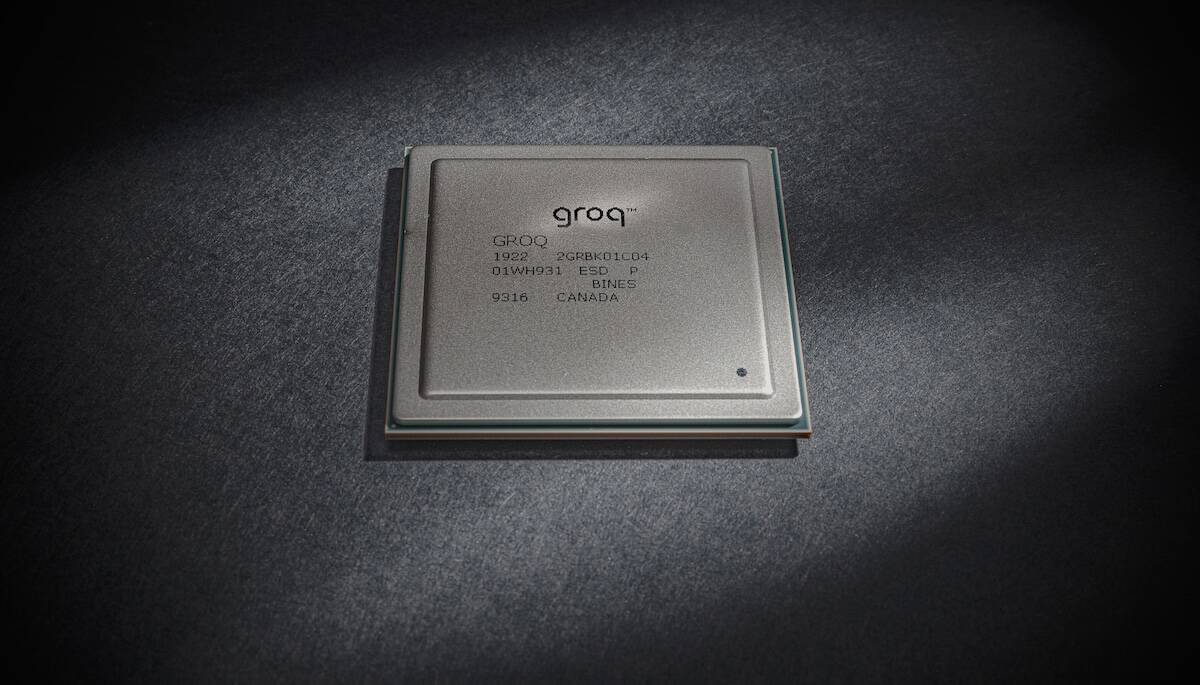
SYSTEMS Everybody has a theory about why Nvidia dropped $20B on Groq – they're mostly wrong El Reg speculates about what GPUzilla really gets out of the deal Tobias Mann…
Sources
- Everybody has a theory about why Nvidia dropped $20B on Groq – they're mostly wrong
- Nvidia to buy assets from Groq for $20B cash
- Nvidia buys (most of) Groq for $20B cash; largest execuhire ever
- Nvidia: You're Looking For The AI Bubble In The Wrong …
Related posts
- Groq Investor Warns of Data-Center Bubble as Unleased Builds Rise
- If the AI bubble bursts, Nvidia could become the dominant software company
- Meta Acquires Viral AI Startup Manus for Reported $2B to Integrate Agents