
TL;DR
F. Scott Fitzgerald's The Great Gatsby is widely reduced to images of parties and glamour, a reading the author and many critics say misses its darker themes and narrative complexity. The novel sold poorly at first, found new readers after a World War II Armed Services distribution, and has since become a cultural touchstone—its public-domain status in 2021 has led to a surge of adaptations and reappraisals.
What happened
Since its April 1925 publication, The Great Gatsby has routinely been misread as simply a story of lavish parties and flappers, a view Fitzgerald himself lamented when he told Edmund Wilson that even the most enthusiastic reviews "had the slightest idea what the book was about." Early critics often treated it as crime fiction and sales remained modest; by Fitzgerald’s death in 1940 unsold copies had been remaindered. The book’s fortunes shifted after World War II when nearly 155,000 Armed Services Edition copies were distributed, creating a new readership. By the 1950s and 1960s it became a common set text. Hollywood and stage adaptations helped entrench a pop-cultural Gatsby image—coining of the term "Gatsbyesque" followed the 1974 Robert Redford film—and the novel has since inspired films, TV adaptations, immersive theatre, graphic novels and musicals. The novel’s public-domain status in 2021 opened the way for a further wave of adaptations, while recent writers and scholars have urged readers to reexamine Nick Carraway’s narratorial role and Fitzgerald’s prose rather than just the surface spectacle.
Why it matters
- Misreading the novel flattens its themes about illusion, class and the limits of the American Dream.
- Understanding Nick Carraway’s narration shifts interpretation away from surface glamour toward trauma and perspective.
- The book’s public-domain status (2021) has expanded adaptations, changing how new audiences encounter the text.
- Educational and pop-culture focus on symbols and spectacle can obscure Fitzgerald’s prose and structural choices.
Key facts
- The Great Gatsby was first published in April 1925.
- Fitzgerald told Edmund Wilson that reviewers, even the most enthusiastic, had no idea what the book was about.
- Early sales were modest; by Fitzgerald’s death in 1940 remaining copies had been remaindered.
- Nearly 155,000 copies were distributed as an Armed Services Edition during World War II, widening its readership.
- The word "Gatsbyesque" was first recorded a few years after the 1974 film starring Robert Redford.
- Adaptations include a 2000 television film (with Paul Rudd, Toby Stephens and Mira Sorvino), the 2013 Baz Luhrmann feature, stage musicals and immersive theatre.
- Since the novel’s copyright expired in 2021, new adaptations and commercial projects have proliferated.
- Michael Farris Smith wrote Nick, a novel giving Nick Carraway a fuller backstory; he delayed publication until 2021 because of copyright constraints.
- Scholars such as William Cain argue readers should focus on Fitzgerald’s page-to-page prose and Nick’s ambivalent first-person narration.
What to watch next
- The continuing output of stage and screen adaptations now that the work is in the public domain (explosion of projects since 2021 is reported in the source).
- A Broadway musical that the source says is running in New York and was about to open in London.
- Fresh critical work and fiction that re-centers Nick Carraway (Michael Farris Smith’s Nick is one recent example).
- not confirmed in the source: whether a major studio or franchise will produce a large-scale new film adaptation in the immediate future.
Quick glossary
- First-person narrator: A storytelling perspective in which a character within the work (here, Nick Carraway) recounts events from their own viewpoint.
- Armed Services Edition: Pocket-sized paperback editions of books distributed to US military personnel during World War II to boost morale and readership.
- Public domain: Works whose copyright has expired or been relinquished, allowing anyone to reproduce, adapt or build on them without seeking permission.
- American Dream: A cultural concept centered on the idea that individuals can achieve prosperity and upward mobility through effort, often explored and critiqued in American literature.
- Adaptation: A retelling of a work in a different medium, such as film, theatre, television, or a musical, which may reinterpret or reshape the original text.
Reader FAQ
Is The Great Gatsby just about parties and glamour?
No. The source argues that focusing only on parties misses darker elements—criminality, delusion, limits to the American Dream—and the shaping influence of Nick’s narration.
Was Gatsby himself involved in illegal activity?
Yes. The source describes Gatsby as a bootlegger and connected to criminal enterprise.
Why did public reception change after publication?
Early reviews misunderstood the novel and sales were modest; distribution of nearly 155,000 Armed Services Edition copies in World War II and later academic and cultural attention expanded its readership.
Is the novel now in the public domain?
Yes. The source states the copyright expired in 2021, enabling unrestricted adaptations.
Are new adaptations certain to offer fresh readings?
Not confirmed in the source.
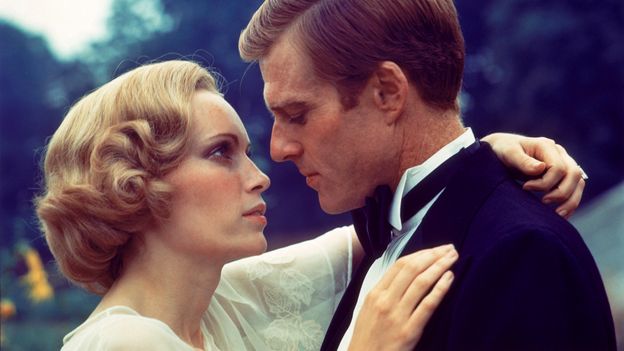
'No one had the slightest idea what the book was about': Why The Great Gatsby is the world's most misunderstood novel 10 April 2025 Share Save Hephzibah Anderson Alamy The…
Sources
- The Great Gatsby is the most misunderstood novel (2021)
- Why The Great Gatsby Is the World's Most Misunderstood …
- Why The Great Gatsby is the Most Misunderstood Novel in …
- The great American classic we've been misreading for 100 …
Related posts
- How Thomas Mann Wrote The Magic Mountain: The Master of Contradictions
- Worst-Case Optimal Joins: Mapping Graphs to Relational Join Bounds
- Why The Great Gatsby Remains the Most Misunderstood Novel Today